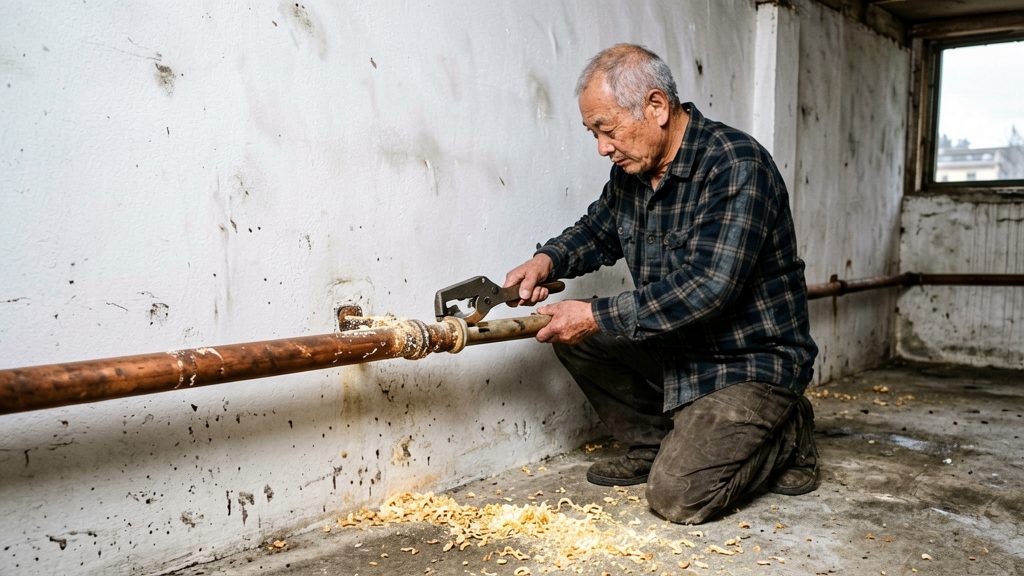
For most home repairs, copper and PEX differ in three practical ways: how the pipe routes around obstacles, how the cut end is prepared, and whether the joint needs heat. Rigid copper runs typically use fittings for direction changes, but suitable copper tubing can also be bent with the appropriate tools.
Copper vs PEX: Key Repair Differences
| Repair factor | Copper | PEX |
|---|---|---|
| Routing around obstacles | Rigid; direction changes typically need elbow fittings | Bends around obstacles and forms continuous runs with fewer elbows (Plastics Pipe Institute) |
| Cut requirement | Cut square and check the cutting tool requirements in the product instructions | Clean, square cuts without burrs or shavings, made with a tubing cutter approved by the tubing manufacturer (Plastics Pipe Institute) |
| Joining heat | Soldered with a torch, or joined without a torch using press tools or push-to-connect fittings (This Old House) | No torch needed for mechanical fittings; the tools must match the fitting system (check the manufacturer’s instructions) |
| Support at fixtures | Provides rigid support at exposed fixture connections (This Old House) | Typically concealed; used in runs combined with copper at valves to reduce movement (This Old House) |
Bending and Routing
PEX’s flexibility lets you run a new supply line through a wall cavity or under a floor with fewer joints. Each fitting is a potential leak point, so fewer elbows means fewer joints to inspect after the repair.
Cutting and Preparing Ends
Burrs or shavings left inside a PEX end can prevent a proper seal, so deburr and inspect the cut before fitting. Use the cutter specified by the tubing manufacturer rather than a general-purpose tool.
Heat and Joining Methods
Copper soldering requires a torch, so you must protect nearby framing, insulation and any PEX runs from heat. PEX is joined with mechanical fittings and does not need solder.
Push-to-Connect Limits
SharkBite Universal fittings are intended as permanent connections, not for repeated connecting and disconnecting (SharkBite / Reliance Worldwide Corporation, 2022). When joining them to a copper system, the SharkBite installation guide requires a copper jumper cable to maintain grounding, because the fittings are not electrically continuous (SharkBite / Reliance Worldwide Corporation, 2022). Check local code for any additional grounding requirements.
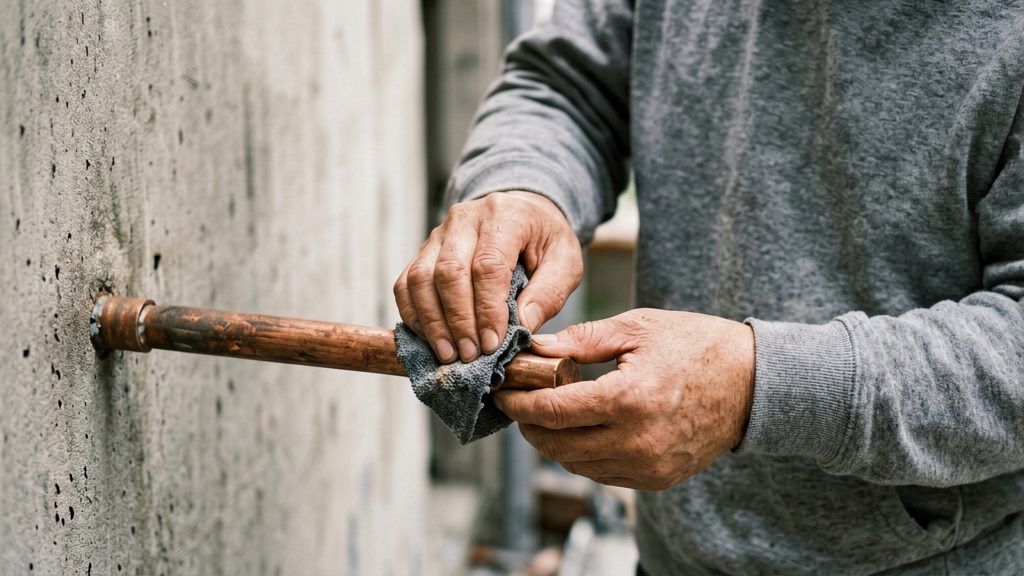
Which Costs Less for Small Repairs?
For a short, single-fixture repair, PEX tubing generally costs less than copper, according to This Old House. Its easier installation can lower labor costs. Copper is usually the more expensive tubing. Prices per foot, per fitting and per hour vary by region and supplier, so compare local quotes before buying.
Cost Comparison by Element
| Cost element | Copper | PEX |
|---|---|---|
| Tubing | Generally more expensive per unit than PEX (This Old House) | Generally less expensive than copper (This Old House) |
| Fittings | Press or compatible push-to-connect fittings at each joint | — |
| Labor | — | Easier installation can reduce labor costs (This Old House) |
Fitting Choice Affects Total Cost
Push-to-connect fittings are priced differently from press fittings, so the fitting type you choose changes the materials budget for a short run.
Tools and Fittings You Will Need
A PEX repair needs a tubing cutter approved by the tubing manufacturer. Joining tools depend on the fitting system: crimp, cinch and press connections require matching tools, while compatible push-to-connect fittings require no crimp, cinch or press tool. A copper repair needs a tubing cutter plus either press tools or push-to-connect fittings. Basic hand tools serve both materials.
Tubing cutters by material
- Copper: Use a cutter designed for copper tube. Remove the burr from the inside and outside of the cut before fitting, because a rough edge can stop a fitting from seating.
Crimp, cinch and press tools
Crimp and cinch tools are fitting-specific. The ring or clamp size must match the tubing and the fitting maker’s specification, so confirm this on the fitting packaging before buying a tool. Copper connections can be made without a torch using press tools, according to This Old House.
| Tool or fitting | Material | Requirement |
|---|---|---|
| Crimp or cinch tool | PEX | Must match the fitting specification (check the fitting packaging) |
Basic hand tools
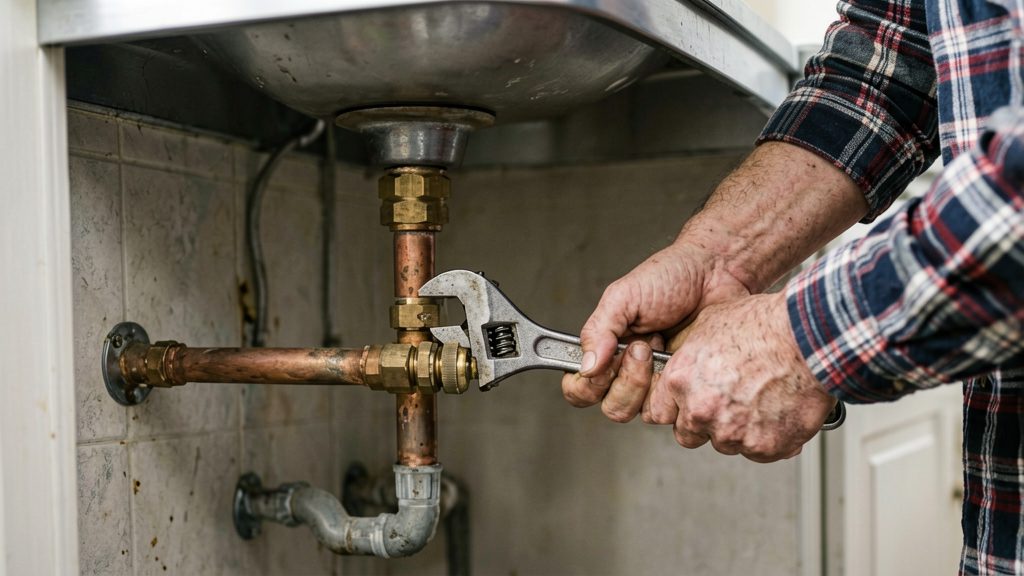
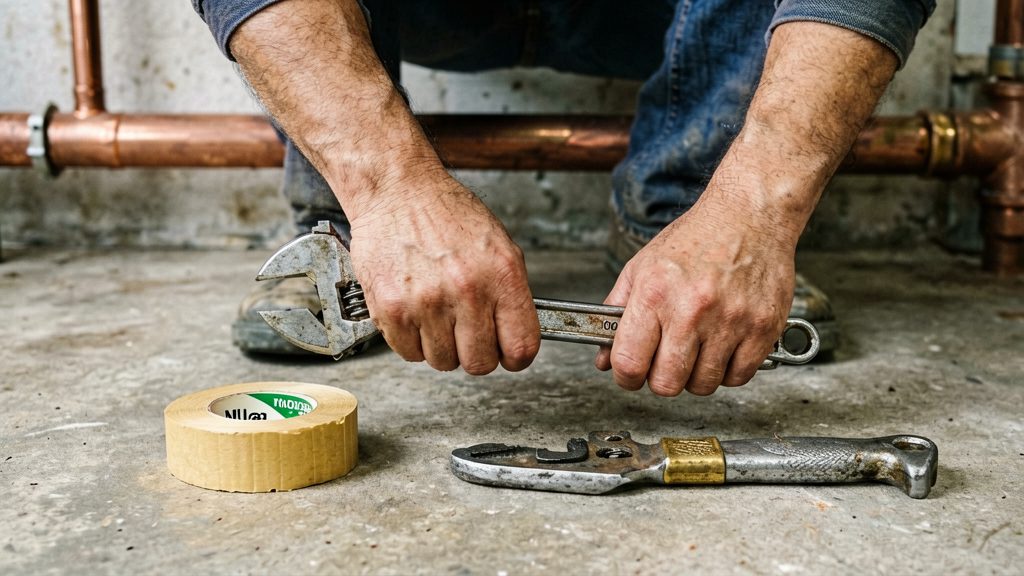
- Wrenches tighten threaded fittings and valve connections.
- A tape measure sets the run length before you cut.
- Pipe clamps hold the tube steady while you join it.
Can You Connect PEX to Copper?
Yes. Copper and PEX can be joined with purpose-made transition fittings, according to Viega LLC (2022-09-07). The two common types are press transition adapters, which need a press tool, and push-to-connect transition fittings, which do not. Each adapter is designed for a specific system, so the fitting, tool and jaw must match.
Press transition adapters
Viega describes press adapters that require the appropriate copper and PEX press jaws (Viega LLC, 2022-09-07). In practice, you need the copper press jaw and the PEX press jaw that the adapter manufacturer specifies, and both must fit the tool head you use.
| Connection element | What to confirm |
|---|---|
| Copper side | Copper press jaw size specified for the adapter |
| PEX side | PEX press jaw specified for the adapter |
| Tool head | Accepts both jaws and matches the fitting range |
Push-to-connect transition fittings
Plan the layout so you will not need to open these joints later, or place an accessible valve upstream of them.
Confirm manufacturer compatibility before buying
Adapter lines are not interchangeable across brands. Check these items on the packaging or in the manufacturer’s installation instructions:
- Jaw part numbers for press adapters, matched to your copper and PEX sizes.
- Fitting line name, to confirm whether it is a Universal-type fitting with the permanence and grounding requirements above.
- Tubing compatibility, to confirm the adapter fits the PEX type and outside diameter you are using.
- Tubing cutter approval, confirmed against the tubing manufacturer’s listed tools.
If the instructions do not list a compatible jaw or tubing, do not substitute a part from another brand. Contact the manufacturer to confirm the match.
Freezing, Sunlight, and Pipe Protection
According to the Plastics Pipe Institute, PEX resists freeze-related breakage, but PEX systems should still be protected from freezing. Sunlight is the second constraint. PEX should not be stored or installed where it receives direct or reflected sunlight, because UV exposure affects its long-term performance.
UV Rules for Storage and Installation
- Keep PEX coils and straight lengths indoors or in full shade until installation.
- Do not run exposed PEX where sunlight or light reflected from nearby surfaces can reach it.
- If a run must pass through an area that receives sun, check the manufacturer’s instructions for that product before installing it.
Freeze Tolerance Versus Protection
Resistance to freeze breakage is not the same as freeze-proofing. Treat PEX as more tolerant of freezing than many rigid materials, but still protect it:
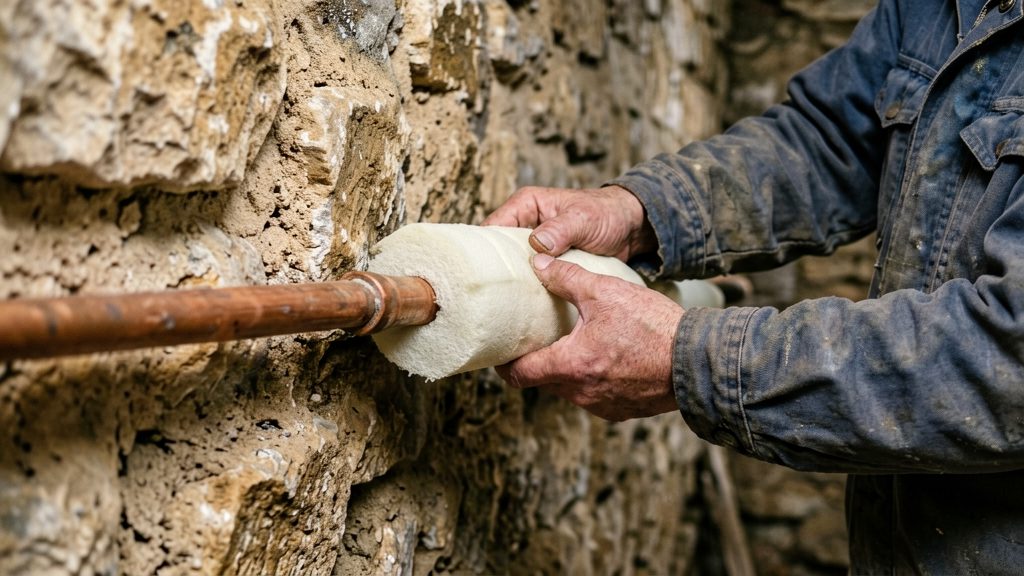
- Insulate lines in unheated spaces such as crawl spaces, garages, and exterior walls.
- Seal gaps and drafts near pipe penetrations so cold air does not reach the lines.
- Keep the building heated, including during vacant periods, to reduce the risk of freezing.
Thawing Methods to Avoid
If a PEX line has frozen, do not apply any of the following:
- An open flame, such as a torch.
- Excessive heat of any kind.
- An electric resistance pipe-thawing device.
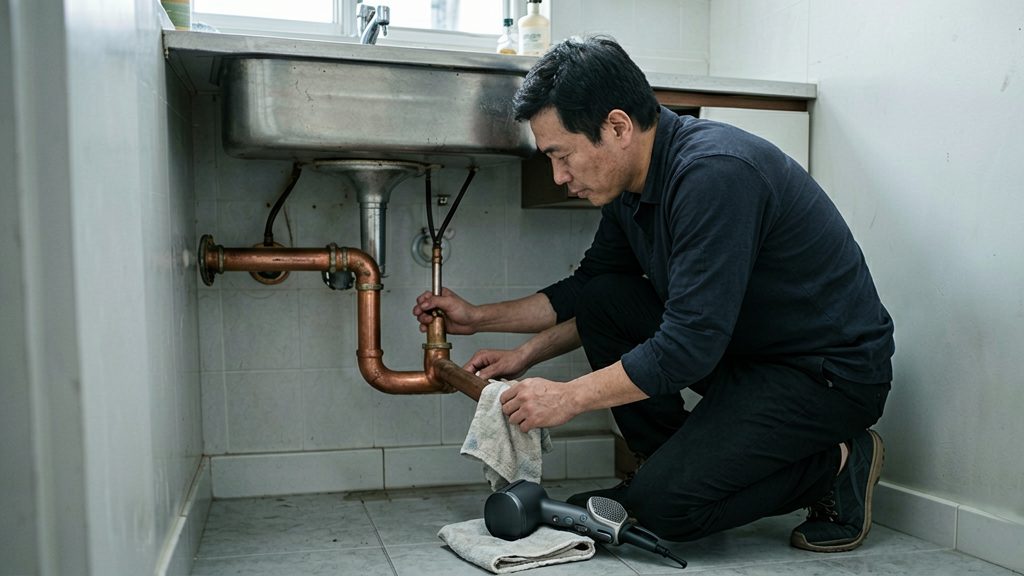
Instead, let the surrounding space warm gradually, for example by restoring the building’s normal heating. Open the nearest faucet on the affected line so that water can move as the ice melts. After thawing, inspect the line and its joints for leaks before restoring normal use. If you find damage or cannot locate the frozen section, contact a licensed plumber.
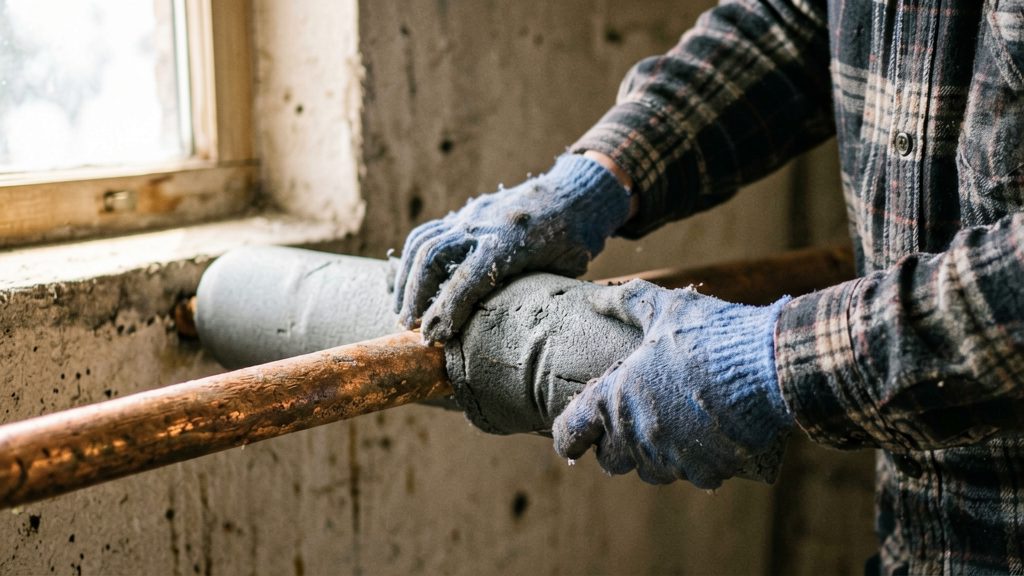
When Keeping Copper Makes Sense
Keep existing copper in place when a repair touches points where a pipe is exposed or likely to move. In these spots, copper’s rigid support matters more than PEX’s flexibility, so replacing it rarely improves the connection.
Exposed Fixture Connections
Where the supply line rises to a faucet, sink, or toilet, copper can provide rigid support at the visible connection, according to This Old House. Flexible tubing at these points can shift when the fixture is turned or pulled, so keeping the final exposed section in copper helps the connection hold its position.
Valves and Limiting Movement
This Old House describes combining concealed PEX runs with copper at valves to reduce movement. When you repair the pipe between two shut-off valves, leave the valve bodies and their adjacent copper sections in place. The rigid copper limits movement where you turn the handle, and the new tubing only needs to replace the section you cut out.
Partial Repairs with Limited Wall Access
When you can open only a small section of wall or floor, a short copper repair often fits better than a new run. PEX can also suit short repairs; the choice depends on the available clearance, the tubing’s permitted bend radius and access for the selected fittings and tools. In a small opening, keeping copper that is already secured avoids adding a new material to a tight space.
Before cutting into a wall or floor, confirm local rules and any tenant or landlord authorization, since requirements vary by jurisdiction.
When to Call a Licensed Plumber
Some copper or PEX repairs stay within a homeowner’s scope: replacing a washer, tightening a compression fitting, or swapping a push-to-connect fitting at an exposed valve. Others involve concealed pipework or equipment connections where a mistake causes water damage, gas-safety risk or code violations. The signs below mark the point where a licensed plumber should take over.
Pipe Failures Inside Walls or Under Slabs
Stop and call a professional if any of these occur:
- Water appears on a wall, ceiling or floor with no visible source at an exposed fitting.
- Damp patches, staining or bubbling paint or plaster appear in a wall that carries a pipe run.
- A concealed PEX run is damaged, kinked or punctured, and you cannot reach the section without opening finished surfaces.
- You suspect a leak under a concrete slab, where access requires breaking the floor.
PEX runs are often installed as continuous lengths routed through framing, so locating and isolating the damaged section can require specialist equipment. Concealed work also may be subject to local permit requirements, which must be verified with the local building authority.
Water Heater and Boiler Connections With Safety Concerns
Connections to a water heater or boiler carry pressure and temperature risks. Do not attempt to modify them if you notice:
- Any sign of a gas leak or gas-related odour, which requires immediate evacuation and a call to the gas emergency service. Gas work is outside the scope of this guide.
- Scorching, discolouration or deformation at a connection point.
- A PEX line that runs directly to the heater without confirmed manufacturer approval. Direct PEX connections and required heat clearances depend on the equipment, its piping instructions and applicable local code, so check the heater’s manual and contact a licensed plumber.
- Missing or uncertain electrical grounding after a metal pipe repair.
Leaks Returning After a Completed Repair
A leak that reappears after a repair you completed is a signal to stop and reassess rather than repeat the same fix. Call a licensed plumber when:
| Situation | Likely reason to escalate |
|---|---|
| The same joint leaks again after re-tightening or re-cutting | The original cut, joint or fitting choice may be wrong for the pipe or fitting type |
| A press or push-to-connect joint weeps after installation | The tool, jaw or fitting may not be compatible with the pipe |
| A leak returns at a different point on the same run | The problem may be a wider pressure, support or movement issue |
For press connections, confirm that the tool and jaw match the fitting manufacturer’s requirements.
Frequently asked questions
How can I tell whether an existing line is copper or PEX?
Check the markings printed along the tube, which usually name the material and size. Copper has a metallic finish and stays rigid, while PEX is a flexible plastic tube. If the markings are unclear, confirm the material at a fitting or valve before ordering parts.
Does the temperature rating matter for a hot-water repair?
Yes. Check the tubing’s listed temperature and pressure rating on the product label or in the manufacturer’s instructions, and confirm it covers hot-water use before you choose it for that section.
What should I do before cutting into either material?
Shut off the water at the nearest valve, then open a faucet on the affected line to release pressure and drain the remaining water. Work over a towel or bucket, because some water is always left in the line.