Keep the heat on only if it can be maintained reliably throughout the absence. Heat helps; the choice depends on whether heat will reach every space where water pipes run.
Should You Keep Heat On or Winterize?
The two options answer different conditions:
| Option | When it applies | What it involves |
|---|---|---|
| Keep heat on | Heat can be maintained through the absence | Heat can help, but it does not guarantee that pipes avoid freezing (Portland Water Bureau) |
| Shut off and drain | The property has no heat | Shut off the water supply and drain water from the systems and appliances (District of Columbia Department of Insurance, Securities and Banking) |
Why Heat Alone Does Not Guarantee Protection
Pipes in unheated spaces are the most exposed. These include basements, crawl spaces, attics, garages and cabinets, as well as pipes running against poorly insulated exterior walls (American Red Cross). A thermostat set for the living area may not warm these locations, so heat alone can leave the most vulnerable runs unprotected.
A check helps you spot a heating failure early, when it is still possible to act.
Full Shutdown and Draining
Use this sequence when heat cannot be kept on:
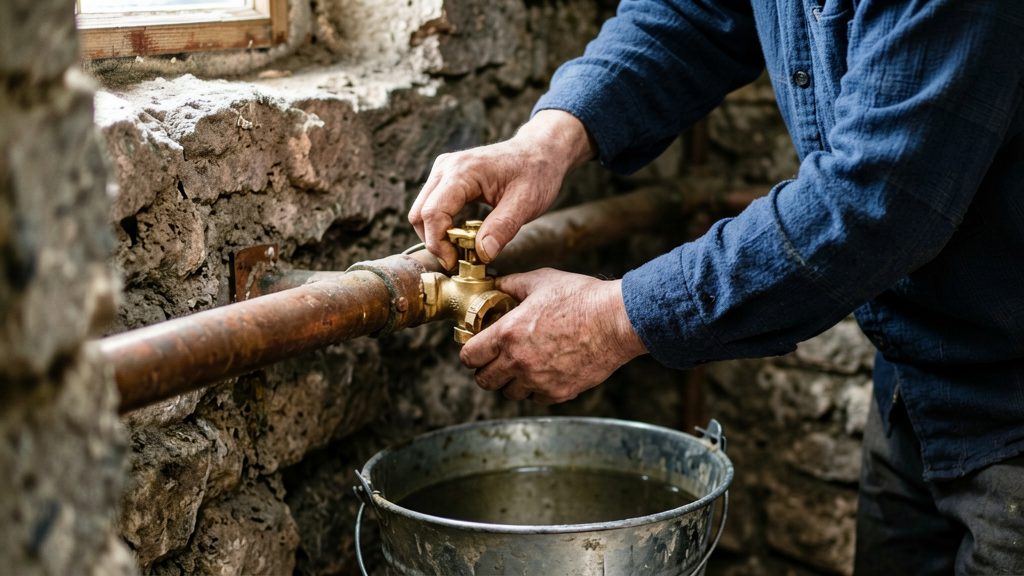
- Locate the main water shutoff and confirm you can operate it. Do this before freezing weather arrives (Portland Water Bureau).
- Close the main to stop water entering the building.
Complete draining procedures for water heaters, boilers and appliance connections depend on the specific model. Follow the manufacturer’s instructions for each unit, or ask a licensed plumber to drain it.
Vacancy insurance conditions vary, so check your policy wording or ask your insurer before leaving the property unheated.
What Temperature Should a Vacant Rental Maintain?
For cold-weather absences, the American Red Cross recommends leaving the heat on with the thermostat setting no lower than 55°F. Treat this as a minimum rather than a guarantee. No single outdoor temperature or absence length is established as the point at which every rental’s pipes will freeze, so a 55°F setting lowers the risk without removing it. These sources also do not establish a required heating setting for landlords or tenants, so check your lease and local rules for any stricter requirement.
Why the Thermostat Reading Is Not the Pipe Temperature
A thermostat measures the air in the room where it is mounted. A 55°F reading in one room does not confirm the temperature inside unheated or poorly insulated spaces.
Insulate Pipes and Seal Drafts
Pipes in unheated areas are the first to freeze, and the fix is to keep cold air away from them. Insulation slows heat loss from the pipe itself, while sealing gaps and letting warmer indoor air reach enclosed plumbing reduces how cold the air around it gets. None of these steps replaces heat in the building, and none guarantees that pipes will stay unfrozen.
Which Pipes Are Most Exposed
In a vacant rental, check the locations most likely to lose heat first.
Insulate Pipes in Unheated Areas
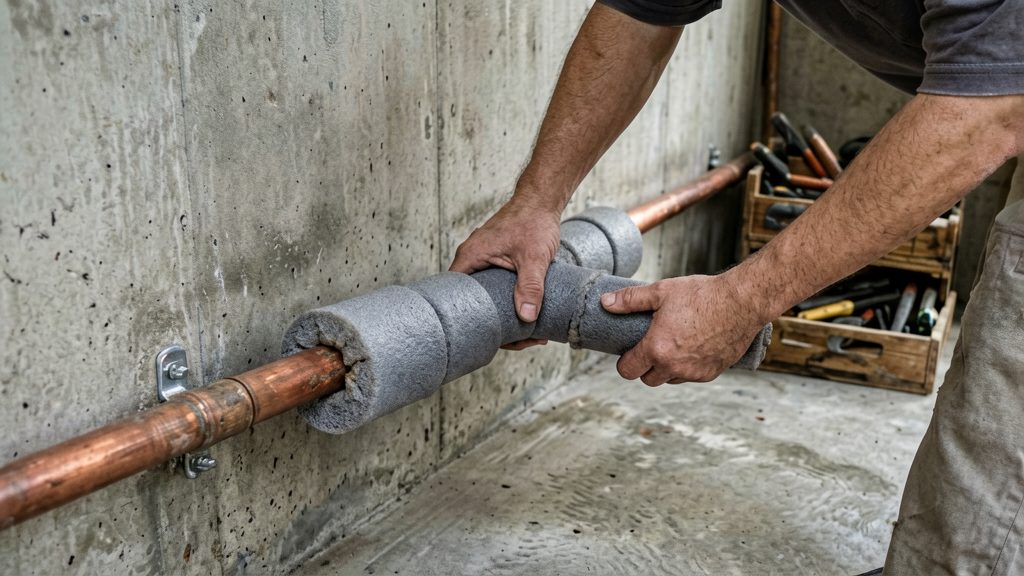
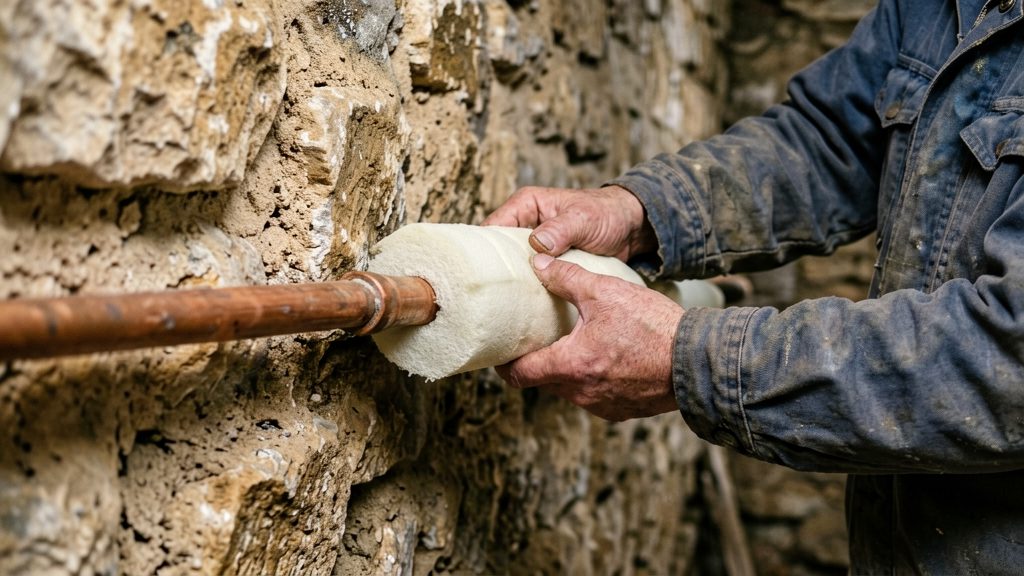
According to the Portland Water Bureau, insulating pipes in unheated areas is a primary protective step. Use foam pipe sleeves or wrap pipes in insulation, covering the full exposed length, including elbows and fittings where the pipe is accessible. Work through basements, crawl spaces, attics and garages in turn.
Caulk Gaps Where Pipes Enter the Building
According to the Portland Water Bureau, caulking gaps around pipes where they enter the building limits cold air infiltration. Inspect the points where supply lines pass through exterior walls, floors and rim joists, and seal visible openings with caulk. Gaps that look small can still let enough cold air in to reach the pipe.
Open Cabinets and Control Garage Airflow
According to the American Red Cross, opening kitchen and bathroom cabinet doors lets warmer indoor air circulate around plumbing inside them. Where water supply pipes run through a garage, keep the garage door closed, since an open door exposes those pipes to outdoor air.
Disconnect Hoses and Drain Outdoor Faucets
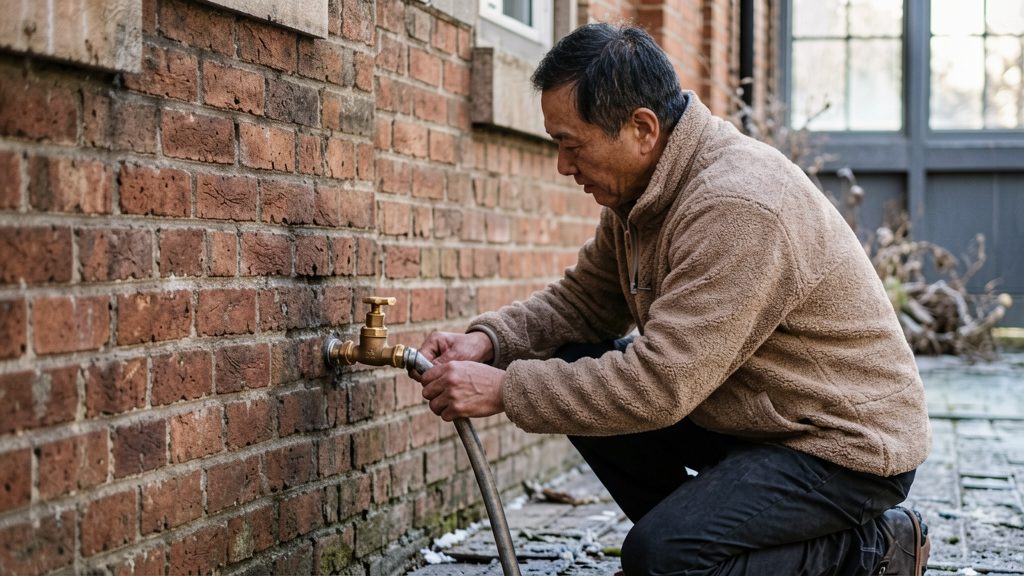
Outdoor faucets and their connected lines are among the first parts of a vacant rental’s plumbing exposed to cold. According to Portland Water Bureau, the protective steps are to disconnect outdoor hoses, close a separate outdoor shutoff valve where one exists, and open the outdoor faucets to drain the remaining water.
- Disconnect every garden hose. Unscrew hoses from each outdoor faucet, including faucets you rarely use, and store them out of the weather.
- Close the separate outdoor shutoff, if installed. Some properties have a valve that controls only the outdoor line. Where one exists, close it. If you cannot find one, skip this step and continue to the next.
- Open each outdoor faucet to drain the line. With the outdoor shutoff closed, open every outdoor faucet and let the remaining water run out. Leave the faucets open afterward so any water that collects in the pipe can escape.
Should You Leave Faucets Dripping?
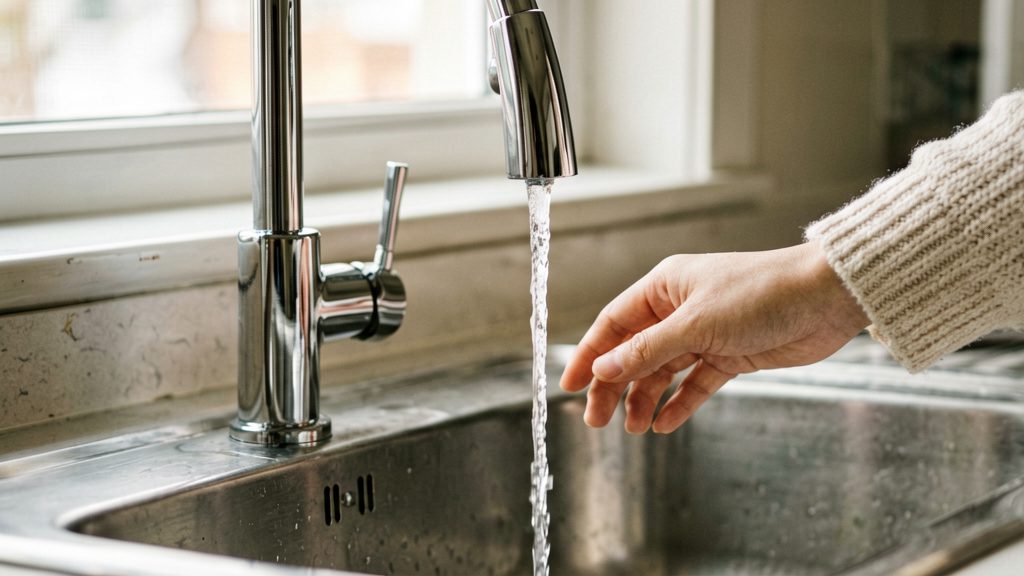
During very cold weather, letting cold water trickle from a faucet can help prevent freezing, according to the American Red Cross. The sources do not give a flow rate or a temperature at which trickling becomes necessary, so check the guidance from your local water utility for thresholds in your area.
Which Faucets to Run
Run the faucets connected to exposed pipes. Run only the cold tap, because the guidance refers to cold water.
What Trickling Cannot Replace
- Pipes in unheated areas should be insulated, and gaps where pipes enter the building should be caulked (Portland Water Bureau).
Arrange Property Checks During Cold Weather
A frozen pipe can leak unnoticed in a vacant rental, so scheduled checks can help identify problems before water damage spreads. The reviewed guidance does not set one inspection interval that fits every property, so the frequency should be set by the local weather, the building’s construction and how much heat is left on.
Ask a Neighbor to Check the Property
For a vacant property, the District of Columbia Department of Insurance, Securities and Banking recommends arranging for a neighbor to check on it if possible. A neighbor who has a key and knows what to look for is the simplest option. Give them the following before the cold period starts:
- The location of the main water shutoff, so they can close it quickly if they see water where it should not be.
- A list of rooms to look at, such as the basement, crawl space, garage and any cabinet with plumbing inside.
- A phone number for you and for the property manager, if one is involved.
Schedule Visits and Set an Inspection Checklist
Plan visits during very cold weather, not only at the start of the absence. Each visit should cover the same points:
- Check the thermostat and confirm the heating is running, as the building needs it to stay above freezing.
- Look at pipes in unheated areas.
- Check pipes against exterior walls for frost, condensation or signs of stress.
- Look for water on the floor, damp ceilings, stains on walls or dripping near fittings.
Hire a Property Manager or Local Service
If no neighbor can help, a property manager or a local inspection service can carry out the visits. Ask them to follow the same checklist above and to report any sign of freezing or water leakage the same day.
What If Pipes Freeze or Burst?
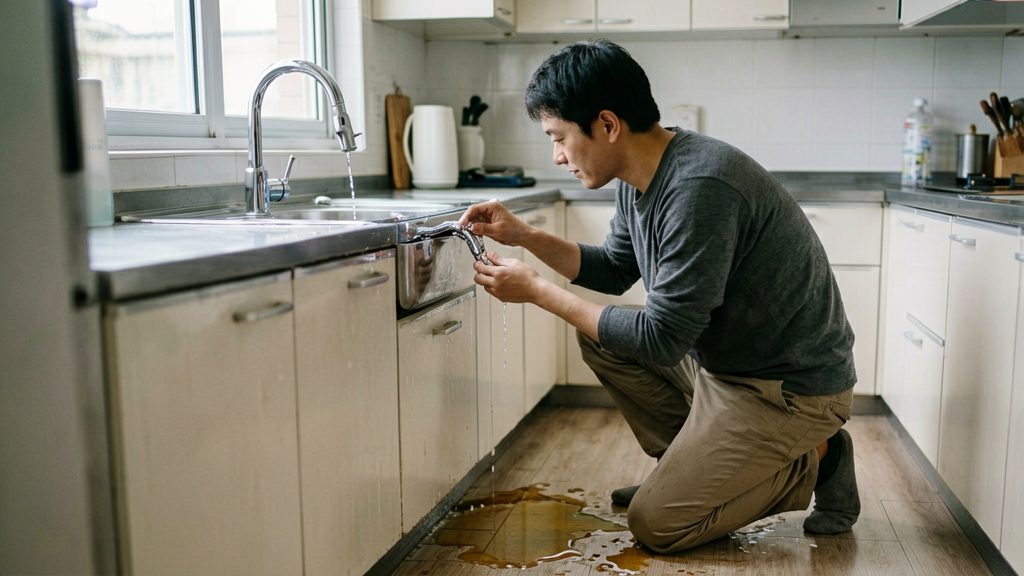
Act in this order: confirm the symptoms, close the water supply, then thaw only the section you can reach safely. A frozen line usually shows up as a tap that delivers little or no water. A burst line shows up as water escaping from a wall, ceiling or floor.
Signs of frozen pipes
Test every tap in the unit. If one tap runs weakly or not at all while others work normally, the blockage is likely in the supply line that serves it. Check exposed runs. Damp patches or staining near these runs can indicate a split pipe that is already leaking.
Shut off the water first
Close the main water shutoff as soon as you suspect a break. If you rent an apartment and cannot reach the shutoff, contact the property manager.
Thawing safely
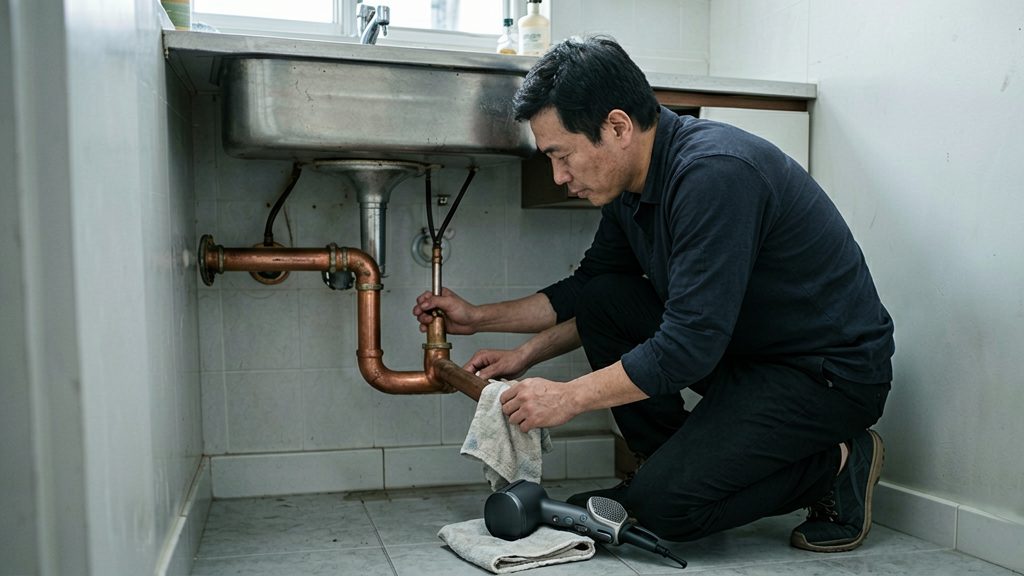
- Warm the pipe gradually, starting at the open tap and working toward the frozen section, so any melted water can drain out.
- If you use an electric heating tool, follow the manufacturer’s instructions for that tool.
- Stop if you cannot locate the frozen section, cannot reach it, or cannot thaw it. In those cases, call a licensed plumber, as the American Red Cross recommends.
Containing water damage after a burst
Once the supply is closed, limit the spread of water. Move belongings off wet floors, soak up standing water, and keep electrical outlets and appliances clear of it. Repairing the break itself is work for a licensed plumber, particularly when the damaged section is hidden inside a wall or floor.