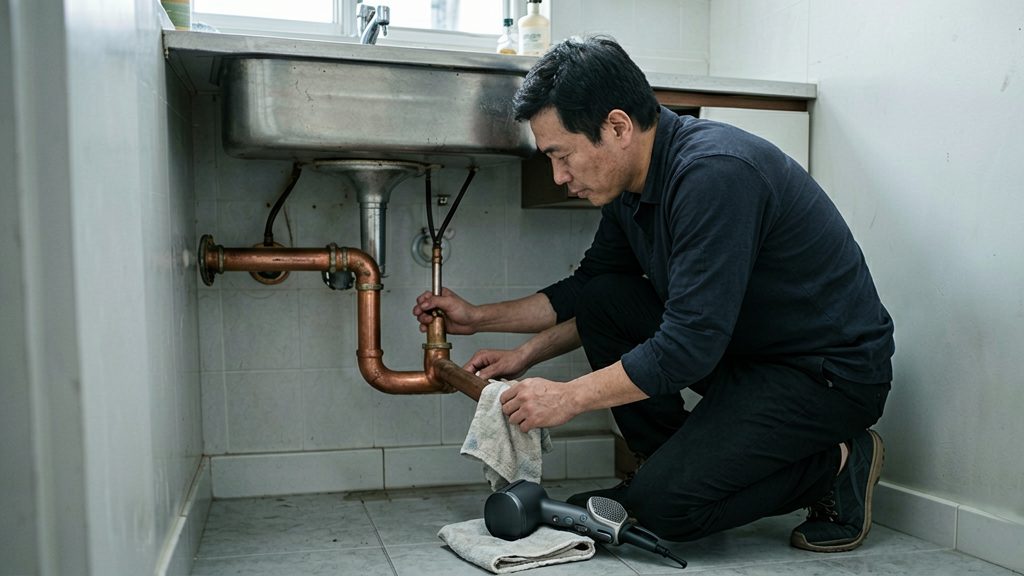
Low water at a tap during freezing weather can point to a frozen pipe, but the symptom alone does not identify the cause. According to the Philadelphia Water Department, little or no faucet flow during freezing weather can indicate frozen pipes. The same symptom can also come from a water main break. Checking how many fixtures are affected and whether neighboring properties also lack water helps separate the two.
Are your pipes frozen?
Low or no flow at the faucet
Low or no flow from one tap during freezing weather is the main sign of a frozen pipe. Test the other faucets in the home as well, since the freeze may not be limited to one line.
Where freezing is most likely
According to the National Weather Service, pipes near exterior walls are especially vulnerable to freezing, as are pipes in cold basements, attics, and kitchen cabinets. When diagnosing, start with these locations:
- Supply lines running along exterior walls, including behind kitchen and bathroom fixtures
- Exposed runs in unheated basements
- Pipes in attics and in cabinets under sinks against outside walls
Local freeze or main break?
Use the pattern of affected water service to narrow the cause:
- Only your faucets are affected: a frozen pipe on your side of the meter is the more likely cause.
- Neighbors also have no water: according to the Philadelphia Water Department, a main break may be responsible.
If neighbors also lack water, contact your local water utility to ask about outages or main work in your area before opening walls or cabinets to search for a frozen line.
What to do first
A frozen pipe usually shows up as a loss of flow, so start by confirming that the problem is the pipe and not the supply. During freezing weather, little or no faucet flow can indicate frozen pipes. Then work through three checks in order: find the frozen section, test the other fixtures, and secure the work area.
Locate the affected section
Find the frozen section before you apply any heat. Look for exposed runs that are frosted or noticeably colder to the touch than the pipes around them. Locating the frozen section helps you inspect it, but does not establish whether it has split. Water expands when it freezes and can rupture both metal and plastic pipes. Watch for leaks during and after thawing.
Check the other faucets
More than one pipe may be frozen, so test every faucet in the home, not only the one you noticed first (American Red Cross). Use this to narrow the cause:
| Observation | What it suggests |
|---|---|
| One faucet has little or no flow | The frozen section is likely on the line serving that fixture |
| Several faucets on one side of the home have low flow | More than one pipe in that cold area may be frozen |
Keep the area dry and clear of electrical hazards
Clear the floor and cabinet contents around the pipe, and mop up any standing water before you work. Keep electrical hazards away from the work area: move cords, extension leads, and portable appliances out of wet spots, and do not handle outlets or light fixtures while the floor is wet.
How to thaw frozen pipes
Thawing works best when heat reaches the frozen section and the meltwater has a route out. According to the American Red Cross, keeping the affected faucet open while you thaw lets the melting water escape.
Open the faucet first
Open the faucet served by the frozen line before applying any heat, and keep it open while you work. Leave it open until water flows freely again.
Apply gentle heat
According to the National Weather Service, these are recognised thawing methods:
- Heating pad, plugged in away from standing water
- Electric hair dryer, moved steadily along the frozen section
- Space heater, kept clear of anything that can burn
- Cloth warmed with hot water, wrapped around the pipe and re-warmed as it cools
Sources differ on where the heat should go. The National Weather Service and American Red Cross describe applying heat to the pipe itself. The Philadelphia Water Department instructs readers to warm the surrounding area rather than apply direct heat. These sources give different heating instructions; follow your local water utility’s guidance. If the frozen section is inside a wall or otherwise inaccessible, call a licensed plumber.
What if a pipe bursts?
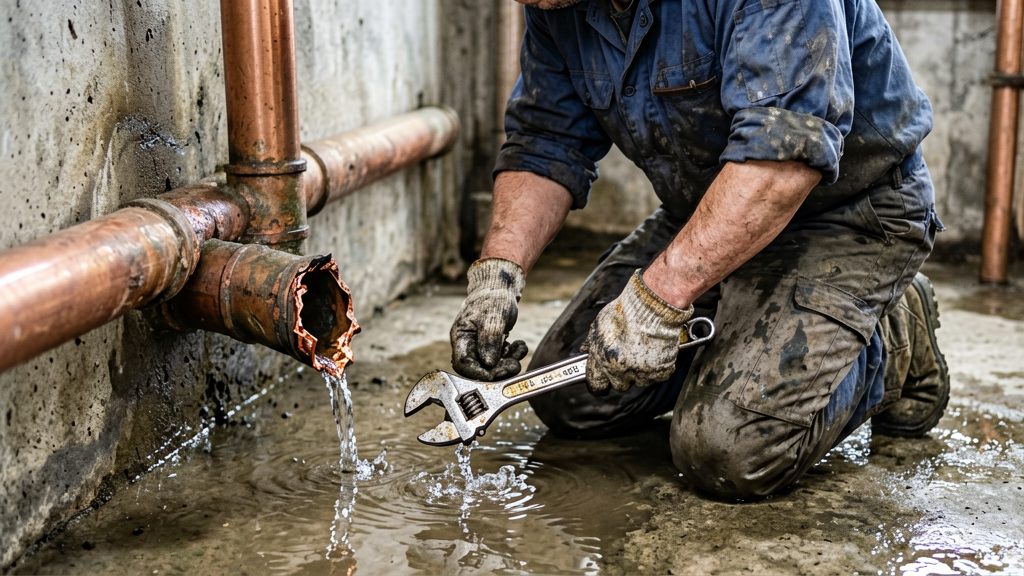
When a pipe bursts, the first priority is stopping the flow. Close the house-side valve near the water meter so the damaged section stops receiving water, then drain what remains in the pipes and protect the area from electricity and water damage.
Shut off the house-side valve near the meter
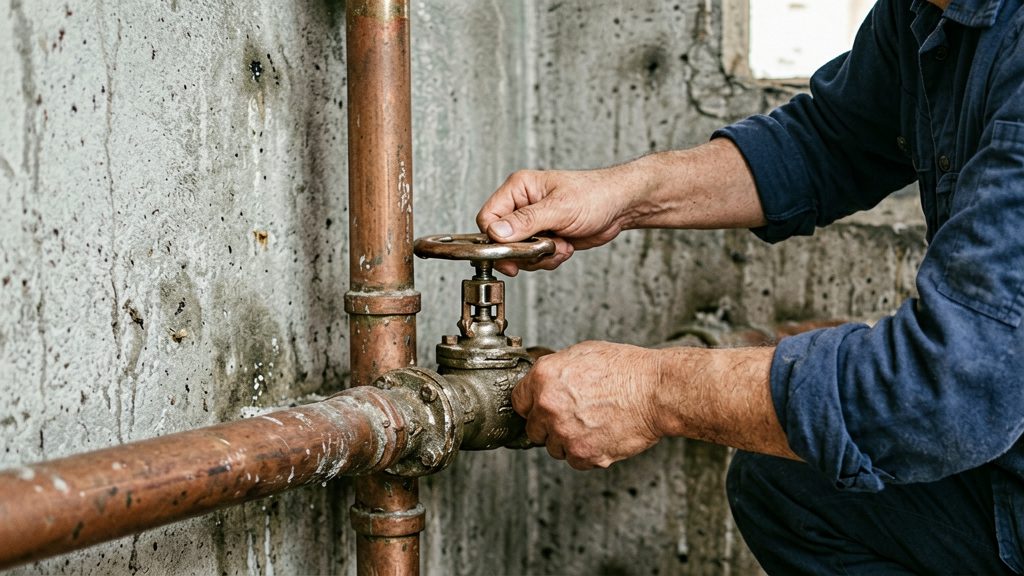
According to the Philadelphia Water Department, if a pipe is damaged, shut off the water supply at the house-side valve near the meter. Locate this valve before you need it, since it is the one that stops water to the whole house.
Guidance on the main shutoff is not uniform. Louisville Water recommends shutting off the main whenever a pipe freezes, while Philadelphia requires shutoff specifically for damaged pipes. Follow your local water utility’s instructions and the location of the valve in your home. If the valve is stiff or does not close fully, do not force it. Note its position and contact a licensed plumber.
Drain the remaining water
Once the supply is closed, open the lower faucets in the house, such as a kitchen or basement tap, so the water still in the pipes can run out. This lowers the pressure in the damaged section and reduces the amount of water that escapes.
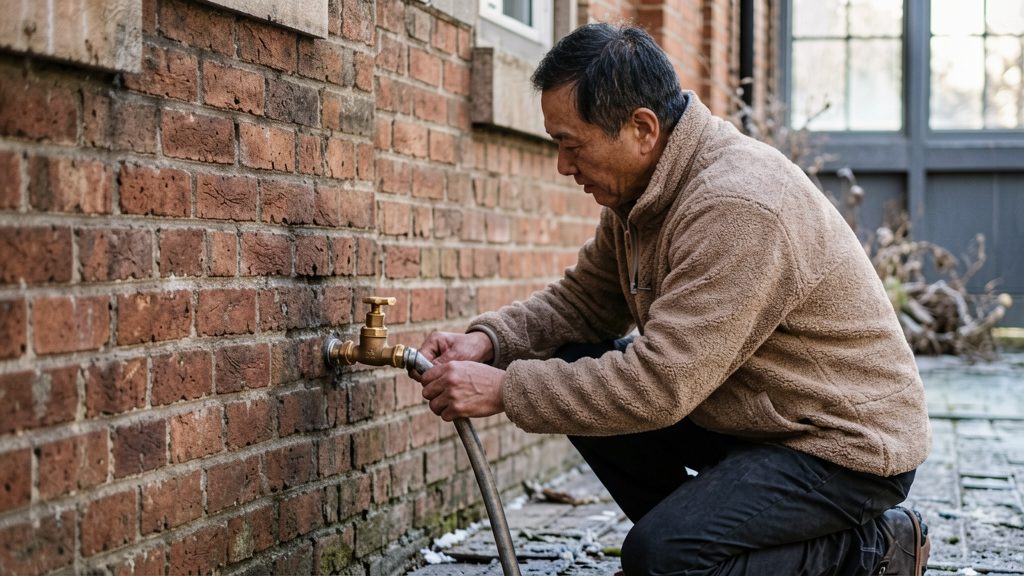
For outdoor faucets, the Philadelphia Water Department advises disconnecting garden hoses, closing the indoor valve that supplies the outdoor faucet, and leaving the outdoor faucet open to drain the remaining pipe section.
Electrical and flooding precautions
Water near electrical outlets, switches, or appliances is a shock hazard. Do not touch electrical fixtures while standing in water, and do not use appliances in a wet area. If water reaches outlets or the area around the electrical panel, stay clear and have a qualified electrician evaluate the affected electrical system before power is restored.
To limit water damage, move furniture, rugs, and valuables away from the wet area, and place containers or towels to catch dripping water. Keep the area ventilated so surfaces can dry.
When to call a licensed plumber
Stop DIY thawing and call a licensed plumber if you cannot find the frozen section, cannot reach it, or cannot thaw it, according to the American Red Cross. Physical damage to a pipe, or a fault outside the house, also takes the job beyond a homeowner’s scope.
Frozen section you cannot locate, reach, or thaw
Frozen runs often pass through cabinets, wall cavities, and crawl spaces. If you cannot trace the line to the blockage, or it sits behind finished walls or under flooring, call a licensed plumber to locate it and determine what access is needed. Repeated thawing attempts that bring no flow back are a sign to stop and call.
Ruptured pipes that need cutting, soldering, or replacement
A split pipe is generally repaired by cutting out the damaged length and joining in new pipe. The joining method depends on the material, whether copper, PEX, or PVC, and soldering copper involves a torch near framing and insulation. The Philadelphia Water Department advises having a licensed plumber make repairs to damaged pipes.
Suspected water main or meter-side failure
Report a suspected main break to your water utility rather than digging or opening the line yourself. For work on the house side of the meter, contact a licensed plumber.
Check for damage after thawing
A thawed line needs inspection before you rely on it. Check the exposed pipes, the joints and fittings, and the water meter.
Inspect exposed pipes
Start with the pipes you can see. Look for:
- Cracks along a straight run or at a bend
- Splits in the pipe wall, often near a fitting or a seam
- Bulging, a swollen section that is larger in diameter than the pipe beside it
Run a dry paper towel along each section. Damp patches or drips that were not there before point to a problem even when the crack is too fine to see.
Watch for leaks at joints and fittings
Freezing stresses connections as well as straight runs. Turn the water on slowly and check every joint, elbow, valve, and connection under flow, then look again after the pipe has been running for a while. Pay particular attention to the threads where a pipe meets a faucet or valve, and to any compression fitting that was exposed to the cold.
Check the water meter with fixtures closed
Before you start, make sure every faucet, appliance, and outdoor hose connection is off. Then look at the water meter. If the dial or low-flow indicator keeps moving after all water use has stopped, suspect a leak downstream of the meter. The meter alone cannot distinguish a damaged pipe from a leaking toilet, faucet, or other fixture. The Philadelphia Water Department also advises checking the water meter itself for damage after thawing; observing its flow indicator does not replace that inspection.
Prevent pipes from freezing again
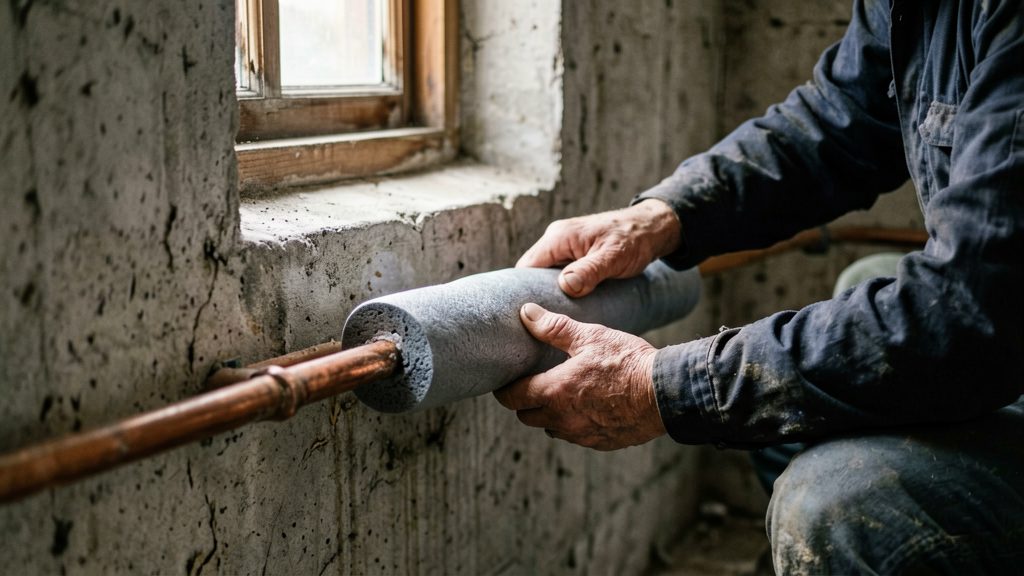
Insulate hot and cold pipes in unheated areas
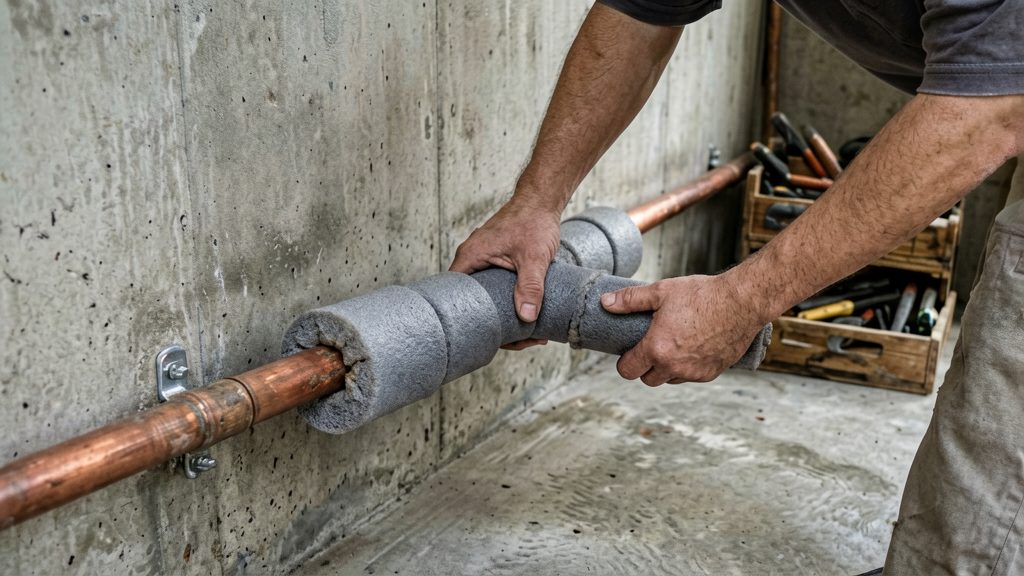
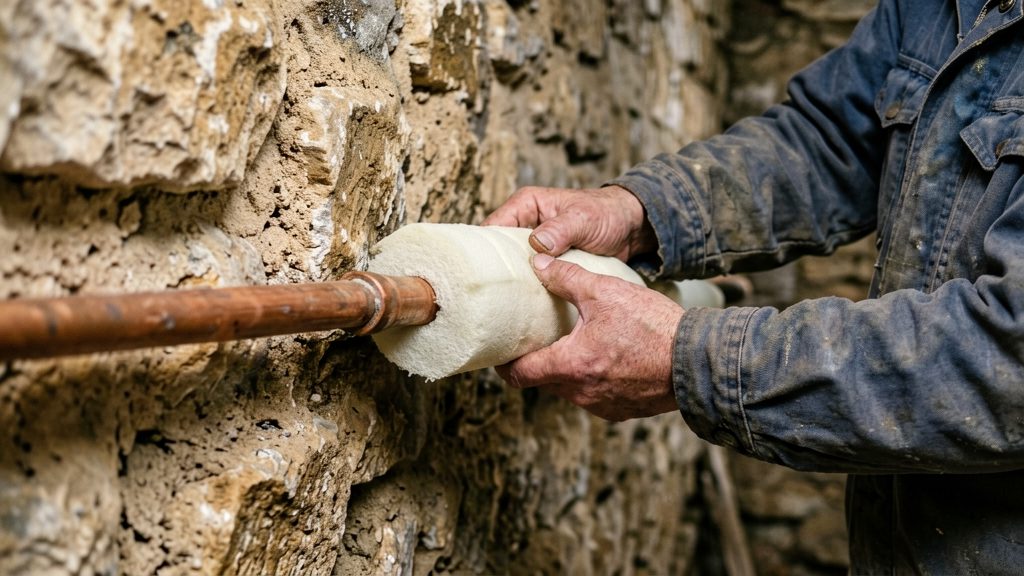
Insulate both hot and cold supply lines wherever they run through unheated areas (American Red Cross). Pipe insulation sleeves are a common option for straight runs, and foam or fiberglass wraps suit elbows and fittings. Check the product label for the pipe diameter it fits and follow the manufacturer’s instructions for installation.
Open sink cabinet doors to admit warm air
On cold days, open the doors of cabinets holding plumbing under kitchen and bathroom sinks so heated room air reaches the pipes (American Red Cross). This works best when the room itself stays heated.
Drip faucets during very cold weather
During very cold weather, let cold water drip from faucets supplied by exposed pipes (American Red Cross). Continuous flow keeps water moving through the line, which makes it harder for ice to form in that section.
Winter absence precautions
- Heat setting when away: When you leave during cold weather, the American Red Cross recommends keeping the heat at 55°F or higher. If you rent, check your lease or ask your landlord, since the thermostat may not be yours to set.
- Outdoor faucets: Disconnect garden hoses, close the indoor valve that supplies the outdoor faucet, and leave the outdoor faucet open so the remaining pipe section drains (Philadelphia Water Department).