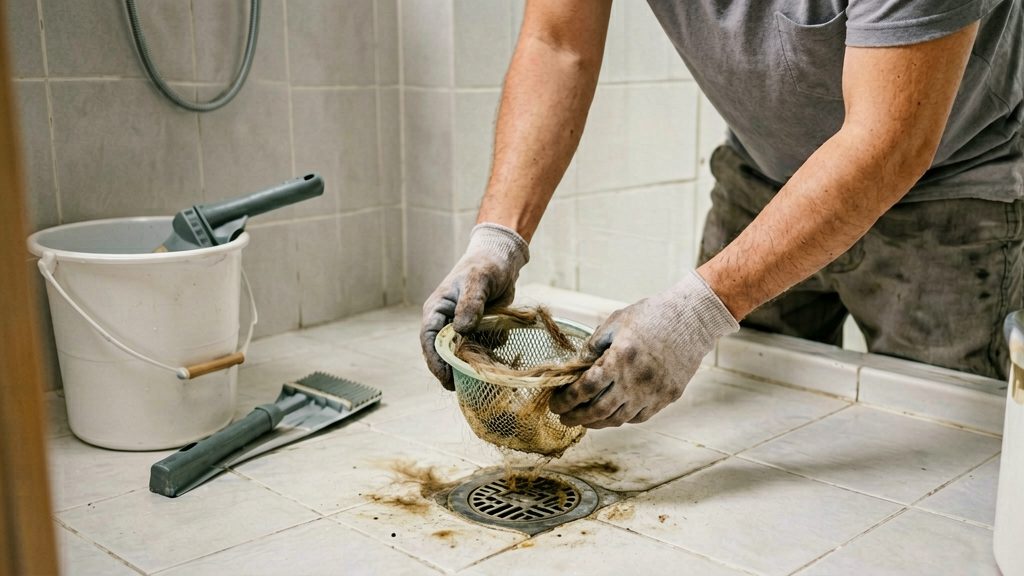
A slow-draining shower usually means hair and soap scum have built up inside the drain’s trap or along the pipe walls, leaving a narrower path for water. Hair and soap scum are among the most common causes of shower drain clogs, according to This Old House (2026). The buildup usually forms gradually, so the drain often slows for a long time before it stops completely. Understanding how this buildup forms helps you recognise a partial blockage early and decide what to clear first.
Why Is Your Shower Draining Slowly?
Most shower drains have a curved section of pipe, called the trap, that holds a small amount of water to block sewer gases. The curve also catches debris. Hair that reaches the trap wraps around the bend and snags on rough spots in the pipe. Once hair is caught, it acts as a net for everything that follows.
Soap scum is the second part of the problem. Soap reacts with minerals in water and with body oils to form a sticky film. This film coats the inside of the pipe walls and binds the hair into a dense, fibrous mat. Because the film forms a little at a time, the opening narrows slowly rather than closing in one event.
This is why a partial blockage is common. The mat does not seal the pipe, so water still drains, but at a reduced rate. You may notice:
- Water pooling around your ankles for a short time before draining
- A gurgling sound as air struggles to pass the blockage
- Drainage that seems fine at first and gradually worsens
- Slow drainage that continues after cleaning the drain cover
If only one fixture is slow and the others drain normally, the cause is most likely local to the shower trap or the pipe immediately below it.
Gather Tools and Check Safety
Before opening a shower drain, check whether chemical drain cleaner has already been used. If cleaner may remain in the blocked drain, stop before removing debris, plunging or snaking, and contact a licensed plumber; tell them which product was used. Otherwise, put on protective gloves and eye protection before starting. This Old House (2026) advises wearing both when using a drain snake, and the same precaution makes sense for any drain work, since the debris is often wet hair and soap residue that may carry bacteria or sharp fragments from the cover.
Gather these items first:
- Protective gloves that cover your wrists.
- Eye protection, such as safety glasses or goggles.
- A plunger, ideally a flat-bottomed cup plunger.
- A drain snake, a flexible cable with a handle, sometimes called a drain auger.
- A bucket to catch water and debris.
- Old towels to protect the surrounding floor and fixtures.
Clear the Bathroom Floor and Protect the Tub
Remove bath mats, bottles, and other items from the shower or tub area so you can work without knocking things over. Lay old towels around the drain and across the tub floor to absorb splashes and to cushion any tools you set down. Place the bucket beside the drain so you can empty it as you go.
Remove the Cover and Trapped Hair
Removing the drain cover and pulling out the hair by hand is the first physical step on a slow shower drain. Clearing visible hair is an appropriate first step, and SC Johnson (Drano) gives the same advice. This works without chemicals and without tools beyond your hands or a simple hook.
Lift off the cover
Drain covers are fixed in different ways. Some are held by one or more screws through the strainer, while others lift out once you pull up on an edge. Look for screws first, and set them aside in a dish so they don’t get lost. If the cover resists, don’t force it. Check whether it’s held by a hidden screw or a locking tab.
Pull out the hair and soap clumps
Hair usually wraps around the strainer and sits just below the opening. Hook it with a finger or a bent piece of wire, then pull it straight up in one piece. Soap scum forms a soft, sticky layer that you can scrape off with a spoon or an old toothbrush. Remove what you can reach from the hair and soap clumps before moving on.
Inspect the drain for leftover debris
Shine a flashlight into the opening and check the walls and the area just below the strainer for hair strands, soap residue, or grit. Wipe the reachable inside surfaces with a cloth to remove the film that catches new hair. When the leftover debris is gone, put the cover back.
Try a Plunger Before Chemicals
A plunger is the first non-chemical tool to reach for when a shower drain runs slowly, because suction and pressure can loosen a clog without adding any cleaner to the pipe. Removing visible hair from the drain comes before plunging, so the plunger has a clear opening to work on.
To plunge a shower drain:
- Seat the plunger cup tightly over the drain opening. The rubber rim should sit flat against the surface around the drain so that pressure stays inside the pipe rather than escaping at the edges. On a shower floor, use a flat-bottomed cup plunger that seals tightly around the drain opening.
- Add enough water to cover the bottom of the plunger. According to SC Johnson (Drano), this water is needed so the plunger can build suction and pressure. Without it, the cup mostly moves air.
- Pump steadily. Push down gently, then pull up sharply, keeping the cup sealed. Repeat in a steady rhythm for about 15 to 20 strokes, then pull the plunger off the drain and check whether the water begins to move.
If the water drains after a few rounds, run hot tap water for a short time to flush remaining debris. If the water still stands, the clog is likely deeper in the trap or line and needs a different method.
Clear Deeper Clogs With a Snake
When plunging does not clear a shower drain, a manual drain snake can reach the obstruction. Remove the drain cover first, then feed the cable into the drain opening. A snake works by catching and pulling the clumps out rather than pushing them further down the pipe.
Feed the Cable Slowly
Insert the end of the cable into the drain. Turn the handle steadily while you push the cable forward. Feeding it slowly lets the head pass around bends in the trap and gives the tip a chance to hook the clog instead of skipping past it.
Work the Obstruction Gently
When the cable meets resistance, keep turning the handle and move it back and forth by small amounts. This loosens the hair and soap scum so the head can catch it. Forceful jabbing can damage the drain pipe or push the blockage farther down, so use steady, light pressure.
Retrieve the Cable and Debris
Turn the handle in the same direction while slowly pulling the cable back out. Expect hair and sludge to come up attached to the tip. Wipe the cable clean as it comes out, and dispose of the debris in a bag or bin rather than rinsing it down the drain.
Run Water to Confirm the Drain Is Clear
Run hot water through the drain after removing the cable. If the water drains at normal speed, the obstruction has been cleared. If it still drains slowly or backs up, repeating the snaking process or calling a licensed plumber are the next steps.
Are Chemical Drain Cleaners Safe?
Chemical drain cleaners can clear a slow shower drain when hair and soap scum are the cause, but safety depends on following the label exactly. Use Drano Max Gel only when its directions match your drain, and stop if the drain does not respond.
Dosage, wait time and rinse for Drano Max Gel
According to SC Johnson / Drano, the Drano Max Gel instructions for clogged or slow-running drains call for:
| Step | Instruction |
|---|---|
| Amount | 16 fluid ounces per drain |
| Wait time | 15 minutes for a slow drain, 30 minutes for a tough clog |
| Rinse | Hot water, not boiling |
Measure 16 fluid ounces, add it to the drain, and leave it for the full wait time before rinsing.
The manufacturer specifies hot, not boiling water for the rinse. This Old House recommends boiling water for drains in general, but the Drano Max Gel directions do not allow it. Check the materials and piping in your shower before using boiling water on any drain, and follow the label if the two sources conflict.
Plunging after treatment is prohibited
Do not plunge during or after using Drano Max Gel. According to SC Johnson / Drano, chemical cleaner may remain in a drain that has not cleared, so plunging after treatment is prohibited by the manufacturer.
Limits of chemical cleaners
Chemical drain cleaners are neither universally harmless nor universally damaging. This Old House warns that they can damage pipes, while Drano states that its products are compatible with plumbing when label directions are followed. Neither claim covers every product or plumbing condition, so pipe compatibility depends on your product’s label and your plumbing.
If the drain stays slow after one treatment, you can stop and contact a licensed plumber. One unsuccessful application does not establish the cause or severity of the blockage; follow your product’s label for any permitted repeat treatment, and do not plunge during or after using Drano Max Gel.
When Should You Call a Plumber?
According to This Old House (2026), three patterns mean a shower drain problem has gone beyond basic clearing: recurring clogs, several drains blocking together, and water backing up into other fixtures. Any one of them warrants professional plumbing help.
Clogs That Keep Coming Back
If the drain slows again soon after you have cleared it, the blockage likely sits further down the line than the cover or trap you can reach. Repeating the same clearing method is unlikely to fix it. Stop and book a licensed plumber rather than trying more aggressive methods.
Several Drains Blocking at Once
When the shower slows down at the same time as a bathtub, sink or toilet, the cause may be a shared section of drain pipe rather than one fixture’s trap. Clearing only the shower will not address a blockage that affects the whole line.
Water Backing Up Into Other Fixtures
If water rises in a tub, sink or toilet when you run the shower, stop using the affected fixtures to avoid overflow and call a plumber. This sign points to a blockage that is holding back wastewater beyond the shower itself.
Tell the plumber which cleaner you used before they start work.
If you rent, report recurring or backing-up drains to your landlord or property manager in writing, and keep a record of the date and what you observed. When you hire a plumber, check that they are licensed in your area before work begins.
Prevent Future Shower Drain Clogs
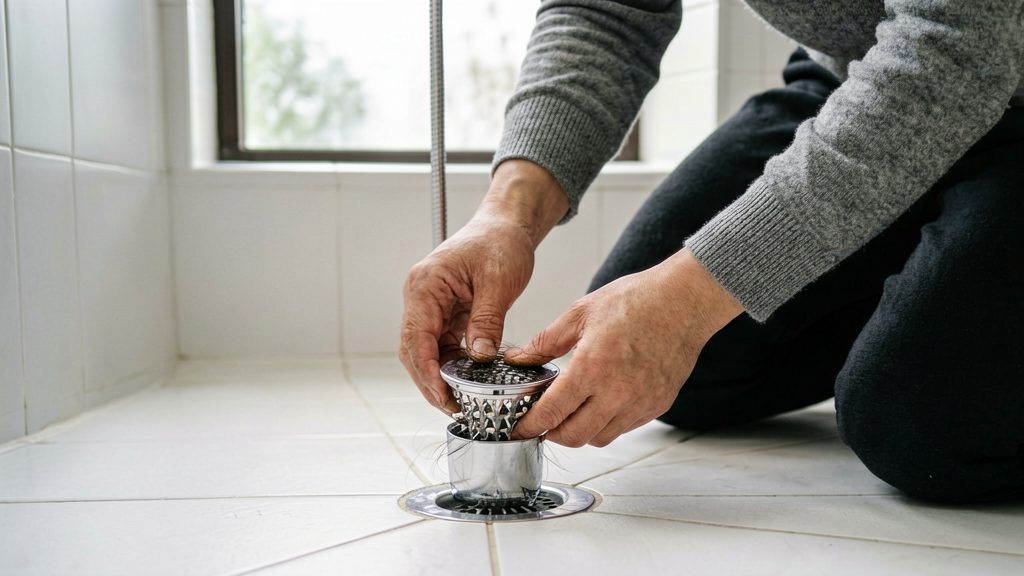
A hair catcher placed over the drain opening stops hair and debris before they reach the trap, which limits what builds up inside the pipe. According to This Old House (2026), a hair catcher combined with regular cleaning of the drain cover can help prevent future clogs.
Fit a Hair Catcher
- Choose a catcher that covers the whole drain opening, so water passes through the screen and solids stay on top.
- Test the fit before showering. A catcher that shifts or leaves gaps lets hair slip past.
- Empty it regularly. A full catcher lets water pool on the surface and sends debris into the drain when it overflows.
Clean the Drain Cover on a Regular Schedule
Cleaning the drain cover removes the soap scum and hair that collect on its underside and in its slots before they wash down. Pick an interval that matches how often the shower is used, and shorten it if the water starts to drain more slowly.
- Lift off the cover or catcher.
- Pull out any visible hair and wipe off soap residue.
- Rinse the cover under running water.
- Refit it.