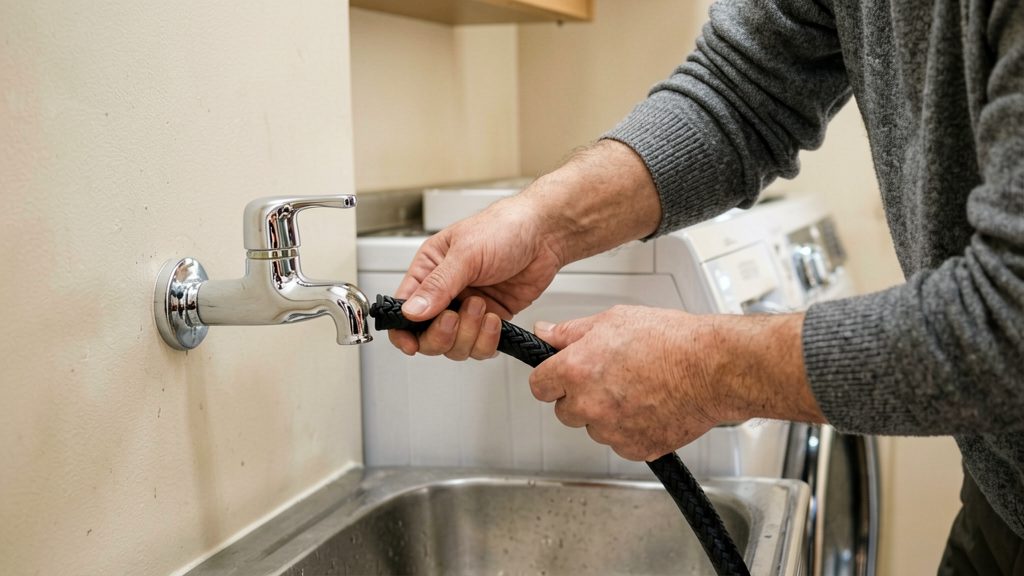
Some washers can draw water from a sink faucet, but the documented case is a portable model with its own faucet adapter. GE’s instructions for its portable washers covered by the Unicouple setup say a sink connection requires a faucet with a removable aerator, and that the water temperature is selected at the faucet. Full-size plumbed machines are a different case: the Whirlpool manual for one plumbed model connects hot to hot and cold to cold, so the washer’s model and manual decide whether a sink faucet is an option.
Can your washer connect to a sink faucet?
Portable washers versus fixed plumbed machines
- Portable washers: GE documents a sink connection for its portable models covered by the Unicouple instructions. The washer is designed for this kind of setup, and the faucet must meet the requirements below.
- Fixed plumbed machines: Whirlpool’s manual W11735098 Rev. A describes connecting to separate hot and cold supplies, matching hot to hot and cold to cold. Whether a standard full-size washer can safely connect to a kitchen faucet with a generic adapter is not confirmed by manufacturer guidance, so do not assume it can.
What the faucet must have
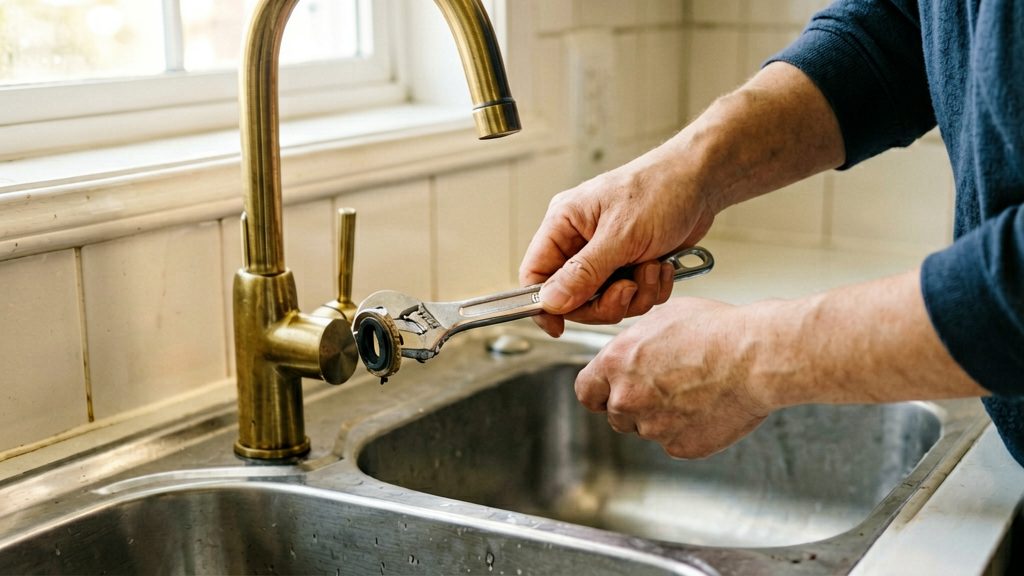
A sink connection for GE’s portable washers requires a faucet with a removable aerator, the screen-and-cap assembly at the spout tip. Compatibility with pull-down, pull-out, sensor, or concealed-aerator faucets is not confirmed, so identify your exact faucet model and check whether its aerator unscrews before deciding.
Water temperature set at the faucet
With GE’s portable washers, the water temperature is chosen at the faucet rather than on the washer, so the faucet’s hot and cold settings determine what the machine receives. For fixed machines, temperature handling depends on the manual for that model.
Check before connecting
Tenants should get written approval from their landlord before attaching anything to a faucet, and the local water utility can confirm backflow rules.
Each value applies only to the named manufacturer and model, and the tightening figures are not universal, so confirm your exact washer and faucet models before following them.
| Requirement | GE portable washers (GE Appliances) | Whirlpool, manual W11735098 Rev. A | LG U.S. inlet hoses (LG Electronics USA) |
|---|---|---|---|
| Hose condition | Faucet must have a removable aerator; supplied adapter is screwed on | New inlet hoses with flat washers at both ends; reusing old hoses or omitting washers is prohibited | New hoses with rubber seals in the threaded fittings |
| Connection | Fill hose to the blue cold inlet, not the red hot inlet; water temperature is selected at the faucet | Hot to hot, cold to cold | Hot and cold supplies to their corresponding washer inlets |
| Tightening | Hand tight, then 1/8 to 1/4 turn with pliers; overtightening can damage the plastic valve | Hand tight, then two-thirds turn with adjustable pliers | — |
| Sealants | — | No tape or sealants | — |
| Pre-connection flush | — | Flush inlet hoses into a bucket, laundry tub, or drainpipe until clear, then open faucets slowly and check for leaks | — |
| Replacement interval | — | After five years, or sooner if bulges, kinks, cuts, wear, or leaks appear | — |
| Drainage | Sink drainage permitted only if the sink can handle the pumped discharge; a utility sink is preferred, as shallow bathroom sinks may not cope with the volume | — | — |
Which hoses and faucet adapter do you need?
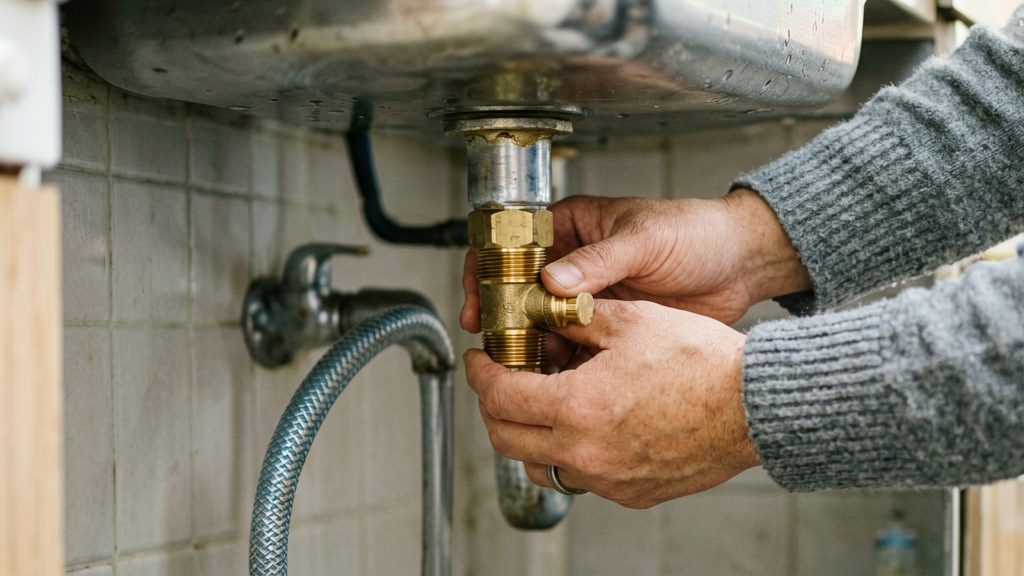
Use new inlet hoses for the washer, never old ones. Whirlpool’s manual W11735098 Rev. A requires new inlet hoses with flat washers at both ends and prohibits reusing old hoses or installing hoses without washers (Whirlpool). Reused hoses can carry hidden wear, so buy fresh hoses for every connection.
Check your hose set against the washer’s own manual before you buy. Some inlet hoses are rated for either hot or cold water. Check the hose specifications and washer manual, and connect each supply to the corresponding washer inlet. LG’s U.S. inlet-hose instructions require new hoses, rubber seals in the threaded fittings, and both hot and cold supplies connected to their corresponding washer inlets (LG Electronics USA).
Portable washers and the Unicouple adapter
Portable washers that connect to a sink use a dedicated adapter kit. For the GE portable washers covered by its Unicouple instructions, a sink connection requires a faucet with a removable aerator, and the water temperature is selected at the faucet (GE Appliances).
The Unicouple kit is supplied with the washer. Its adapter threads onto the faucet once the aerator is removed. The fill hose then connects to the blue cold inlet, not the red hot inlet (GE Appliances). Do not improvise a substitute adapter from a generic fitting.
Matching the adapter to your model
Match the adapter to your exact washer model number and your exact faucet, not to a general category. The sources do not establish that an arbitrary full-size washer can safely connect to a kitchen faucet with a generic adapter.
Local backflow rules, landlord permission, and any plumbing alteration are not covered by the manufacturer instructions cited here. Tenants should get written permission before connecting to a sink, and homeowners should check local rules before adding any adapter.
Prepare the hoses, seals, and water supply
Clean, sealed connections start with the right parts and a clear line. Use new inlet hoses with a flat washer seated in each end. Whirlpool’s manual W11735098 Rev. A requires new inlet hoses with flat washers at both ends and prohibits reusing old hoses or installing them without washers (Whirlpool). Old hoses should not go back on the machine, even if they look intact.
Flush the new hoses before connecting
New hoses can carry manufacturing debris. Whirlpool instructs flushing water through each inlet hose into a bucket, laundry tub, or drainpipe until the water runs clear, before connecting the hoses to the washer (Whirlpool). Flushing removes particles that could otherwise lodge in the washer’s inlet valve screens.
Seat the washers in both hose ends
Check that a flat washer sits inside each hose end before threading it on. A missing or misplaced washer is a common cause of leaks at the joint. LG’s inlet-hose instructions for its U.S. models similarly call for rubber seals in the threaded fittings (LG Electronics USA, 2026-05-29). Keep the washer flat and centred so the threads do not pinch it.
Close and check the faucet shut-off valve
Before connecting, make sure the water supply can be controlled. Close the faucet or supply valve, then confirm no water is flowing before you start threading hoses. When you reopen the supply later, open the faucets slowly. Whirlpool recommends this slow opening and then checking for leaks (Whirlpool).
For GE portable washers covered by its Unicouple instructions, a sink connection requires a faucet with a removable aerator, and water temperature is selected at the faucet (GE Appliances). Remove the aerator first if your setup uses this adapter method.
Connect a portable washer to the faucet
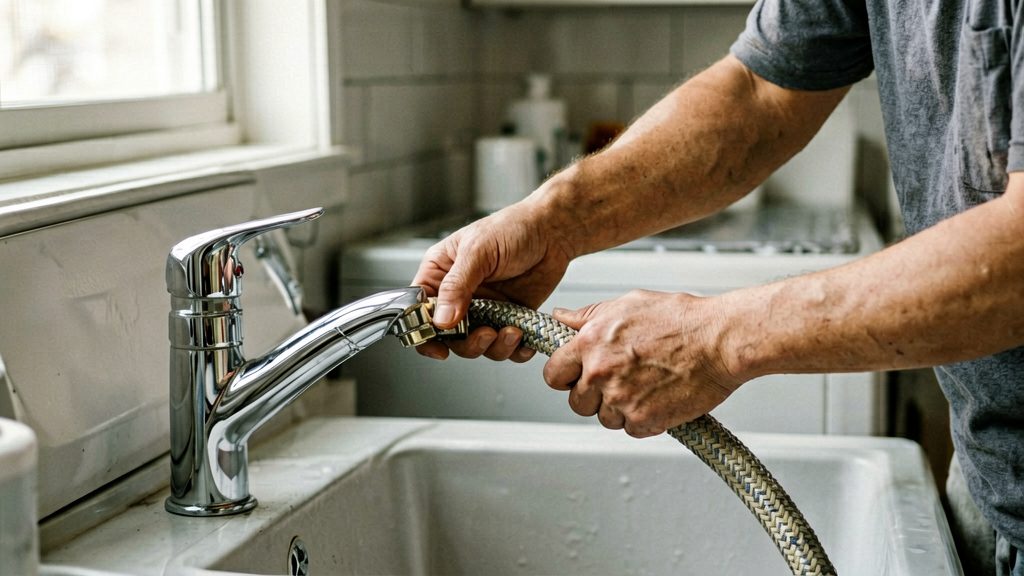
For GE portable washers, the fill hose attaches to a sink faucet only if the faucet has a removable aerator, the small screen at the tip of the spout. According to GE Appliances, the connection uses the adapter supplied with the washer, which replaces the aerator and holds the hose through a Unicouple locking collar. Before buying any adapter, confirm the exact faucet and washer models with the manufacturer, since a generic adapter is not a substitute for the one supplied.
- Remove the aerator. Unscrew it from the spout tip, following the faucet’s own design.
- Screw on the supplied adapter in place of the aerator.
- Lock the coupling. Push down the Unicouple collar, attach the hose coupling to the adapter, then release the collar.
- Tug test. Pull gently on the hose. If it comes free, the collar has not locked, so repeat step 3.
- Connect and tighten the fill hose at the washer. Thread it onto the blue cold inlet, hand tighten, then tighten an additional 1/8 to 1/4 turn with pliers. Follow the supplied adapter’s instructions for its faucet connection. Whirlpool’s manual gives a different value (two-thirds turn) for its own washer, so neither figure applies to every model.
- Use the blue cold inlet. The fill hose connects to the blue cold inlet on the washer, not the red hot inlet. GE states that water temperature for these models is selected at the faucet.
Local backflow rules and landlord permission can affect whether a sink connection is allowed, so check both before installing an adapter in a rental.
Connect hoses to dedicated laundry faucets
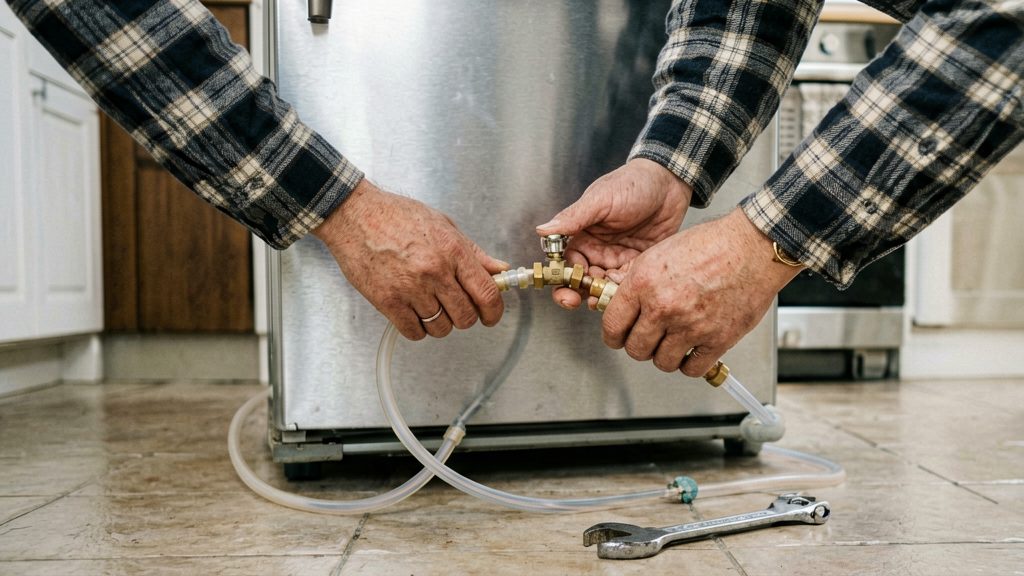
Connecting a washer’s fixed inlet hoses to a laundry faucet comes down to one rule: hot to hot, cold to cold. The hot hose goes to the hot supply, the cold hose to the cold supply, and each connection is tightened by hand before a small final turn. Reversing the hot and cold supplies can cause incorrect wash temperatures. Cross-threading a fitting can damage the connection and cause leaks.
Matching hot and cold supplies
Whirlpool manual W11735098 Rev. A states to connect hot to hot and cold to cold. LG’s U.S. inlet-hose instructions give the same pairing, requiring that both hot and cold supplies connect to their corresponding washer inlets. Check the colour marking on each washer inlet and the faucet handle before attaching anything. Many washers mark the hot inlet in red and the cold inlet in blue, though you should confirm this on your own model’s label.
Tightening the connection
For the Whirlpool washer covered by manual W11735098 Rev. A, hand-tighten each hose first, then turn it an additional two-thirds turn with adjustable pliers. GE’s instructions for its portable washers use a different value: hand-tighten, then turn only 1/8 to 1/4 turn with pliers. These figures come from different manufacturers and models, so neither is a universal rule. Follow the torque or turn guidance in your own washer’s manual.
Overtightening can damage the connection. GE warns that excess force can crack the plastic valve on its portable washers, so stop once the hose is snug and firm.
Hoses and washers
Whirlpool requires new inlet hoses with flat washers at both ends and prohibits reusing old hoses or installing hoses without washers. LG similarly requires new hoses with rubber seals in the threaded fittings. Do not reuse old hoses, even if they look undamaged.
Check drainage and test for leaks
Once the hoses are connected and the shut-off valves are open, check where the water goes and confirm every joint is dry before running a full load. Work slowly, and keep a towel and a bucket nearby.
Confirm the drainage route
Portable washers that use a sink have a different drain path from standard installs. For the GE portable washers covered by its Unicouple instructions, GE permits sink drainage, but the sink must be able to take the pumped discharge. GE prefers a utility sink and warns that shallow bathroom sinks may not handle the water quantity. Check the sink’s size and the drain hose’s position before starting the machine.
Open the faucet slowly and inspect the joints
Open the water supply slowly while checking for leaks, then set the faucet or supply valves to the operating position required by the washer’s manual. Do not use partial opening as a substitute for a properly sealed connection. Watch each joint, both at the faucet adapter and at the washer inlet, for drips, mist, or weeping. Whirlpool’s manual for model W11735098 Rev. A instructs users to flush water through new inlet hoses into a bucket, laundry tub, or drainpipe until it runs clear before connecting them, then to open the faucets slowly and check for leaks.
Run a short test cycle and recheck
Before testing, confirm that the drain hose is connected and secured according to the washer’s manual. Run a short test through filling and draining while watching the supply joints, drain connections, and sink for leaks or overflow. Look at the connections while the water is flowing and after the machine has stopped, since leaks can show up only under pressure. For the GE connection, the fill hose attaches to the blue cold inlet, not the red hot inlet. If you see any leak, shut off the supply before touching the fitting.
Why is the hose connection leaking?
Possible causes of leaks at washing machine hose connections include missing or damaged seals, loose or misthreaded fittings, damaged hoses, and damage from overtightening. Each one produces a different symptom, so identifying the cause tells you which fix to apply.
Missing or displaced flat washers
Whirlpool’s manual for its washer (model W11735098, Rev. A) requires new inlet hoses with flat washers at both ends and prohibits installing hoses without them, so a missing washer is a manufacturer-level fault, not a minor oversight (Whirlpool). A washer that is absent, cut, or pushed out of its seat leaves a gap that water escapes through at the threaded joint. Check both ends of each hose before reconnecting: the washer should sit flat inside the coupling, not folded or offset.
Cracked plastic valves from overtightening
GE specifies hand tightening followed by only 1/8 to 1/4 turn with pliers for its portable washer connection, and warns that overtightening can damage the plastic valve (GE Appliances). For the washer covered by Whirlpool manual W11735098 Rev. A, the instruction is hand tightening followed by an additional two-thirds turn with adjustable pliers, and it prohibits tape, sealants, and overtightening (Whirlpool). These two values come from different models and should not be treated as universal. If a fitting leaks after it was tightened hard, inspect the plastic valve for cracks before adding more force, because a cracked valve will not seal by tightening further.
Loose fittings after the first wash cycle
A fitting that seems tight at installation can loosen once the washer begins filling and vibrating. Whirlpool instructs users to flush the inlet hoses until the water runs clear, connect them to the washer, then slowly open the faucets and check for leaks (Whirlpool). Check each connection again after the first wash cycle. LG’s inlet-hose instructions for its U.S. models call for rubber seals in the threaded fittings and hot and cold supplies connected to their matching inlets, so a seal that is missing or misaligned can also cause a joint to weep (LG Electronics USA, 2026-05-29).
When to replace hoses or call a plumber
Inlet hoses are the part of the connection most likely to fail quietly, so they deserve a regular check. Whirlpool recommends replacing washer inlet hoses after five years, and sooner if an inspection shows bulges, kinks, cuts, wear, or leaks. Those two triggers, age and visible damage, cover most replacement decisions.
The five-year replacement interval
Note the install date when you fit new hoses, or write it on the hose with a marker. Whirlpool’s guidance for its washer (manual W11735098 Rev. A) sets the replacement point at five years, even if the hose looks intact. Rubber and braided hoses age from the inside, so a hose that appears sound can still fail under water pressure.
Signs of damage that mean replace now
Check both ends and the full length of each hose every few months and whenever you move the machine. Replace the hose immediately if you see:
- Bulges or swellings, which show the inner lining has weakened.
- Kinks or sharp bends that do not straighten out.
- Cuts, cracks, or abraded spots in the outer covering.
- Wear around the threaded ends or the rubber seal.
- Leaks or moisture at any connection point.
Do not repair a damaged hose with tape or sealant. Whirlpool’s instructions for the W11735098 washer prohibit tape and sealants on these connections, and a damaged hose should be replaced, not patched.
When you replace a hose, use new hoses with flat washers at both ends. Whirlpool prohibits reusing old hoses and installing hoses without washers. LG’s U.S. inlet-hose instructions also require new hoses and rubber seals in the threaded fittings.
When a licensed plumber should take over
Some parts of this job fall outside a DIY connection. Call a licensed plumber if:
- The faucet has no removable aerator, or you cannot identify its type. GE’s sink-connection instructions for its portable washers assume a faucet with a removable aerator. Compatibility with pull-down, pull-out, sensor, or concealed-aerator faucets is unconfirmed, so check with the manufacturer before proceeding.
- The washer is a full-size model and you are considering a generic adapter on a kitchen faucet. Manufacturer guidance does not confirm that this is safe, so do not assume it is.
- Your local rules may require a backflow device or a permit for new water connections. Confirm these with your local water authority or building department.
- Your landlord’s permission is needed to alter the plumbing, or the connection requires new pipework.
- A leak persists after you have replaced the hose and washers, or the valve itself appears damaged.
Before you connect anything, confirm the exact faucet and washer models against the manufacturer’s manual.