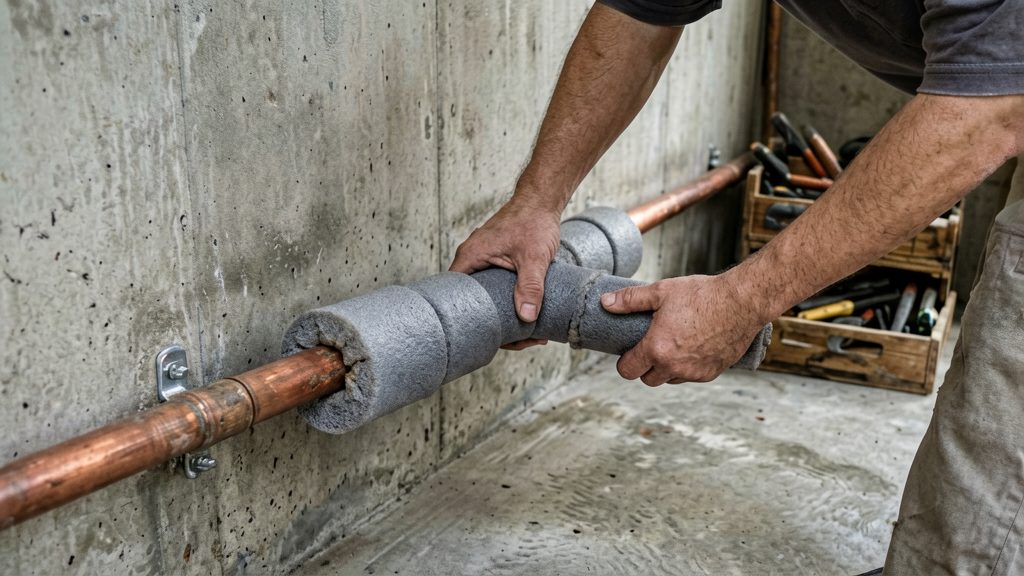
Which Garage Pipes Need Insulation?
In an unheated garage, the pipes most at risk of freezing are the hot and cold water supply lines, any run that follows a poorly insulated exterior wall, and the water meter if it sits in the garage. According to the American Red Cross, water supply pipes in unheated garages are particularly vulnerable to freezing.
Hot and cold supply lines
Water supply pipes running through an unheated garage are the first group to protect. Insulate both the hot supply and the cold supply. The hot line is not exempt because it carries warm water. The American Red Cross also advises keeping garage doors closed during cold weather when supply pipes run through the garage.
Pipes along poorly insulated exterior walls
Pipes that run along exterior walls with little insulation are also particularly vulnerable. Check the wall behind each run, not only the pipe itself, because a draughty wall cavity can expose a pipe that looks well covered.
Water meter in an unheated garage
A water meter in an unheated garage needs particular attention to insulation, according to New York City Department of Environmental Protection. Before wrapping or enclosing a meter, ask your local water provider what it allows around the meter, because access and modification rules differ by utility.
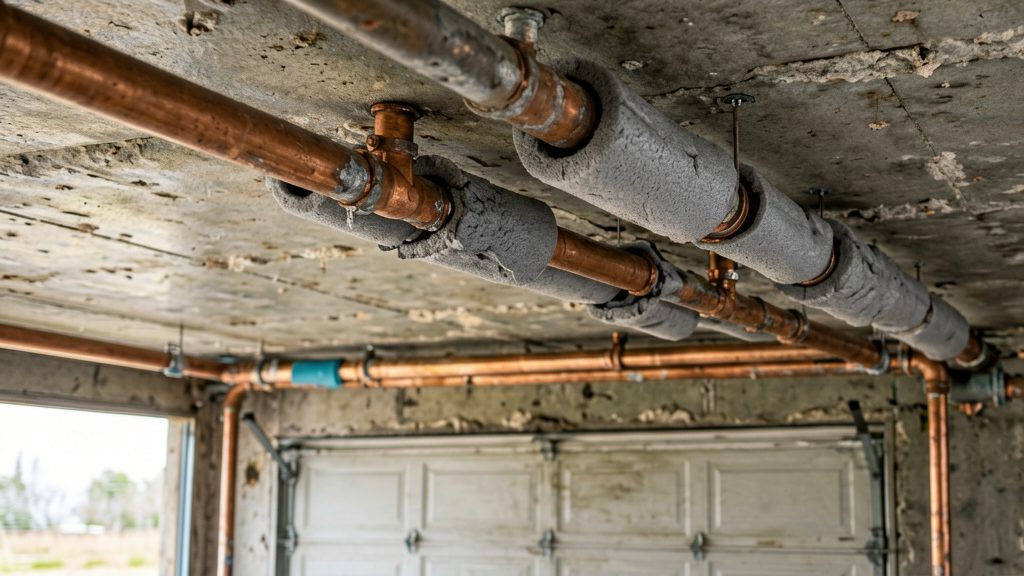
Choose Pipe Sleeves and Compatible Materials
For exposed water supply pipes in an unheated garage, the American Red Cross recommends considering purpose-made pipe sleeves. Heat tape and cable decisions are covered separately, so this section focuses on the sleeve itself.
Pre-slit poly foam sleeves
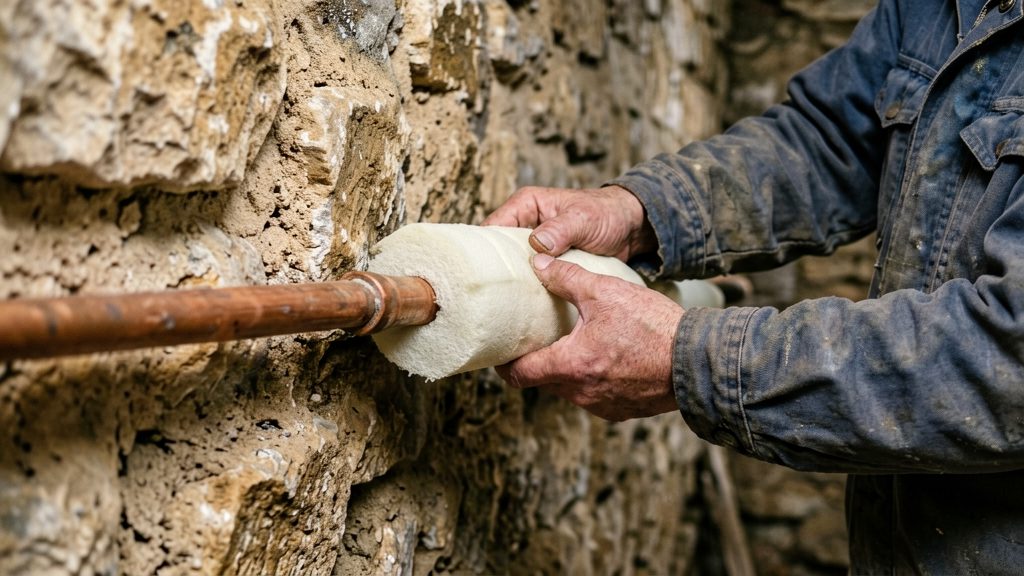
Frost King’s pre-slit poly foam sleeve is designed to be slipped over an existing pipe once its slit is opened. Its instructions specify an installation temperature range of 40°F to 90°F. This range governs when the foam can be fitted. It is not a freeze-protection rating, so check the label of your specific product for its stated range.
Fiberglass pipe insulation with vapor seal
Frost King’s HC-series heat cable manual requires 1/2-inch fiberglass or equivalent nonflammable pipe insulation with a vapor seal when the cable is used. The table compares the two materials on the specifications the manufacturer documents.
| Material | Documented specification | Context |
|---|---|---|
| Pre-slit poly foam sleeve | Installation range of 40°F to 90°F | Installation range only |
| Fiberglass or equivalent nonflammable insulation | 1/2-inch thickness, nonflammable, with vapor seal | Required by the HC-series manual when used with heat cable |
Matching the inner diameter to the pipe
The sleeve’s inner diameter must match the pipe’s outside diameter. A sleeve that is too small will not slide over the pipe or its fittings. One that is too large leaves an air gap, which weakens its insulating contact with the pipe.
To measure, wrap a flexible tape around the bare pipe and divide the circumference by 3.14 to estimate its outside diameter. Match that measurement to the sleeve’s actual inner diameter using the manufacturer’s sizing information; if the packaging lists nominal pipe sizes, check the entry for your pipe material. Do not assume a nominal pipe size matches the measured outside diameter.
Checking material compatibility
For heat cable, the HC-series manual permits use on water-filled plastic or metal supply pipes and prohibits use on drains, fuel lines, or hoses. That permission does not extend to every product. Confirm compatibility with a specific PEX or PVC installation in the exact cable and pipe manufacturers’ instructions.
Measure and Cut the Insulation
Measure each straight run on the actual pipe before cutting. Run the tape between the fittings, or from a bend to the next fitting, and measure the exposed length rather than estimating from the first section. Runs in the same garage often differ in length, so measure each one separately.
Cut each sleeve to its exact length. Frost King’s instructions for its pre-slit poly foam sleeve say to cut the sleeve to length, open the slit, and slip it over the pipe (Frost King / Thermwell Products Co., Inc.). A sharp utility knife gives a cleaner, squarer cut than a dull blade, which leaves crushed or angled ends.
Where two sections meet along a straight run, push the ends together so they form a butt joint. Frost King’s instructions state that adjoining sections should butt together (Frost King / Thermwell Products Co., Inc.). Check that each end sits square to the pipe, with no gap along the run.
Fit Sleeves Around Bends and Tees
Angled cuts let a foam sleeve follow a change of direction without leaving gaps. Frost King’s pre-slit poly foam instructions specify a wedge cut for bends and a miter cut for elbows and tees, according to Frost King / Thermwell Products Co., Inc. A straight cut at these points leaves an open gap at the turn.
Wedge Cuts for Pipe Bends
A wedge cut removes a V-shaped piece from the sleeve. Position the open side of the V on the inside of the curve, so the outer edge of the sleeve can close around the bend. Mark the cut on the sleeve while it sits dry on the pipe, then trim a little at a time.
Miter Cuts for Elbows and Tees
A miter cut is an angled cut across the end of a sleeve section. Cut each section that meets an elbow or tee at an angle matching the fitting, so the two sections form the turn together.
Re-Checking Fit Before Fixing
Dry-fit every section before securing it:
- Confirm the sleeve closes fully around the bend, elbow, or tee.
- Check that no bare pipe shows at the cut faces.
- Confirm the adjoining ends meet squarely.
- Re-trim the cut if any gap remains, then secure the sleeve.
Seal Joints and Close Garage Drafts
Cold air that reaches a pipe lowers its temperature, so sealing the pipe run and the openings around it reduces freezing risk. Three measures address this: sealing the sleeve joints, keeping the garage closed in cold weather, and closing gaps in the walls and openings.
Tape Every Sleeve Joint
Frost King’s instructions for its pre-slit poly foam insulation also call for wedge cuts at bends and miter cuts at elbows and tees, so the foam fits closely around each fitting. Check every joint along the run, including those at fittings, and seal each one with the tape the sleeve manufacturer recommends, following that tape’s own application instructions.
Keep Garage Doors Closed in Cold Weather
When water supply pipes run through the garage, keep the garage doors closed during cold weather, according to the American Red Cross. An open door lets outside air move directly across the pipes.
Close Cracks, Gaps and Exterior Openings
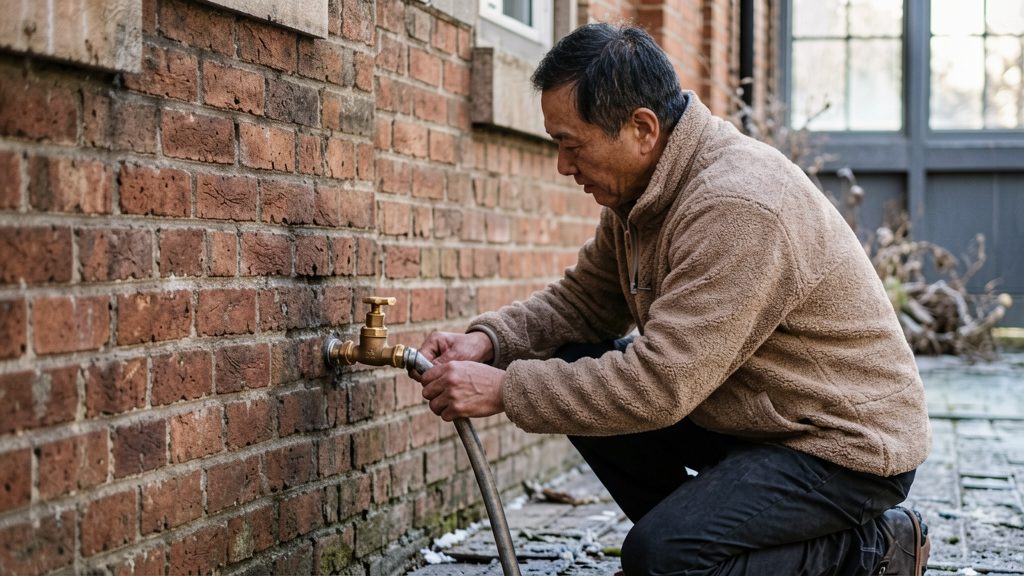
The New York City Department of Environmental Protection recommends repairing cracked doors, windows and walls, closing exterior openings, and insulating exterior walls as additional measures against plumbing freeze damage. Inspect the garage’s exterior openings, including door and window frames and the spots where pipes or cables pass through the wall, and fill gaps with a suitable sealant or weatherstripping.
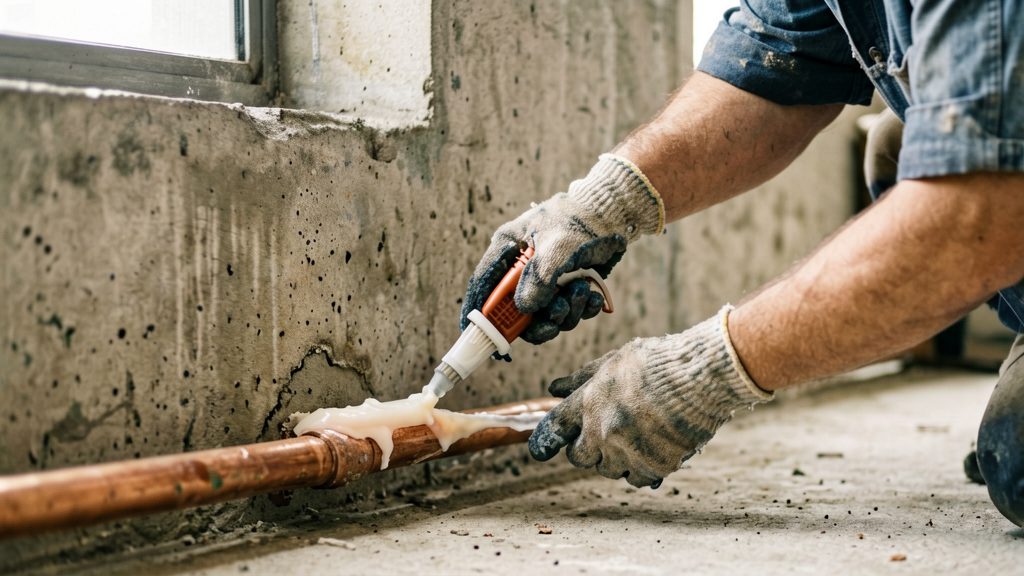
When Do Pipes Need Heat Cable?
Pipe sleeves are the first measure for most exposed supply lines in a garage, but they do not always keep water flowing in cold weather. The American Red Cross recommends considering UL-listed heating tape or cable for exposed water pipes. The conditions below warrant assessing whether additional freeze protection is needed; they do not automatically require heat cable. Use cable only where the exact product instructions permit it, and consult your water provider about protecting a meter.
Conditions Where Sleeves Alone May Not Suffice
- Exposed runs along poorly insulated exterior walls.
- A water meter in an unheated garage.
- A garage with cracked doors, windows or walls, or open exterior gaps.
Judge each pipe run by its location, its exposure and how cold the space gets, and check the product label and local guidance before deciding.
Choosing UL-Listed Heating Tape or Cable
Look for a UL listing on the product and confirm that it matches your pipe material. Frost King’s HC-series automatic heat cable instructions permit use on water-filled plastic or metal supply pipes. Compatibility with a specific PEX or PVC installation is not automatic, so check both the cable and pipe manufacturers’ instructions before installing. Do not apply the HC-series permission to other products.
Following Manufacturer Instructions and Electrical Warnings
- Run the HC-series cable straight against the pipe rather than spiraling it.
- Follow the electrical rating and plug or outlet requirements printed on the label, and replace any cable with a damaged cord or jacket.
- Tenants should check their lease and speak with the landlord before adding electric heat cable, since rules on this work vary by location.
What If a Pipe Freezes?
A frozen line usually shows itself at a tap, where flow drops to a trickle or stops while other fixtures still run. Act at that first sign, because ice blocking a pipe can split it, and the split often leaks once the ice melts.
Check for Signs of a Freeze
- Flow stops or weakens at one tap while others work normally.
- Frost or ice is visible on an exposed section of pipe.
- A bulge, crack, or wet patch appears on a pipe. Treat this as a burst and shut off the water.
- A cold meter area indicates freezing risk, but does not by itself establish that the meter or pipe is frozen.
Thaw the Pipe Safely
- Open the nearest tap on the frozen line. Meltwater needs an exit, and reduced pressure lowers the risk of a split.
- Trace the pipe from the open tap back toward the point where it runs through the coldest, least protected area.
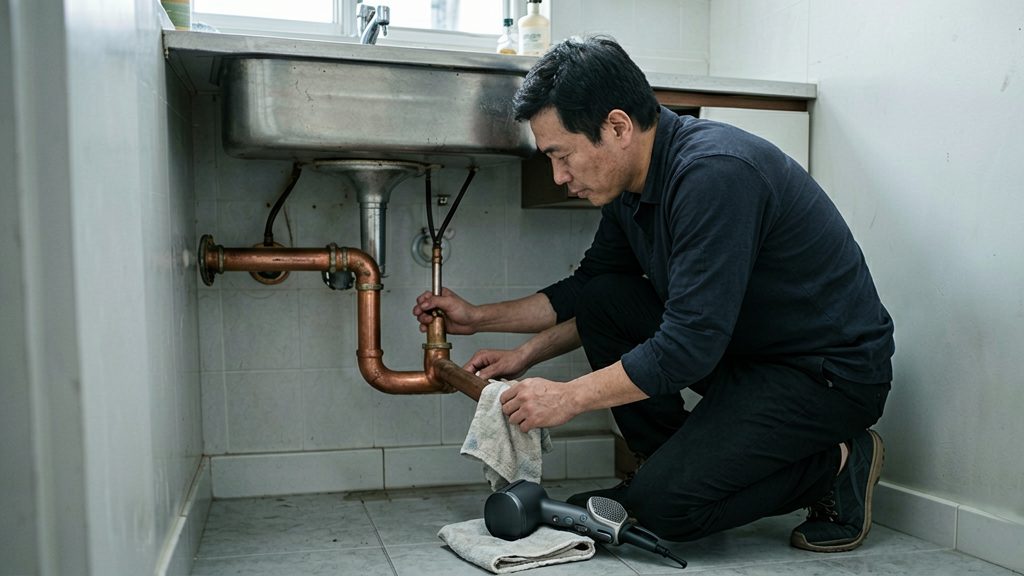
- Apply gentle warm air with a hair dryer or a space heater placed at a safe distance from the pipe and from flammable materials. Move the heat slowly along the pipe, working from the open tap toward the frozen point.
- Never leave heat unattended, and check the tap regularly for flow.
Respond to a Burst
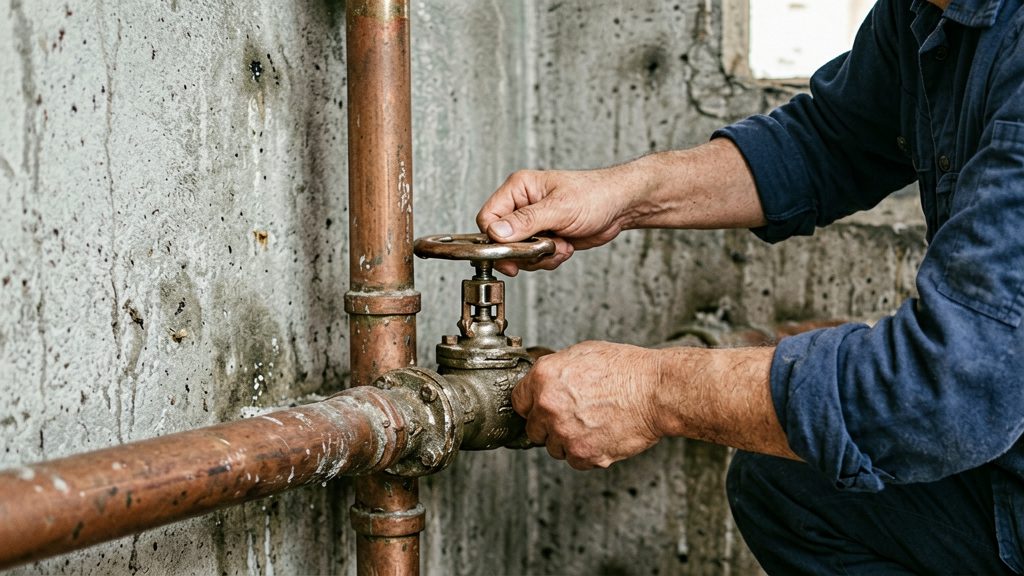
- Shut off the water at the main shut-off valve where the supply enters the home, then open a tap to drain the line.
- Keep clear of standing water near electrical outlets in the garage.
- Leave the damaged section in place until a repair is planned, and take photos of the damage for any insurance claim.
When to Call a Licensed Plumber
The American Red Cross advises calling a licensed plumber if the frozen section cannot be located, cannot be reached, or cannot be thawed. A burst line also warrants a prompt call, since a split pipe can release water faster than a homeowner can respond safely.