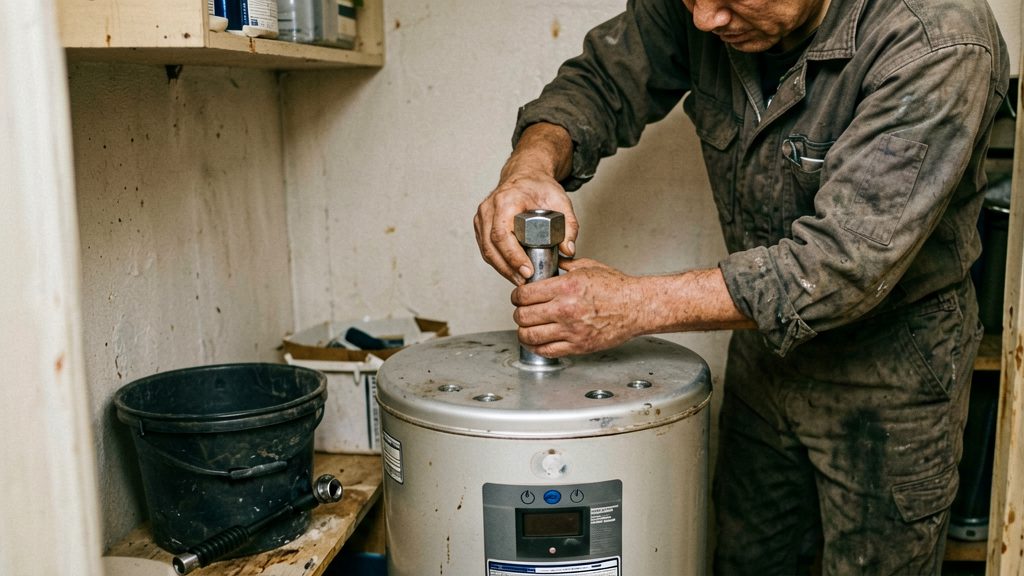
The anode rod in a water heater protects the metal tank from corrosion by being consumed in its place. It is a sacrificial metal rod that sits inside the tank. The sacrificial metal corrodes preferentially, helping protect the steel tank from corrosion. Knowing how this works explains why the rod wears down over time and why a heater running without one is exposed.
What does an anode rod do?
Sacrificial metal consumed in place of tank steel
The rod is made of a sacrificial anode metal that corrodes in preference to the steel tank. According to A. O. Smith, the rod protects the tank by being consumed in its place. Rheem refers to the magnesium anode rod, which is a common material for this job. Corrosion lands on the rod’s metal rather than the tank wall, so the rod gradually shrinks as it does its work.
Why the tank corrodes without protection
Without a more easily corroded metal present, the steel tank itself becomes the material that is attacked, since it is in direct contact with the stored water. The rod provides sacrificial corrosion protection, so its condition matters to the tank’s life.
Where the rod sits
The rod is installed inside the tank, submerged in the stored water, so the corrosion it absorbs happens there rather than on the outer shell. Because its protective role depends on that contact with the water, the rod has to stay in place to work. The GE manual also states that artificially softened water causes the rod to be consumed more rapidly, according to GE Appliances.
What does a worn rod look like?
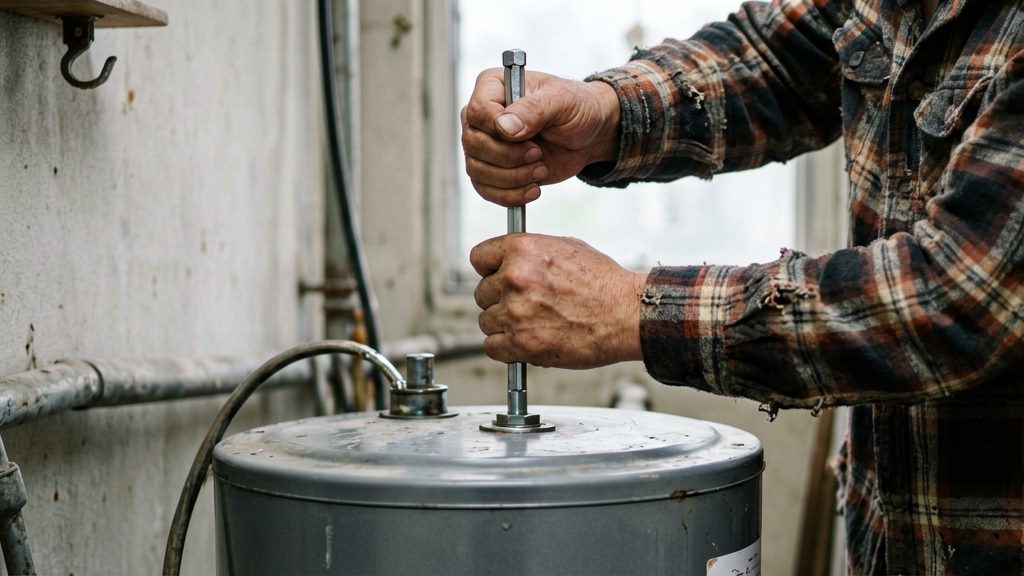
A worn anode rod is judged by how much of its sacrificial metal remains. No single replacement limit applies to every water heater, so the threshold depends on the manufacturer’s manual for your model. The two published limits differ:
| Manufacturer manual | Replacement point |
|---|---|
| Bradford White, service manual 238-53684-00 | Half the original anode diameter consumed, or any exposed steel core |
| GE Appliances, owner’s manual 49-50300-2 | More than 6 inches of core wire exposed at either end of the rod |
Under the Bradford White limit, any exposed steel core calls for replacement, even if much of the rod’s diameter remains. Under the GE limit, the rod is replaced once more than 6 inches of core wire shows at either end.
Rheem recommends replacing a rod that is mostly coated with calcium. No universal coating threshold has been established, so judge this against your model’s manual rather than a fixed percentage.
Rusty water, odors, and other clues
Three household symptoms are commonly linked to a water heater’s anode rod: rust-tinted water, a rotten-egg odor, and popping or rumbling from the tank. Each one points to a possible problem, but none confirms on its own that the rod is used up.
Rust-tinted water can indicate corrosion in the tank or in the pipes. Rheem recommends inspecting the anode rod as part of finding the source. Run the hot tap briefly and note whether the color appears only on the hot side. That helps you decide whether to look at the tank or the supply pipes first.
A rotten-egg or sulfur odor may come from bacterial activity involving the water and the magnesium anode rod, according to Rheem. Because the smell involves the rod’s chemistry, it is a reason to inspect the rod, but it does not show how much metal remains.
Popping or rumbling sounds usually indicate sediment accumulation at the bottom of a tank water heater, according to Rheem. Sediment is a separate issue from the rod, so these noises mean the tank needs a look, not necessarily the rod.
How often should you inspect it?
A. O. Smith recommends checking the anode rod annually for visible wear, and the GE owner’s manual 49-50300-2 also specifies annual inspection for the models it covers. Other manufacturers’ intervals vary, so follow the schedule in the manual for your specific unit.
| Source | Inspection interval | Scope |
|---|---|---|
| A. O. Smith | Annually | Visible wear on the rod |
| GE Appliances, manual 49-50300-2 | Annually | Covered GE models |
Annual inspection does not mean annual replacement. A rod is replaced only when it reaches the wear limit set for your model, so a yearly check tells you whether the rod is still doing its job.
Water conditions that shorten rod life
Softened water is the main condition that changes the schedule. The GE manual states that artificially softened water causes the anode rod to be consumed more rapidly. If your home has a water softener, treat the annual check as a minimum and inspect the rod sooner than the manual’s interval.
Checking the rod safely
Before arranging an inspection, check who your model’s manual authorizes to perform it. The cited GE and Bradford White procedures call for a qualified servicer or plumber; for those models, have that professional isolate the power and cold-water supply and inspect the rod. GE Appliances directs that a qualified servicer or plumber inspect the rod with electrical power and the cold-water supply turned off, because of shock and leak hazards. For an electric heater, switch off the breaker that feeds it. For a gas-fired unit, follow the manufacturer’s shutdown instructions, since gas work is outside this guide.
- Isolate the supply. Switch off the heater’s electrical power at the breaker, then close the cold-water inlet valve on the top of the tank.
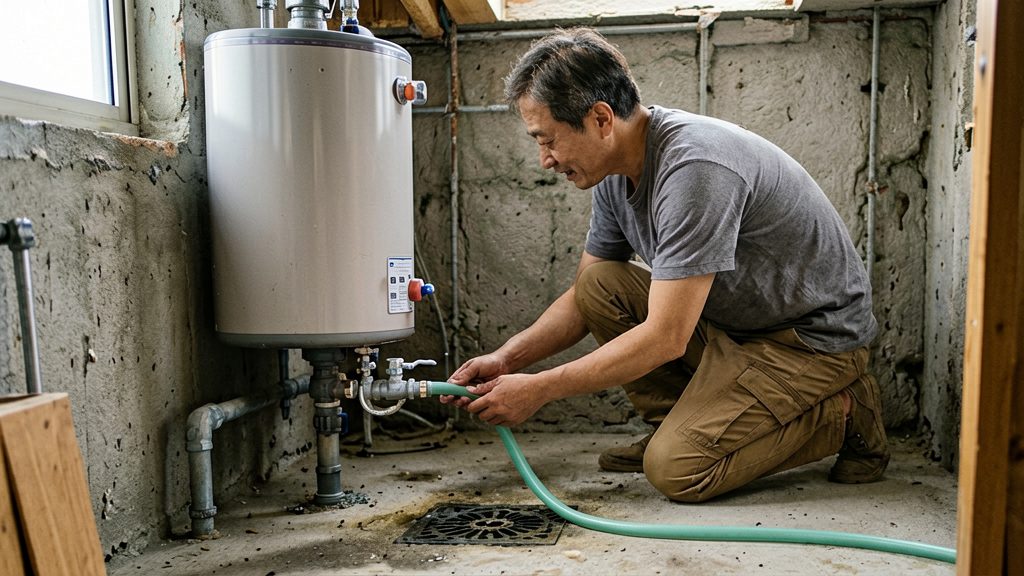
- Relieve pressure and drain partly. Open a hot tap elsewhere in the home. Attach a hose to the tank’s drain valve and drain enough water to lower the level below the rod’s fitting. Let the tank water cool before opening the drain valve or removing the rod, because draining hot water can cause scalds.
- Remove the rod. The rod normally threads into a fitting at the top of the tank. Loosen it with a socket or wrench sized to its hex head, turning slowly. If it resists, stop and call a professional rather than forcing it, because a rough removal can damage the fitting or cause a leak.
- Inspect the remaining metal. Look at the rod’s full length, both ends, and any exposed steel core. A. O. Smith describes this visual check as the way to judge how much sacrificial metal remains. Interpreting what you see depends on your model, so use the manual for your specific heater.
Reinstall the rod with the threads sealed as the manufacturer specifies, close the drain valve, and refill the tank before restoring power.
Choosing a compatible replacement rod
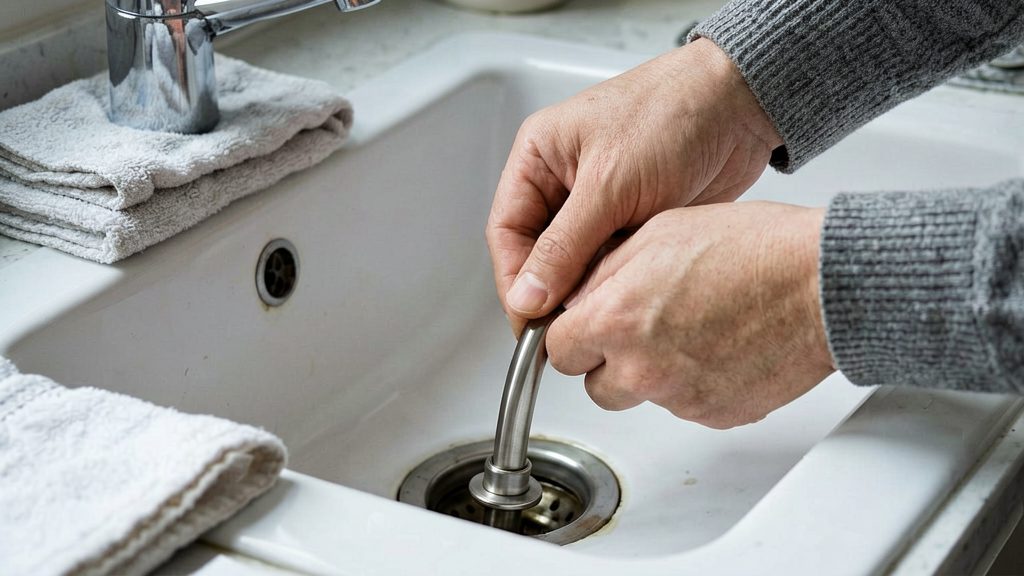
The right replacement is the rod listed for your exact tank, matched by model number, connection type, and rod dimensions. Start with the water heater’s rating label and the manufacturer’s manual, since these identify the rod specification for your unit. Buying by brand or tank size alone can produce a rod that does not fit the tank’s port or thread.
Match the manufacturer’s model and rod specification
- Note the model number and serial number from the rating label on the tank.
- Look up the manual for that model. Manufacturers such as GE Appliances and Bradford White publish model-specific service manuals that describe the anode rod.
- Buy a rod that the manufacturer or the parts supplier lists for that model. Do not assume a rod for a similar-looking tank will fit.
Check diameter, length, and threaded fitting
Before buying, use the manufacturer’s approved replacement specification for your exact model; a worn rod’s remaining diameter and length may differ from its original dimensions:
- Diameter and overall length of the rod.
- The threaded fitting at the top of the rod, including thread size and type, which must screw into the tank’s port.
- Whether the rod is a single piece or has a hex head or other fitting that a standard socket will need to turn.
Measure the old rod while it is out of the tank, and compare it against the new one before installation. If the rod cannot be matched with confidence, ask the parts supplier or a licensed plumber to confirm the fit.
Magnesium versus aluminum or zinc
Rods in common use are magnesium. Rheem’s guidance on water heater rods refers to magnesium anode rods. Whether an aluminum or zinc rod is suitable for a given tank depends on the manufacturer’s instructions. Do not switch material unless the manual or the parts listing confirms that the alternative is approved for your model.
When to call a licensed plumber
Some anode rod jobs are better left to a licensed plumber or qualified servicer. The main signals are a rod that will not come out, a unit with an unclear electrical connection, and leaks that appear after you have worked on the tank.
Rod stuck, seized, or with damaged threads
A rod that is seized in the tank fitting, or whose threads strip during removal, is a common reason to stop. Forcing a seized rod can damage the tank opening, and a damaged fitting may leak once the job is done. A plumber can use the right tools and decide whether the fitting or tank itself needs work.
Gas-fired units or unclear electrical connections
If the water heater is gas-fired, handle the gas side only with a licensed professional. Work on gas burners and gas lines is outside the scope of this guide. For electric units, if you cannot identify the power supply or are unsure how the heating elements are wired, stop and call a licensed electrician or plumber. The GE manual for its covered models directs a qualified servicer or plumber to inspect the rod, with electrical power and the cold-water supply turned off because of shock and leak hazards.
Water leaking from the tank or fittings after work
If water appears at the tank, the drain valve, or any fitting after you reinstall or replace the rod, shut off the water and power supply and call a plumber. Do not keep operating the unit while it leaks. Bradford White’s inspection procedure warns that stored water and components may be hot, and it requires the heater to be completely refilled before electrical power is restored. A plumber can check the seal and the tank opening and confirm the unit is safe to run again.