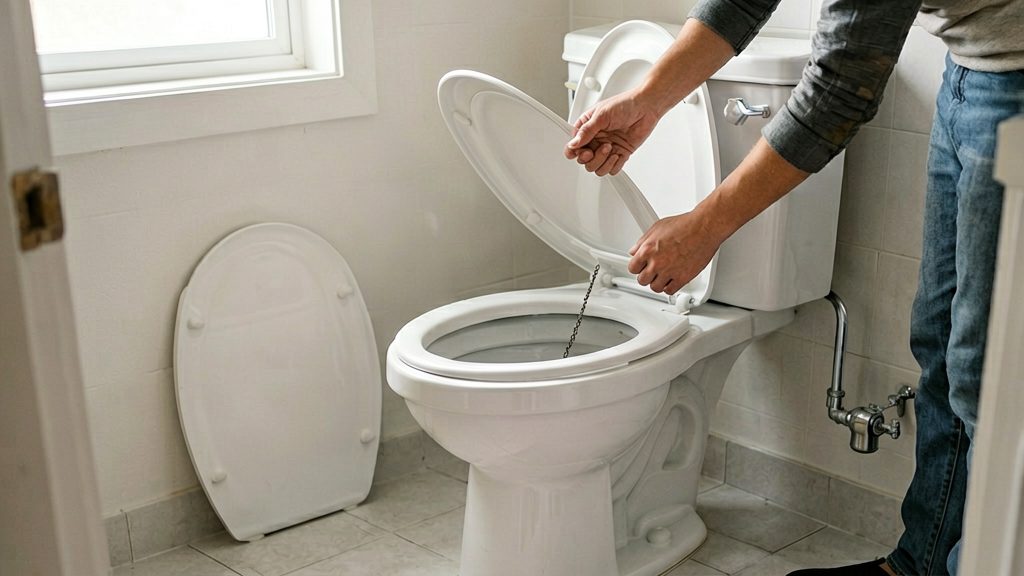
Why does your toilet keep running?
A toilet that keeps running usually has one of three causes: a flush lever that binds and holds the flapper open, water flowing into the overflow tube, or debris preventing the fill valve from shutting off. According to KOHLER, these are the common causes of continuous running. Identify which one applies before replacing any part, because each cause points to a different component.
Lift the tank lid and watch the tank during one flush and refill. The water path shows which cause you are dealing with.
Binding flush lever
A flush lever that sticks can hold the flapper open after the flush, so water keeps draining from the tank into the bowl. Press the handle and let it return. If it does not spring back fully, or an internal arm catches on the tank wall, the lever is the likely cause.
Water flowing into the overflow tube
The overflow tube is the vertical pipe in the centre of the tank. Water that pours into it drains straight to the bowl, so the tank keeps refilling. According to KOHLER, a tank water level set too high can send water into this tube. Look at the top of the tube while the tank fills. Water entering it confirms this cause.
Debris stopping the fill valve
Sediment can collect beneath the cap of the fill valve and stop it from closing fully. KOHLER recommends cleaning the valve first. If continuous running persists, replace the valve.
| Cause | What you see | First check |
|---|---|---|
| Binding flush lever | Handle sticks or stays down; water keeps flowing into the bowl | Press the handle and release it; watch whether it returns freely |
| Water in overflow tube | Water pours into the vertical centre tube while the tank fills | Look at the top of the tube during refill |
| Debris at fill valve | Tank keeps refilling and the fill valve does not shut off | Lift the fill valve cap and check for sediment beneath it |
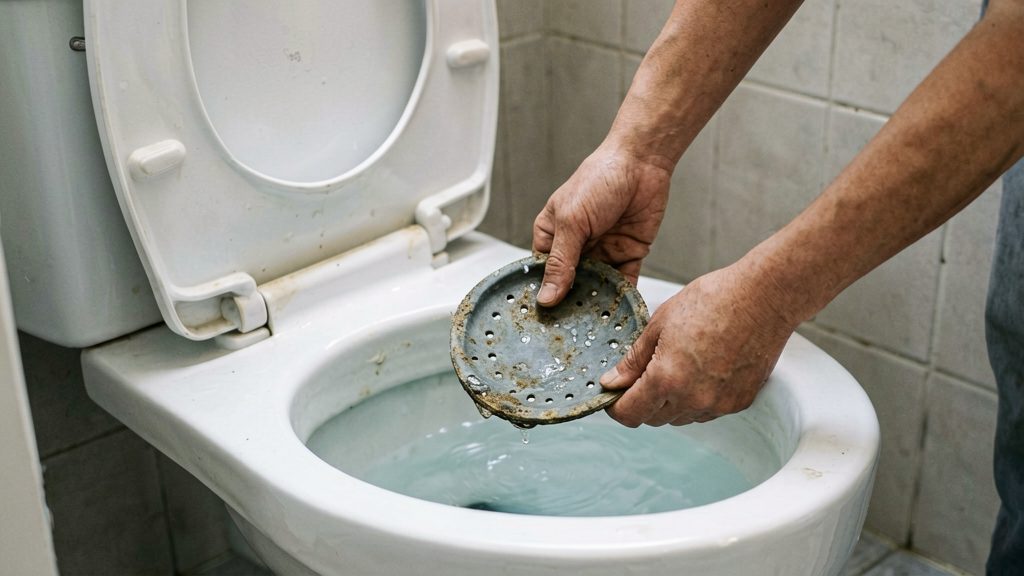
Check the flapper and chain
The flapper is the rubber valve at the bottom of the tank that seals the opening into the bowl. If it does not sit fully on its seat, water leaks from the tank into the bowl and the tank keeps refilling. The flapper and its chain are the first parts to check when the toilet runs after flushing.
Chain slack is the first thing to check. The chain connects the flush lever arm to the flapper and needs enough slack to let the flapper close completely. A tight chain can hold the flapper partly open, so water keeps flowing even when the flapper looks seated. To test this, flush and watch whether the flapper drops fully onto its seat. If it does not, lengthen the chain slightly by moving the clip to a different link, then check again.
Flapper condition is the next check. A worn, dirty, or misaligned flapper may not seal, even with correct chain slack. Look for:
- Cracked, warped, or stiffened rubber
- Mineral buildup or debris on the underside or on the seat
- A flapper that sits off-centre over the opening
Clean the flapper and the seat with a soft cloth, then reposition the flapper so it lines up evenly. If the rubber is damaged or no longer flexible, replace the flapper.
Damaged flush valve seat is the case where replacing the flapper is not enough. The seat is the ring the flapper rests on. If the seat or its seal is damaged, the flapper cannot close properly even when new. Repairing or replacing the seat is a larger job than changing the flapper. If you cannot see a clear fault with the seat or the seal, or if the toilet still runs after a new flapper is fitted, contact a local plumber.
Test for a silent leak
A silent leak lets water seep from the tank into the bowl without any visible sign, so the toilet can waste water while looking normal. The dye test shows whether this is happening. According to the U.S. Environmental Protection Agency, you need only food coloring or a dye tablet and a short wait.
- Add the dye to the tank. Put a couple of drops of food coloring, or one dye tablet, into the tank. Do not flush during the test.
- Wait 10 minutes. Leave the toilet undisturbed for ten minutes so any leaking water can reach the bowl.
- Read the bowl. Look at the water in the bowl without flushing. Color in the bowl indicates a leak (U.S. Environmental Protection Agency).
- Flush afterward. Flush once when you finish reading the result. This prevents the dye from staining the bowl.
Make the annual check a routine. The U.S. Environmental Protection Agency recommends checking toilets for silent leaks at least once a year, so repeat the test on every toilet in the home, including ones that seem to work normally.
Adjust the tank water level
The fill valve controls how high the water rises in the tank, and the overflow tube is the safety outlet that carries excess water into the bowl. When the tank level sits too high, water spills into the overflow tube and keeps flowing, so the toilet appears to run after every flush. KOHLER lists an excessively high tank water level as a cause of water entering the overflow tube and recommends adjusting the tank water level as a corrective action (KOHLER).
Check the water level against the overflow tube
Lift the tank lid and look at the top of the overflow tube, the tall vertical pipe in the center of the tank. Then check where the water sits relative to it:
- The water surface should stay below the top of the overflow tube, with a visible gap.
- If water is pouring over the top or the tank is full to the rim, the level is too high.
Flush once and watch the tank as it refills. Tank water spilling over the rim of the overflow tube indicates an overflow problem; water delivered into the tube by the refill hose during a normal refill does not. Check the tank water-level setting against the manufacturer’s instructions, and troubleshoot the fill valve if it fails to shut off.
Adjust the float or fill valve height
The method depends on the fill valve design. Follow the manufacturer’s instructions for your toilet model, because exact adjustment ranges and clearances differ between models and should not be generalised.
- Float-arm designs: Use the water-level adjustment specified in the manufacturer’s instructions. Bend the arm only if those instructions explicitly permit it. Make small changes and re-check after each flush.
- Float-cup designs: Adjust the float using the mechanism specified in the manufacturer’s instructions.
- Pressure-assisted toilets: Follow the manufacturer’s troubleshooting instructions for the specific model; the gravity-tank water-level adjustments described here do not apply.
Keep the water level low enough to clear the overflow tube but high enough to refill the bowl properly. A level set too low can weaken the flush.
If the water level stays too high after adjustment, or water keeps entering the overflow tube, the fill valve may need cleaning or replacement.
Clean or replace the fill valve
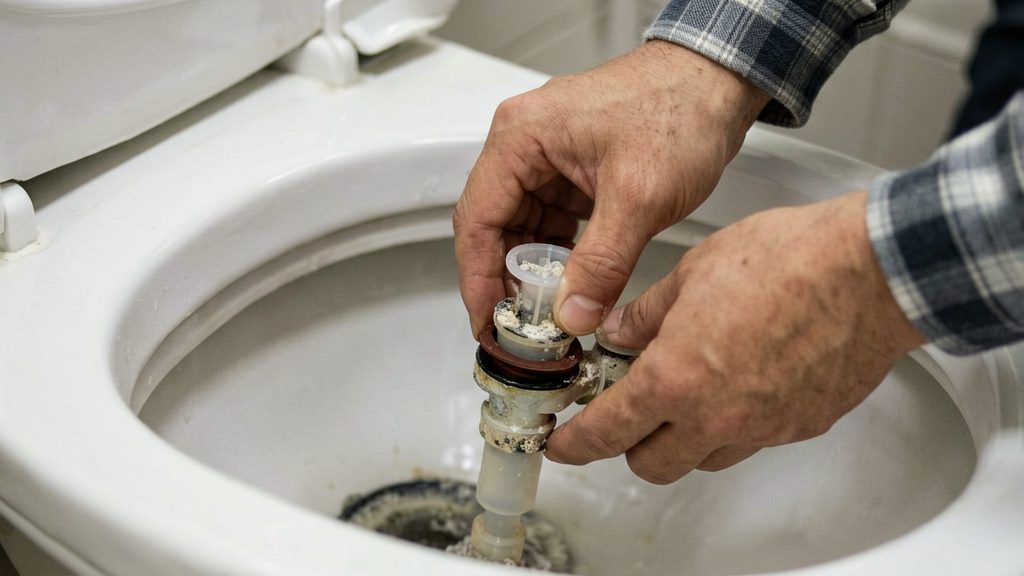
Sediment lodged beneath the fill valve cap can stop the valve from shutting off fully, so the tank keeps refilling and the toilet keeps running.
Cleaning the valve
- Turn off the water supply at the shut-off valve behind the toilet.
- Flush to empty the tank as much as possible.
- Remove the cap on top of the fill valve and clear out any grit or debris beneath it.
- Follow the manufacturer’s instructions to clean the seal and flush debris from inside the valve. If the procedure requires briefly opening the supply with the cap removed, use the specified splash protection, then shut the supply off again before reassembling.
- Turn the water back on and check whether the tank still runs.
Replacing the valve
If the toilet still runs after cleaning, replace the fill valve. Choose the replacement by your model number, which KOHLER specifies as the way to identify the correct part. Confirm compatibility on the packaging before buying.
Check the refill tube position
The refill tube carries water from the fill valve into the overflow tube. Its outlet must sit above the waterline, the level of water in the tank. If the outlet ends below that level, water can siphon out of the tank and into the bowl through the tube. The tank then refills over and over, which shows up as intermittent refilling even when the flapper seals well. KOHLER identifies this hose placement as a cause of a toilet that keeps running.
To check the position:
- Lift the tank lid and look at where the refill tube ends.
- Compare the outlet with the water surface. If it is submerged or below the waterline, correct it.
- Follow the method for your toilet type:
- Non-canister models: Hook the hose onto the overflow tube and secure it with its clip, so the outlet stays above the water.
- Applicable canister models: Reconnect the refill hose to the port at the top of the flush valve, following the manufacturer’s instructions.
- The water should stop flowing into the tube and the tank should stop refilling without interruption.
If the tube is correctly positioned and the toilet still runs, the problem lies elsewhere in the system and needs further troubleshooting.
When should you call a plumber?
A toilet that still runs after you have checked the flush lever, chain, fill valve and tank water level has moved past a typical DIY repair. Call a licensed plumber when the running continues, when water escapes from the supply connections or shutoff valve, or when you see signs of water damage or mold.
Running that continues after troubleshooting
According to the U.S. Environmental Protection Agency, a toilet that runs constantly, will not flush, or continuously sends water into its overflow tube needs further troubleshooting or a local plumber. If a damaged flush valve seat or seal is the cause, replacing the flapper alone will not fix it, so a plumber can assess the valve.
Leaks at supply lines or shutoff valves
A drip where the supply line meets the tank, or at the shutoff valve, is a reason to stop and call. Snugging a loose nut is a limited step. If the valve body, supply line or fitting is cracked or corroded, still leaks after tightening, or does not close fully, a plumber should replace the part.
Signs of water damage or mold
Stop and call if you notice any of the following:
- Staining, soft or lifting flooring around the base of the toilet
- A damp subfloor, or a stained or bulging ceiling below the bathroom
- A persistent musty smell
- Visible mold near the toilet, tank or floor
Hidden moisture can continue after the toilet itself is fixed, so a plumber should trace the source before the area is closed up.
If you rent, tell your landlord or property manager about the running toilet or leak in writing. Repair responsibilities depend on your lease and local rules, so check them before paying for a plumber yourself.