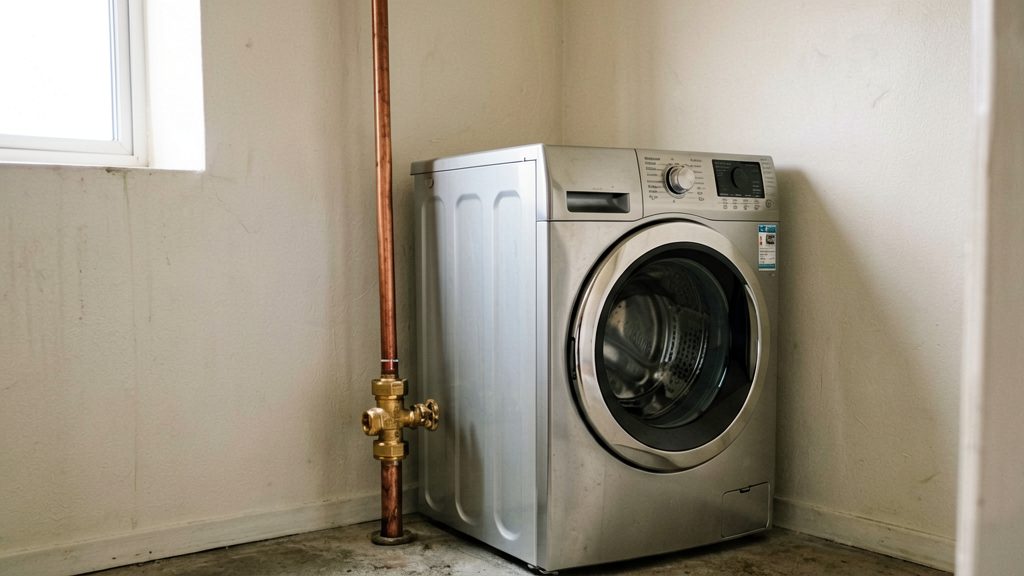
Pipes usually bang when a washing machine stops because of water hammer. The machine’s electric inlet valve closes quickly when filling ends, so the moving water stops abruptly and sends a shock wave through the supply pipes. Oatey attributes washing machine banging to this rapid valve closure. Other causes, including loose pipes, high pressure, sediment in the water heater and partly closed valves, can produce similar noises, so you need to check the timing and source before treating the cause.
Why do pipes bang when the washing machine stops?
Match the bang to the cycle
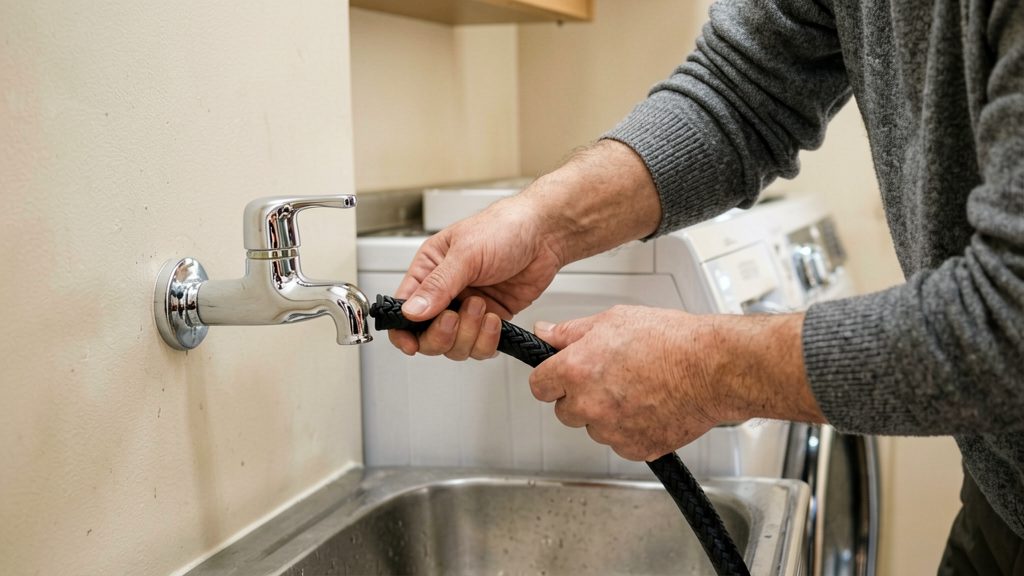
Run one cycle and note when the knock happens. A bang at the moment the machine stops taking in water points to the inlet valve. A rattle that continues through spin or drain suggests a loose pipe or a different problem.
Why the inlet valve is the usual trigger
This Old House lists washing machines and dishwashers among quick-closing valves that cause water hammer. These valves stop the flow abruptly, which sends a shock wave through the pipes, so the bang is often heard at the end of a fill. Oatey’s advice on the cause matches this pattern.
Separate washer knocks from dishwasher and tap noise
- Dishwasher: it also uses a quick-closing valve, so run its cycle separately. A knock at the end of its fill points to the same mechanism at its own supply.
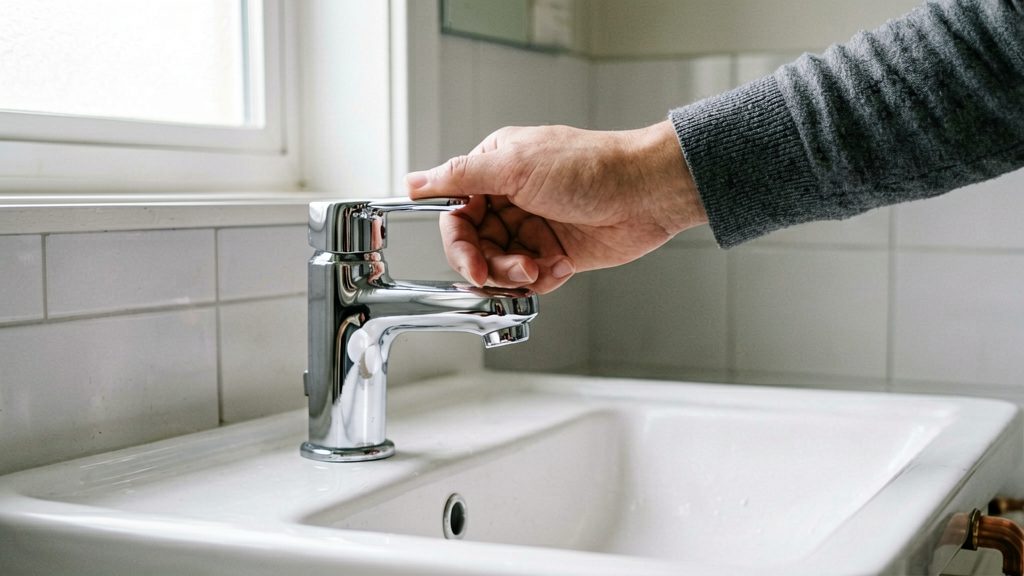
- Tap: closing a tap quickly can cause the same bang. If the noise happens only when you shut a tap, the cause is the tap’s closing action, not the washer.
- Loose pipes: a rattle or buzz during flow, without a sharp bang at shut-off, usually means pipes are knocking against framing.
Reduce the shock
A water hammer arrestor gives the water room to move when the valve shuts. Oatey sells washing machine arrestors that thread onto the supply shut-off valve.
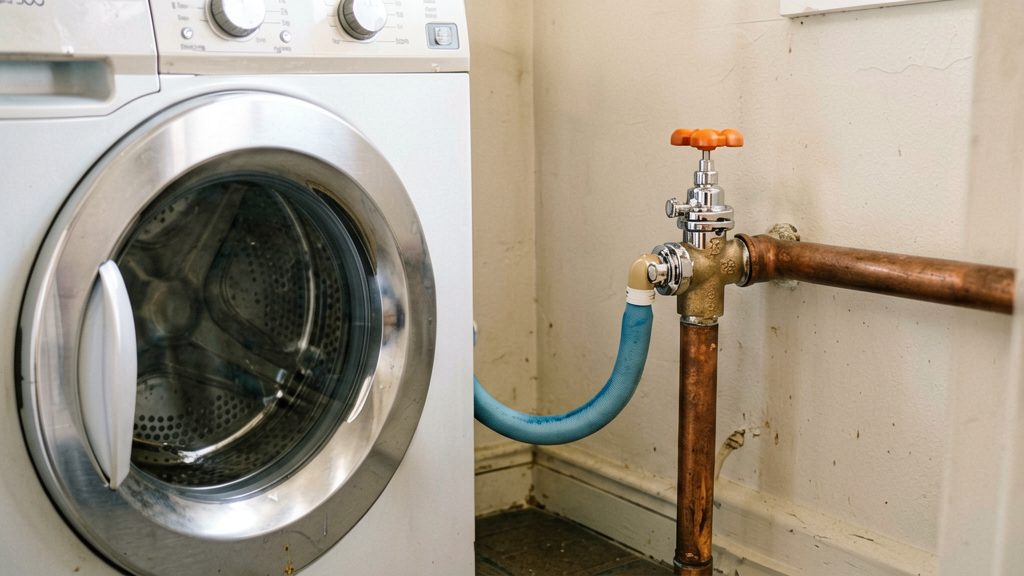
What is water hammer?
Water hammer is the bang or shudder that follows an abrupt stop in water flow. When moving water is halted suddenly, its energy becomes a pressure wave that travels through the pipes.
Pressure spike from abruptly halted flow
According to Oatey, water hammer occurs when water flow suddenly halts, for example when a quick-closing valve shuts. The abrupt stop sends a shock wave through the pipes.
Air pockets as an additional surge source
This Old House also lists air pockets as a separate cause of water hammer, alongside quick-closing valves. A bang that does not coincide with a valve closing may therefore point to air trapped in the supply lines, not only to flow being stopped.
If you install an arrestor, the Oatey comparison is a reason to check which design you are buying.
Quick checks: loose pipes and water pressure
Three checks are worth doing before you buy hardware: pipe support, static pressure, and valve position. According to Oatey, the common causes of banging pipes are loose pipes rattling against framing, pressure above 80 psi, sediment in the water heater, and partly closed valves. These three checks address loose pipes, high pressure and partly closed valves. Sediment in the water heater is a separate issue.
Check the pipe support
Walk the supply lines near the washing machine, under sinks, and along exposed runs. Oatey recommends supporting pipes at least every 16 inches and at every change of direction. Where a pipe touches framing or rattles when you push it, clip it firmly to the framing. A pipe that moves freely in its clips can knock whenever water flow changes.
Measure the static pressure
Static pressure is the pressure in the system when no water is running. Oatey recommends keeping home water pressure between 60 and 80 psi, and using a regulator if pressure is outside that range. To read it, attach a pressure gauge to an outdoor hose tap and note the reading with all indoor taps closed. Readings above 80 psi are a recognised cause of banging. If pressure is too high, This Old House suggests a pressure-reducing valve.
Open any partly closed valves
Oatey lists partly closed valves as a cause of banging pipes. Check the shut-off valves on the washing machine, the sink, and the main supply. Each valve should be fully open, with its handle turned all the way to the open position. A valve left partly closed can restrict flow and contribute to knocking.
How does a water hammer arrestor work?
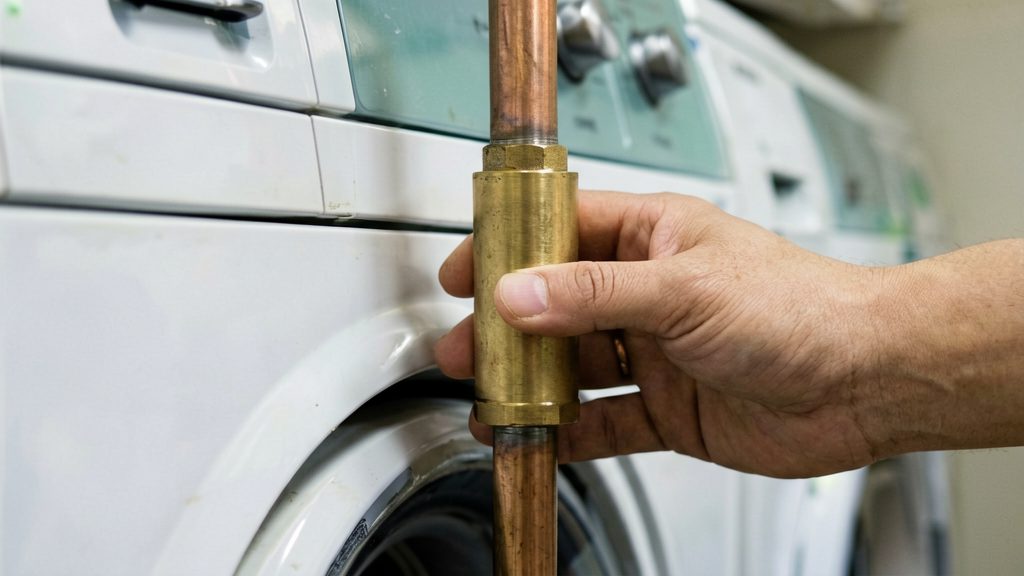
A water hammer arrestor absorbs the shock wave that forms when water flow stops abruptly, for example when a quick-closing washing machine valve shuts. Instead of the water slamming into the closed valve and pipe, the arrestor gives it space to move. Two designs do this in different ways: the sealed piston type and the air chamber type.
Sealed piston chamber absorbing the shock
In a piston-type arrestor, the shock pushes water into a sealed piston chamber, where the piston moves to take up the energy. According to Oatey, these units sit in a sealed chamber and do not lose air or fill with water as air chambers do.
The arrestor only works if the pipe behind it holds still. According to Oatey, the supply pipe must be rigid and securely fastened, or the arrestor only partly absorbs the energy.
Why air chambers lose their cushion
An air chamber uses a column of trapped air as its cushion. According to Oatey, air chambers lose air and fill with water over time. Once the air is gone, there is no cushion left to absorb the shock, and the hammering can return even though the fitting is still installed.
Mounting orientation
Piston-type units can be mounted at any angle, according to Oatey. This helps when the supply line runs in a tight space behind a washing machine.
Oatey also sells versions for CPVC, PEX and copper pipe.
How to install a washing machine arrestor
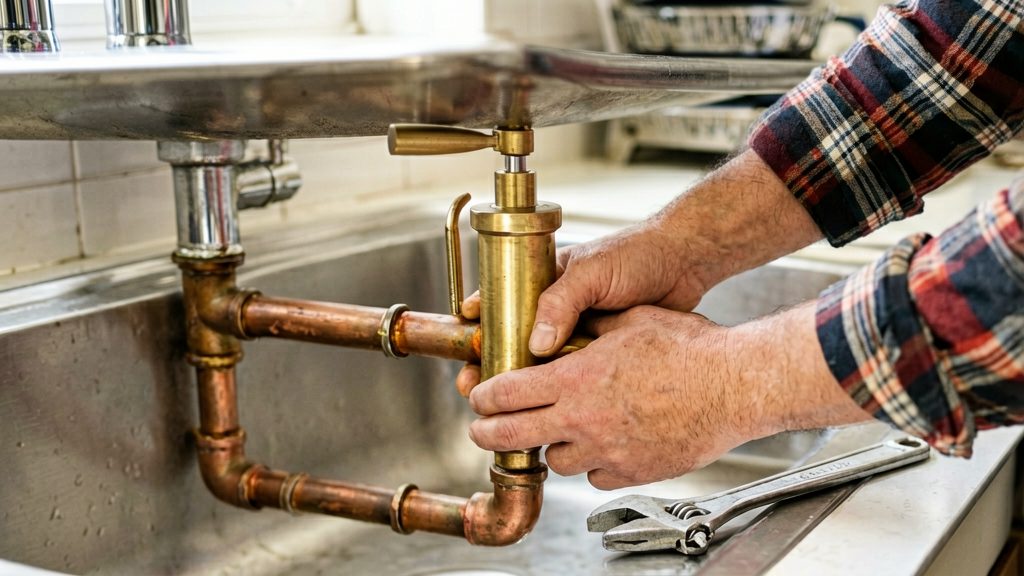
A washing machine arrestor is either a threaded unit that screws onto the washer’s supply valve, or an arrestor fitted into the wall supply lines with T-fittings. The threaded unit is the simpler job. Wall-line installation involves soldering and draining the system, so it suits someone with basic plumbing and soldering skills.
Threaded arrestor on the supply valve
- Hand-tighten the arrestor onto the washer’s supply shut-off valve so the thread engages without force.
- Finish with a wrench, turning only until the connection is snug. Oatey’s instructions call for this approach, not overtightening (Oatey, 2026).
Wall-line arrestors with T-fittings
- Drain the system before cutting or soldering. Close the main supply valve and open a tap to release the water in the lines. Follow the arrestor manufacturer’s instructions for the exact sequence.
- Cut the supply pipe and fit the T-fittings that will carry the arrestor.
- Solder the joints with lead-free solder, as the installation guidance specifies (This Old House, 2026).
- Clip loose pipes securely to the framing.
When should I call a licensed plumber?
Clipping loose pipes and checking water pressure are reasonable DIY steps. Call a licensed plumber if the banging continues after those fixes, if the repair means soldering pipe inside a wall, or if the knocking traces back to the water heater.
Soldering in the wall line
Installing an arrestor in the wall supply lines is rated by This Old House as a moderate-difficulty project. It requires draining the system, soldering T-fittings with lead-free solder, and clipping loose pipes to the framing, so it needs basic plumbing and soldering skills. If you have not soldered before, or the supply line runs inside a wall you would have to open, hire a licensed plumber.
Oatey’s washing machine arrestors avoid soldering altogether, so they are a practical DIY option where the valve is accessible.
Banging that persists
If the banging continues after you have secured the pipes and checked pressure, a licensed plumber should inspect the system.
| Symptom | First step | Call a plumber if |
|---|---|---|
| Pipes rattle against framing | Clip loose pipes to the framing | Clips or pipes are inside a wall you cannot reach without soldering |
| Banging with high pressure | Check pressure against the 60 to 80 psi range | Pressure stays above 80 psi after checking |
| Knocking from the water heater | Confirm the sound comes from the heater | Sediment is suspected |
Knocking traced to water heater sediment
Oatey lists sediment in the water heater as a cause of knocking. If the knocking comes from the water heater, have a licensed plumber inspect it. Sediment is the likely cause, and the plumber can deal with it. Do not treat this as a pipe-clipping problem, because clipping pipes will not remove the source.