Hair is the main cause of shower drain clogs, according to Mr. Rooter Plumbing (Canada) (2026). Blockages rarely form from a single shower. Strands catch on the inside of the pipe, soap residue and dirt bind them together, and the plug grows until water drains slowly or stops. This sequence explains why a drain can run slowly for a while and then back up suddenly.
Why do shower drains clog with hair?
How hair snags inside the pipe
Hair snags on pipe walls, so a strand that enters the drain stays in place instead of washing through. Rough spots give it a grip. Where pipe sections meet, small ledges or uneven joints can catch a strand and hold it against the wall, and the next strand catches on it.
How soap scum and dirt turn hair into mats
Once hair is caught, soap scum and dirt stick to it and bind the strands together. The result is a dense, sticky hair mat rather than loose hair. A mat is harder to flush than individual strands because the residue holds it to the pipe wall and the fibres hold each other.
How the blockage builds over repeated showers
Each shower adds more hair and residue to the layer already in the pipe. The mat grows gradually, narrowing the space water can pass through, so the drain slows before it stops. Clearing a partial blockage early keeps the mat small.
Choose a method by how deep the clog sits and what the pipes are made of.
| Method | Best for | Precautions |
|---|---|---|
| Tweezers | Shallow clogs just under the stopper; remove the stopper with a screwdriver first | Work only where the hair is visible near the opening |
| Drain snake or zip-it tool | Deep or stubborn clogs: push it in, then pull out the trapped hair | Wear gloves if you used a chemical cleaner first |
| Plunger | First step with old pipes, before forcing a snake | Escalate slowly rather than forcing the snake |
| Chemical drain cleaner | Not a reliable first choice; it may not clear the clog | Corrosive; can sit in the pipe and corrode it, injure later workers, and harm septic systems |
What you need before you start
Gather a hair snake, gloves, safety goggles, towels or rags, a bucket, and a flathead screwdriver before you open the drain. Most of the work is done with the snake. The other items protect you, keep the area around the drain manageable, and help you remove a stuck cover, so having them ready avoids stopping partway through.
- Hair snake or zip-it tool: A thin, flexible tool that grabs the hair and soap scum that catch on the pipe wall. A snake or zip-it suits deep or stubborn clogs.
- Gloves and safety goggles: Recommended protection when working inside a drain. This Old House (2026) lists both among the basic gear.
- Towels or rags: Keep them within reach to wipe up water and debris around the drain.
- Bucket: Place it under or beside the drain to catch what comes out. This Old House (2026) includes it in the recommended supplies.
- Flathead screwdriver: Needed if the drain cover is stuck.
Choose a snake long enough to reach the clog. A small hand snake may not reach a blockage deep in the main line (This Old House, 2026), so a short tool suits only clogs close to the drain opening, while a longer snake is needed when water backs up from further down.
How to use a hair snake step by step
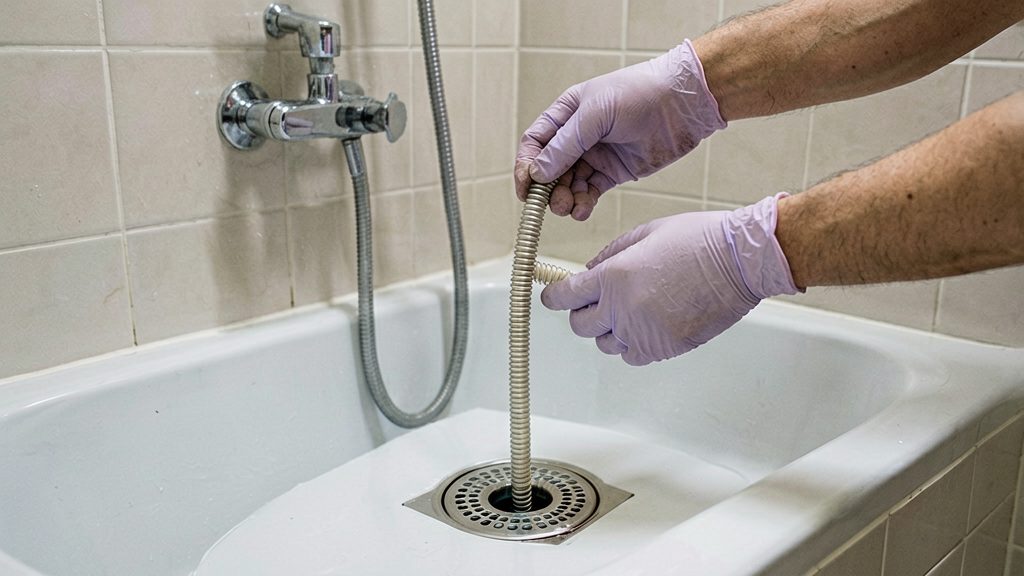
Snaking a shower drain follows a fixed sequence: open the drain, feed the snake in, work the clog, withdraw the snake, then check the flow. This Old House (2026) describes the same steps for shower drains.
- Remove the drain cover. Lift off the cover or stopper. If it is stuck, pry it gently with a flathead screwdriver.
- Feed the snake in while turning clockwise. Push the cable into the drain opening and turn the handle clockwise. Keep feeding until you meet resistance, which means the tip has reached the clog (This Old House, 2026).
- Work the clog. Move the snake back and forth at the point of resistance until the clog breaks up (This Old House, 2026).
- Retract while still turning. Once the clog gives way, pull the snake out slowly and keep turning clockwise the whole time (This Old House, 2026).
- Clear the debris. Remove the hair and sludge from the cable and wipe it clean before the next use.
- Run a flow test. Run hot water down the drain to check that it empties freely (This Old House, 2026). If water still backs up, the clog may be beyond the reach of a hand snake, and a licensed plumber is the next step (This Old House, 2026).
What if the hair snake doesn’t reach the clog?
When a snake stalls or does not clear the drain, check whether hair is visible just under the stopper, which tweezers can reach. If nothing is visible near the opening, or water still backs up, the clog may be deeper than a hand snake can reach and a licensed plumber is the next step.
Removing the stopper first
Most fallback methods require the cover off. Once the cover is off, check whether hair is caught on the underside or on the stopper itself, and clear that before going further.
Tweezers for a shallow clog
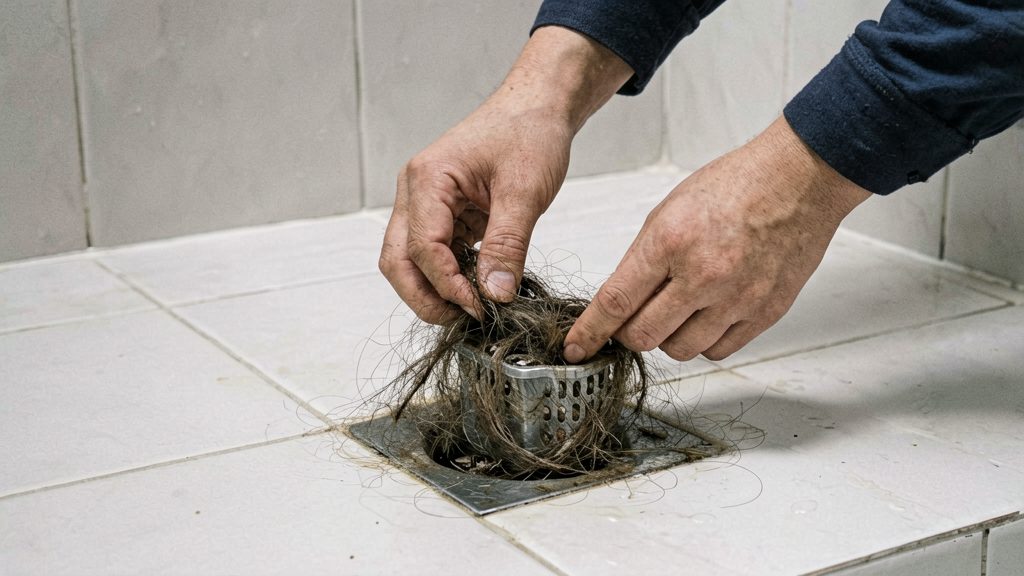
Tweezers work for a shallow clog sitting just under the stopper, after the stopper has been removed with a screwdriver (Mr. Rooter Plumbing (Canada), 2026). Use a flashlight to look down the opening, then grip the visible hair and pull it out in small amounts. Stop when the water starts to drain freely, then run hot water to confirm the drain is clear.
Using the bathtub overflow route
For a bathtub, remove the overflow plate and feed the snake through the overflow opening. This route bypasses the trap and reaches the main drainpipe (This Old House, 2026). Feed the snake slowly, working it back and forth until it meets resistance, then withdraw it carefully and pull out the hair it has brought with it. If the plate is held by screws, keep them in a container so they are not lost while the plate is off.
Are chemical drain cleaners safe for your pipes?
Not reliably. Chemical drain cleaners are corrosive, may not clear a hair clog at all, and carry risks for the pipes themselves, for anyone who opens the drain later, and for septic systems.
Corrosion from repeated use
Drain cleaner is corrosive, and overuse can damage pipes over time, according to Mr. Rooter Plumbing (Canada, 2026). Reaching for a bottle each time a shower slows down adds wear to the same pipe walls, which is the reason to try mechanical methods first.
Caustic liquid left in the pipe
Chemical cleaners can sit in the pipe, where they corrode it and can injure people who work on the drain afterwards, according to This Old House (2026). The product stays in the trap and drainpipe, so a plumber or homeowner who opens the drain later may be exposed to it.
Septic systems
Chemical drain cleaners can harm septic systems, according to This Old House (2026). Households with a septic tank should avoid using them as a routine fix.
How do you keep hair out of the drain?
A mesh drain cover or hair catcher catches hair before it reaches the pipe, where it would otherwise snag on the walls and trap soap and dirt. Keeping the catcher clear and watching for early slow drainage are the two habits that make this prevention work.
Mesh drain covers and hair catchers
Place a mesh drain cover or hair catcher over the shower outlet so hair is caught at the surface rather than travelling into the drain. Check that the cover matches your drain opening before buying, since a loose fit lets hair slip around the edges.
Emptying the catcher after each shower
Empty the catcher after every shower, not only when the water starts to slow. Hair left sitting in a full catcher stops being a barrier, and the water then carries lighter hair and debris past it.
Spotting slow drainage early
Water that lingers around your feet or takes longer to clear after a shower is the first sign that hair is building up. Other warning signs include:
- foul odours from the drain
- gurgling sounds when water runs
- water backing up into the shower or tub
- several drains slowing or clogging at the same time
When to call a licensed plumber
A hand snake clears a single, reachable blockage in a shower. When the drain still backs up after a proper attempt, the blockage is likely beyond what the tool can reach, and a licensed plumber should take over.
Call a professional when you see any of these signs:
- Persistent clogs: the drain blocks again soon after you have removed the hair. This Old House (2026) lists persistent clogs as a reason to call a professional.
- Several drains backing up: a shower and a sink, or a tub and a toilet, clog at the same time. This points to the shared drain line rather than the single trap you are working on.
- Foul odours or gurgling: these signal a problem beyond the drain you are clearing. This Old House (2026) lists both as reasons to call a professional.
- Water backing up in sinks or tubs: standing water rising in a fixture after you have cleared it means the blockage is not local.
Old pipework calls for extra caution. If you suspect older or damaged pipes, ask a licensed plumber to inspect the line, particularly when a clog persists after the drain has been cleared.
Frequently asked questions
Can I use the same hair snake on more than one drain?
Yes, but clean the cable thoroughly after each drain so hair from one drain does not carry into the next. Wipe off all hair and sludge before using it elsewhere.
What should I do with the hair and sludge I pull out?
Bag it and put it in the household bin. Do not rinse it down another sink, shower or toilet, where it can build up into a new blockage.
Do I need to tell my landlord if my shower drain keeps clogging?
Check your tenancy agreement for who handles drain maintenance and how to report faults. If the clog returns after you have cleared it, report it in writing, because repeated blockages can signal a wider drain problem that a licensed plumber should inspect.