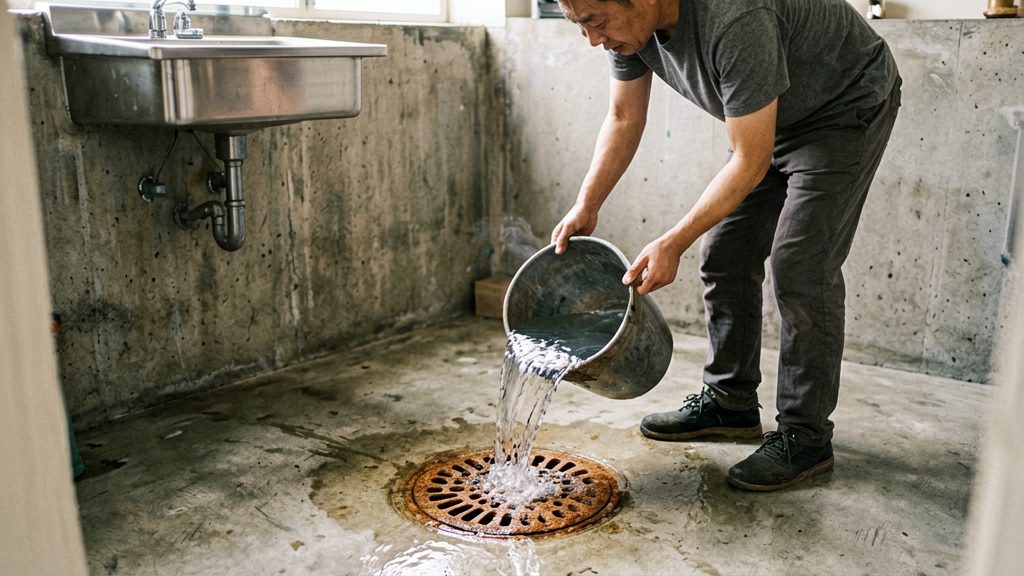
Floor drains smell like sewer gas when the water seal in their trap is low, missing, or no longer blocking the drain line. The seal is a column of standing water that stops gas from rising through the drain opening into the room. Floor drains are most exposed because they sit at floor level and are often used only occasionally. According to a 2015 US trade article, the water-seal trap requirement has been in plumbing codes for almost 100 years.
Why does a floor drain smell like sewer gas?
How the water seal blocks odours
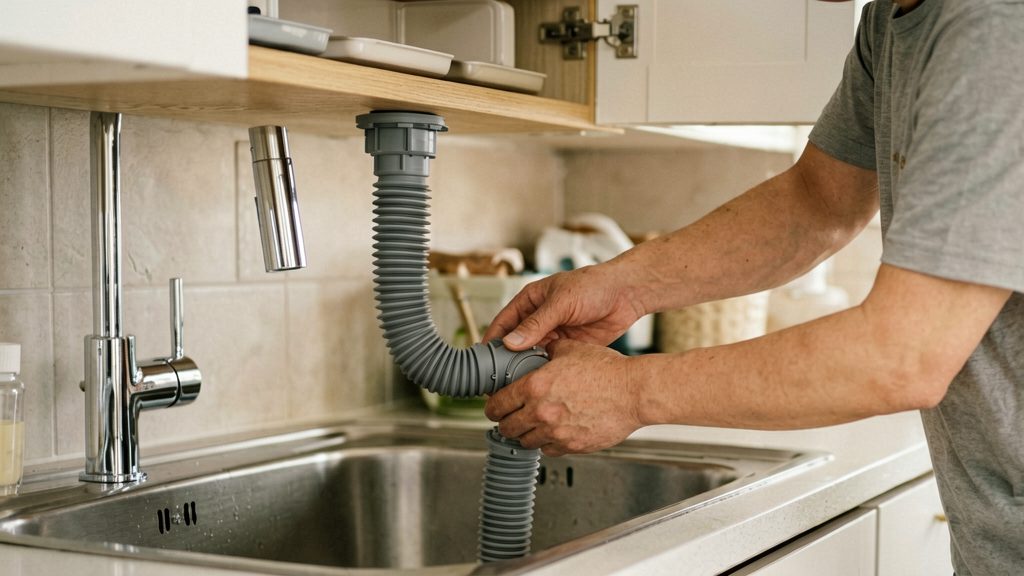
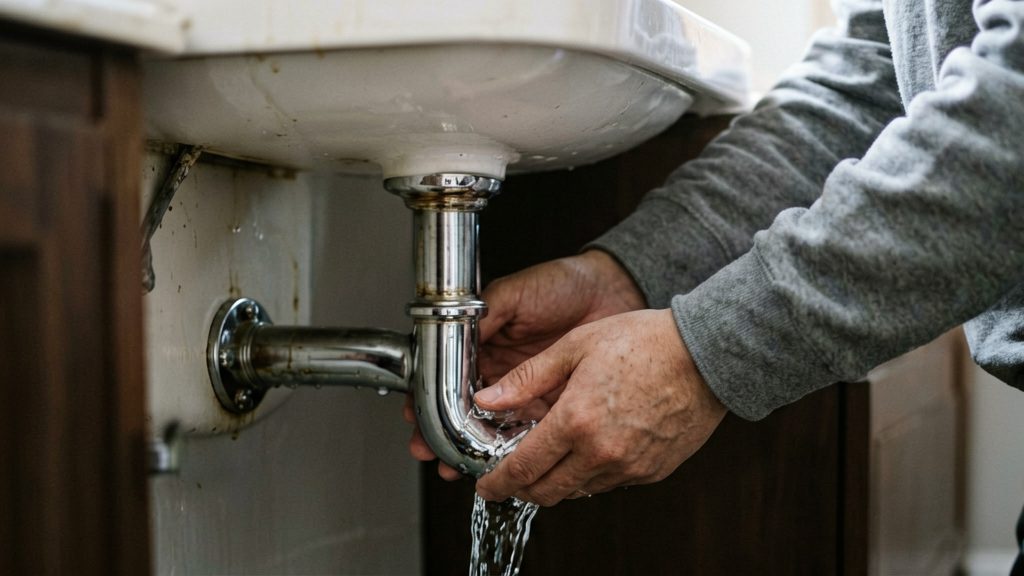
A P-trap is a U-shaped bend in the drain pipe. When the drain is idle, water stays in the bend, and that water is the water seal. Sewer gas travels through the drain network but cannot pass the water in the bend, so the smell stays in the pipes.
Each time water runs down the drain, the flow carries the water through and the bend is left holding water again once the flow stops. The seal is restored after each use, which is why a drain that is used regularly rarely smells.
Check your local plumbing code for the exact seal depth.
Why basements and laundry rooms are most exposed
Floor drains in basements and laundry rooms are often used only for occasional washing machine overflow or floor cleaning. Over time, the water in a rarely used drain can evaporate, as Oatey (2026) notes, which removes the seal and lets gas through. Because these drains are easy to overlook, the smell can appear before anyone notices the seal is gone.
Dry trap: the usual cause
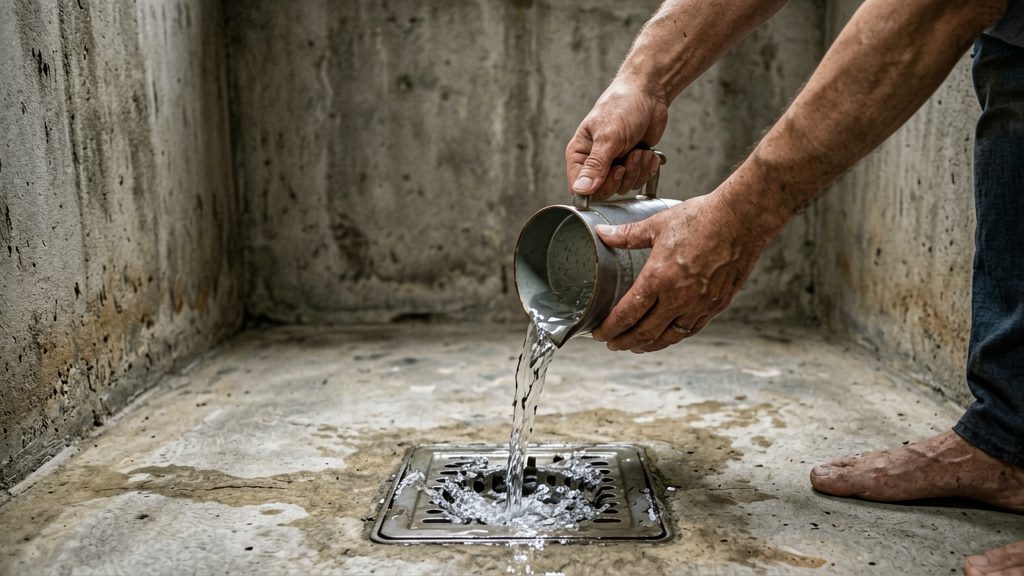
According to Oatey (2026), the most common cause of a sewer gas smell at a floor drain is a dry P-trap. The water seal evaporates in drains that are rarely used, such as those in basements or laundry areas, and this opens a path for gas to rise into the room.
Why rarely used drains lose their seal
The seal is the standing water held in the bend of the trap, as described above. Water only stays in the bend because it is not drained out by use, and in a drain that is used rarely, nothing replaces the water that evaporates. Over time the seal disappears and the trap stops blocking gas.
How to check the trap for standing water
- Shine a torch into the drain opening and look for water in the bend. Do not lean over an open drain when the smell is strong.
- Compare the water level with the depth reference. According to Plumbing & Mechanical (2015, a US trade magazine), a floor drain trap seal should be 2 to 4 inches (about 50 to 100 mm) of water. The requirement under the National Plumbing Code of Canada has not been verified, so check with your local building authority or a licensed plumber. Local code requirements can differ, so check with your local building authority if you need the exact rule for your home.
-
- If no water is visible, the dry trap is the likely cause. If water is present but the smell continues, the cause may lie elsewhere (no trap, vent, cleanout or sewer line), so do not assume the drain is fine and see the next section.
Recognising a dry trap by its smell pattern
A dry trap usually produces a recognisable pattern:
- The smell is strongest at a floor drain or other drain that sees little use, not at sinks used every day.
- The smell appears or grows after the room has been unused for a while, for example after a holiday or in a seasonal home.
- The smell seems to come up from the floor drain itself rather than from a fixture that is in regular use.
A smell that persists even when the trap holds water points to a different source and needs a separate diagnosis.
Other causes to rule out
If the trap still holds water, the smell is probably entering from another point in the system. Other causes include a drain installed with no trap (InspectApedia), a blocked or broken sewer line, and a blocked or damaged vent (Oatey). Oatey also lists a toilet flange set too low or an unevenly compressed wax ring.
Floor drains installed without a trap
Some basement floor drains have no trap at all, so nothing holds a water seal against sewer gas. Adding water will not fix this. To check, remove the grate and look at the pipe directly below the opening. If there is no bend that could hold water, the drain is trapless and needs a plumber to fit a trap.
Blocked or broken sewer lines
A blockage or crack in the main sewer line, including cracked under-slab drain lines, can let gas travel back up through the drains. A plumber is needed for a broken line, and also when the smell persists after you have tried simple fixes.
Check the cleanout plug too. A missing or open cleanout cover lets gas escape without passing through any water trap, a common result after a sewer cleaning. Replace the plug or cap and make sure it is tight.
Blocked or damaged vent pipes
Vents carry sewer gas out of the drainage system. When a vent pipe is blocked, damaged or disconnected, gas has no safe exit and can find its way into the house through floor drains. Check the visible part of the vent for obvious damage or blockage, such as debris or nests at the top. Vents run through the roof and wall spaces, so a plumber is usually needed for a full inspection.
How to fix a dry floor drain
When a floor drain smells, the usual fix is to put water back in the trap. The P-trap is the curved section of pipe under the drain that holds a small pool of water, and that water is the only barrier between the room and the sewer. Once it evaporates, gas has a direct path up through the grate.
Refilling the trap by hand
- Remove the drain grate or strainer if it lifts out, so you can reach the opening.
-
- Pour about 4 litres of water (roughly 1 US gallon) slowly into the drain. Water poured quickly may not fill the trap if air is trapped behind it, so pour in steady stages. Water poured quickly may not fill the trap if air is trapped behind it, so pour in steady stages.
- Check that the water level sits high enough to cover the trap’s outlet bend. Wait a few minutes and smell the drain again.
- Replace the grate.
Oatey (2026), a US manufacturer, recommends roughly 4 litres (1 US gallon) of water monthly for rarely used drains. This interval is a commercial recommendation, not a standard, so refill more often if the smell returns.
Sealing drains for seasonal use
For a home or drain that sits unused for long periods, water alone may evaporate too quickly. Oatey (2026) suggests adding 1 to 2 tablespoons (15 to 30 mL) of mineral oil to slow evaporation. InspectApedia gives a larger figure, about 3/4 cup (about 180 mL). The sources disagree, possibly because of trap size, but this is unconfirmed, so follow the product or plumber’s instructions. Check the size of your trap before choosing a quantity. Mineral oil floats on the water and is said to reduce evaporation, so the seal should last longer than water alone, although no source gives a measured duration.
Keeping track of unused drains
Floor drains are easy to forget. Make a simple list of every floor drain in the home, noting which ones are used daily and which are not. Add a monthly reminder for the rarely used ones, and mark the date you last refilled each trap. Basement drains and drains in spare rooms are the most common candidates.
Water, oil or trap seal: which lasts longest?
Water refill is the cheapest way to keep a trap sealed, but it has to be repeated because evaporation empties the trap. A one-way valve seal blocks gas from rising through the drain and is sized to the pipe. Trap primers, which refill the trap automatically, are another option for a plumber to fit. Choose based on how often the drain is used and whether you can repeat the refill. The available data gives no measured lifespan for any of the three, so check the product label or manufacturer’s instructions for how long a given seal holds.
| Option | How it keeps the trap sealed | Stated limits |
|---|---|---|
| Water refill | Replaces water lost to evaporation | Must be repeated. Oatey suggests about 1 gallon monthly, a commercial recommendation rather than a fixed standard. |
| Mineral oil | Forms a film on the water that slows evaporation | — |
| One-way valve seal | Blocks gas flow up the drain | Must match the pipe: 2-inch or 3-inch. |
One-way valve sizes. Oatey lists one-way-valve drain seals for 2-inch and 3-inch pipes. Measure the drain pipe’s diameter before buying, and follow the fitting instructions for that size.
Permanent option. If a drain must stay usable, InspectApedia describes a check-valve or self-priming trap fitted by a plumber as the costliest choice. It is a job for a licensed plumber rather than a DIY seal.
Is sewer gas dangerous?
Sewer gas can make people feel unwell, and in some situations it needs immediate action. According to Oatey (2026), it contains hydrogen sulfide, methane and ammonia, and can cause headaches, nausea, dizziness and respiratory irritation. Sources disagree on the health risk at household concentrations, and no official Canadian health guidance was consulted. Treat any symptoms as a reason to ventilate and act now rather than wait. Severe symptoms need urgent medical help, as described below.
Symptoms to watch for
- Headaches
- Nausea
- Dizziness
- Respiratory irritation, such as throat or chest discomfort
When to treat it as an emergency
Two situations need immediate action, not a repair plan:
- Suspected natural gas: if the smell could be natural gas rather than sewer gas, leave the building and call the gas utility from outside. Oatey (2026) gives this advice.
- Severe symptoms: breathing difficulty, marked dizziness or confusion need urgent medical help or a call to emergency services, according to Oatey (2026).
Sewer gas also contains methane, which InspectApedia notes is explosive. While the smell persists, keep open flames and sparks away from the drain.
Ventilating while the source is fixed
Ventilate the home and fix the source promptly, as Oatey (2026) advises. In practice:
- Open windows and run any extractor fan to move air out of the affected room.
- Ventilate the room well and stay out of it while the smell is strong.
- Repair the cause, such as a dry trap, rather than only managing the smell.
When to call a licensed plumber?
A homeowner fix is usually enough when the smell comes from a dry trap that holds its water again after a refill. Call a licensed plumber when the odor persists after that refill, or when it keeps returning even though the drain is used normally.
Persistent odor after refilling the trap
Refill the trap and check the drain again. If the odor remains once the trap seal is restored, the gas is entering elsewhere. A cracked under-slab drain line is one cause listed by InspectApedia, and a plumber can check the connection.
Recurring odor and camera inspection
If the smell returns after every refill, the cause is usually in the drain line rather than the trap. Mr. Rooter Plumbing of Toronto (2026) states that a broken sewer line requires a plumber. The plumber can run a camera inspection down the pipe to locate cracks, blockages or a displaced section. Mr. Rooter also names two causes a homeowner may be able to rule out first:
- A cleanout plug left out after a sewer cleaning, which lets gas escape without passing through a water trap.
- A worn wax ring or missing caulk at the toilet base, if the smell is near the toilet.
Details to prepare for the plumber’s visit
Writing these details down before the visit shortens the diagnosis:
- Which drain smells, and whether it has a trap at all
- When the smell is strongest
- The date of the last refill and how much water was added
- Whether a cleanout cover is open or missing, and whether a sewer cleaning took place recently
- The condition of the toilet base seal, if the smell is near a toilet