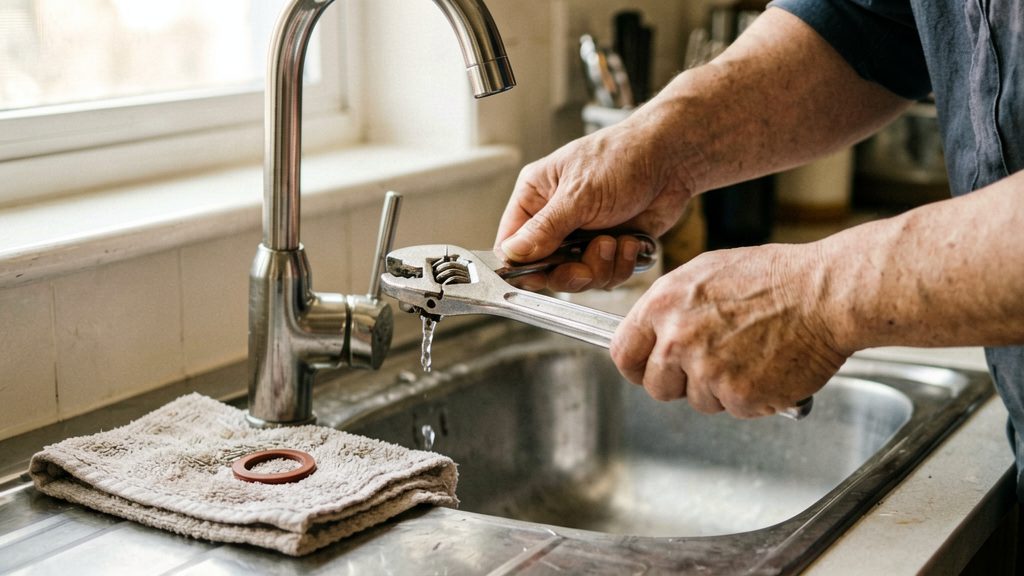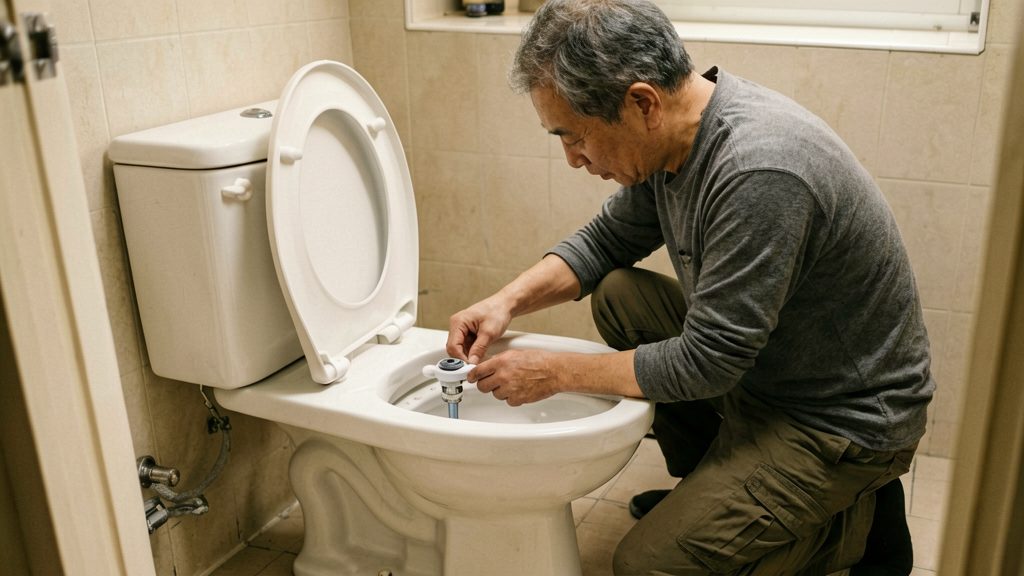
A worn tap cartridge often shows up as dripping with the handle closed, a stiff or sticky handle, or erratic flow or temperature. These signs suggest the cartridge but do not prove it, because scale, worn O-rings or a damaged valve seat can cause the same symptoms. Check the other taps in the home before concluding the cartridge is the cause.
Signs your tap cartridge is failing
- Dripping with the handle fully closed. Water keeps coming through after the handle has been turned as far as it goes. Persistent dripping of this kind is listed among the main warning signs of a failing cartridge (Mr. Rooter Plumbing, 2026).
- A stiff or sticky handle. The handle is hard to turn, resists partway through its travel, or sticks. Related warning signs include squeaking or grinding noises when the handle moves (FaucetFam).
- Erratic flow or temperature, or no water. The temperature or flow changes unpredictably when the handle moves, or the tap delivers little or nothing. Some cartridge failures end with no water at all (Mr. Rooter Plumbing, 2026).
Cartridges are often described as lasting about 5 to 10 years, depending on water quality and use (FaucetFam). This range comes from a single faucet-parts blog rather than a manufacturer or official body, so treat it as an indication only.
The table lists the warning signs that a faucet cartridge may need replacing, with the source for each. The sources are one Canadian plumbing company (Mr. Rooter Plumbing, Scarborough) and one faucet-parts blog (FaucetFam). FaucetFam is a faucet-parts blog, not a manufacturer or official body.
| Warning sign | Source |
|---|---|
| Dripping when the handle is off, even when turned tightly | Mr. Rooter Plumbing (Scarborough, Canada, 2026); FaucetFam |
| Sticky or hard-to-turn handle | Mr. Rooter Plumbing (Scarborough, Canada, 2026); FaucetFam |
| Hard-to-control water flow or temperature | Mr. Rooter Plumbing (Scarborough, Canada, 2026); FaucetFam |
| No water at all | Mr. Rooter Plumbing (Scarborough, Canada, 2026) |
| Inconsistent pressure | FaucetFam |
| Squeaking or grinding noises | FaucetFam |
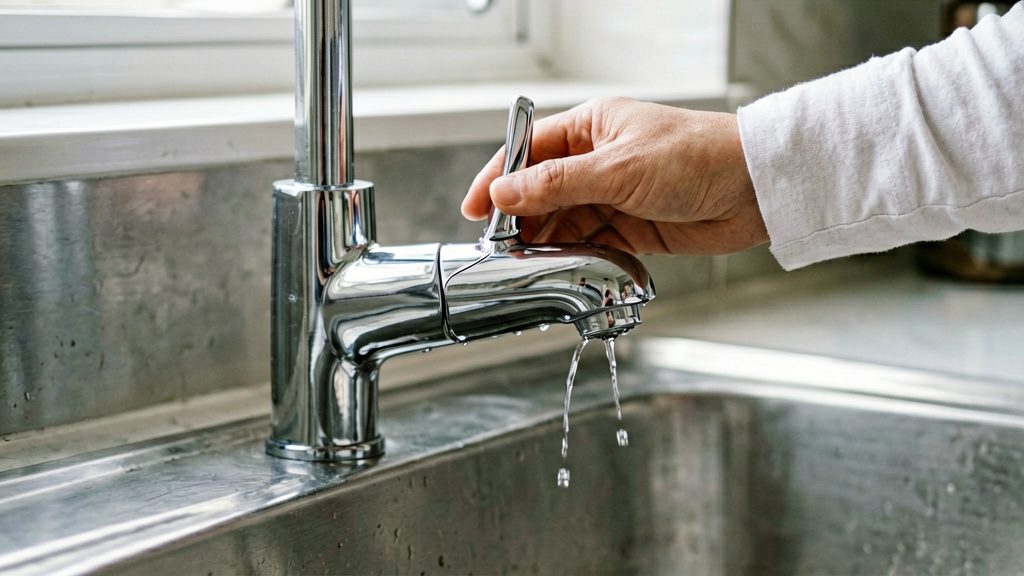
Is it the cartridge or just an O-ring?
On a cartridge faucet, a leak usually comes from a worn O-ring or a failed cartridge. Bob Vila notes that replacing the O-rings often fixes the leak, so start there. If the leak continues, or you are not confident working on the internals, replace the whole cartridge.
Spout leak or base leak
Bob Vila states that leaks can come from the spout or from the base of the fixture. Note where the water escapes: from the spout outlet, or from the base where the spout meets the body. The location shows where to inspect first, but it does not prove which part has failed.
Signs the cartridge has failed
If a leak comes with a stiff handle or erratic flow, the cartridge may be involved as well as the O-rings, but scale can cause the same symptoms, so inspect the parts before deciding.
Inspecting and replacing the O-rings
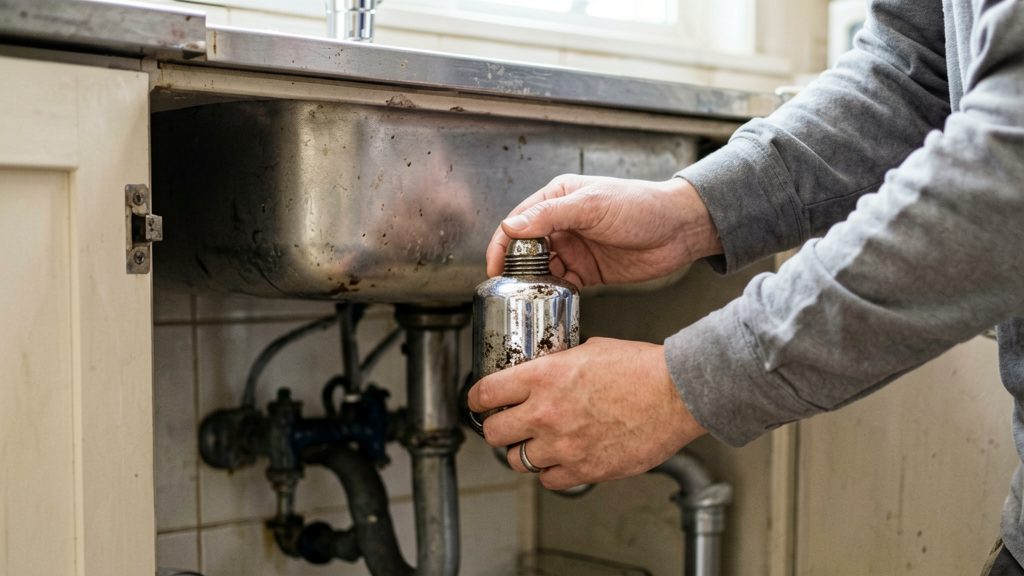
- Pull the retaining clip and lift the cartridge out. Block the drain first so small parts cannot fall into it (Bob Vila).
- Inspect the O-rings and the cartridge body. Look for rubber that is flattened, cracked or torn, and for mineral deposits.
- Fit new O-rings, or buy a replacement cartridge.
Washerless faucet types
Bob Vila identifies three washerless faucet types: cartridge, ball and ceramic-disk. The O-ring and cartridge inspection above applies to cartridge faucets. Check the manufacturer’s instructions for your model before opening a ball or ceramic-disk faucet.
When to call a licensed plumber
Consider a licensed plumber if you have little plumbing experience, or if the fixture keeps needing cartridge replacements.
How long does a tap cartridge last?
A tap cartridge typically lasts about 5 to 10 years, according to FaucetFam, a faucet-parts blog. This is an indicative range, not a manufacturer specification or an official figure, so treat it as a rough guide rather than a schedule for replacement.
Actual service life depends mainly on water quality and how much the tap is used. A cartridge in a busy kitchen tap that runs many times a day will generally wear sooner than one in a rarely used guest bathroom. Because the range is tied to these conditions, a cartridge at the short end of it is not necessarily faulty.
Why is my tap dripping when the handle is off?
A tap drips with the handle closed when water still gets past the sealing surfaces inside the valve. Those surfaces are the cartridge’s internal seals, the ceramic disc faces in ceramic-disc models, and the valve seat inside the spout body. Three internal causes are common behind these leaks, and more than one can be present at the same time.
Debris lodged in the cartridge or valve seat
Grit and mineral particles can catch between the moving parts and the seat, so the valve cannot close fully. According to Mr. Rooter Plumbing (2026), hard water speeds up mineral buildup and cartridge wear, so debris is a more likely internal cause where water is hard. The same source notes that regular cleaning of the cartridge and valve area extends the cartridge’s life.
Worn internal seals and ceramic disc surfaces
The internal seals are elastic parts that press against the body to stop flow. Over time they can lose their elasticity and stop sealing. Ceramic-disc valves depend on two ceramic discs sliding over each other. Scratches or mineral deposits on either disc face let water through even when the handle is closed. Identifying your faucet type tells you which internal parts to inspect.
Worn valve seat inside the spout body
The valve seat is the surface that the cartridge or disc closes against. If it is pitted, scored or coated with scale, the valve may keep leaking even when the cartridge is in good condition. This means a new cartridge does not always stop a drip. Inspect the seat for roughness or deposits when you remove the cartridge.
How hard water wears out cartridges
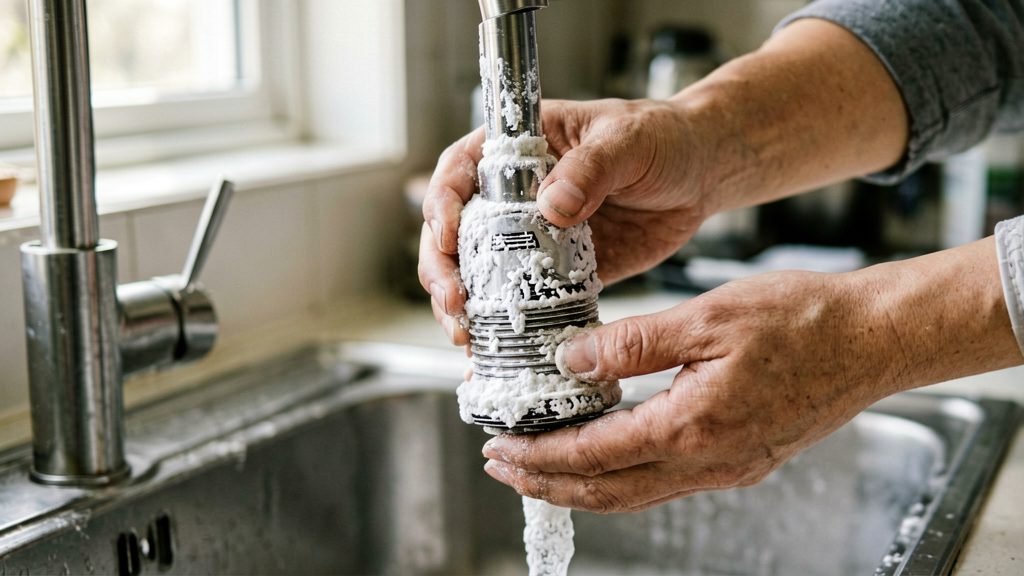
Hard water leaves mineral buildup inside the faucet body and on the cartridge’s moving parts. According to Mr. Rooter Plumbing (2026), that buildup speeds up cartridge wear. Scale can stiffen the handle, stop the cartridge from sealing, and cause the same drips and erratic flow that a worn cartridge produces, so a stiff or dripping tap in a hard-water area may be scale rather than simple wear.
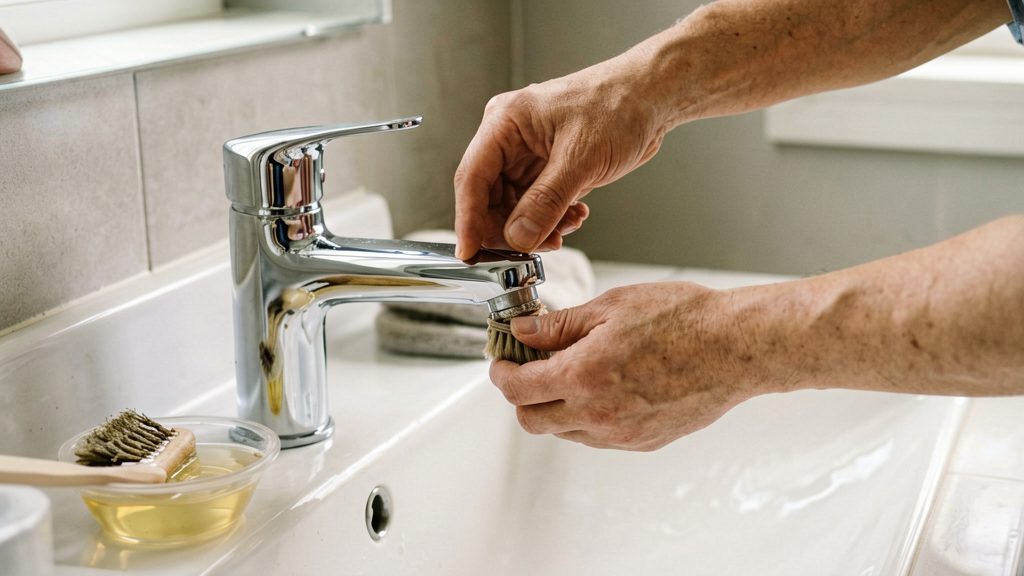
Cleaning the cartridge and valve area
According to Mr. Rooter Plumbing (2026), regularly cleaning the cartridge and valve area extends the cartridge’s life. Once the cartridge is out of the body:
- Rinse it under running water to remove loose grit.
- Clean the valve seat and the inside of the faucet body with a soft brush.
- If scale remains, use a descaling product suited to your fixture’s finish, and follow the label’s contact time and rinsing instructions.
- Check the O-rings while the parts are apart.
When to replace the whole fixture
If an older fixture needs frequent cartridge replacements, replacing the whole fixture may be more cost-effective, according to Mr. Rooter Plumbing (2026). The source does not define how many repairs count as frequent, so track how often the same tap needs a new cartridge. If repairs keep recurring, compare the cost of another cartridge with the price of a new fixture. This is one company’s guidance, not an official standard.
How to replace a cartridge safely
Isolating the water before you touch the cartridge keeps the line from spilling under the sink. The steps below follow the method described by Bob Vila.
Isolate the water
- Under the sink, close both the hot and cold shut-off valves by turning them clockwise.
- Open the faucet and let the remaining water drain from the line.
Protect the drain
Block the sink drain with a stopper or a cloth before removing any parts. This catches small components that could otherwise fall into the trap.
Remove the old cartridge
Pull out the retaining clip that holds the cartridge in place, then lift the cartridge out. Keep the clip with the old cartridge so you can compare them with the replacement.
Match the replacement to the faucet
Buy a cartridge that matches your faucet model. Bring the old cartridge to the store, or note the brand and model number, which are usually printed on the fixture or listed in its manual. Check the product label or the manufacturer’s instructions before you buy.
When should you call a licensed plumber?
A cartridge swap is a reasonable homeowner job when you can confirm the cartridge is the fault and identify the right part. Call a licensed plumber when you are unsure of the cause, when the work must meet local plumbing code, or when the cartridge is not the only problem.
When the diagnosis is uncertain
Several other faults can produce similar symptoms. If the problem does not clearly fit the pattern described, or you cannot tell whether the cartridge is responsible, get a diagnosis before you buy parts or take anything apart.
Part identification is the other common stumbling block. A plumber can confirm the faucet type and the correct replacement.
When the work must meet local code
Replacing a cartridge is mainly a parts job, but it involves the supply lines and valves around the fixture. Mr. Rooter Plumbing (2026) states that a licensed plumber can install the correct part to code, which is especially useful for people with little plumbing experience. Plumbing rules vary by municipality, so confirm the requirements with your local building authority before altering supply connections or valves.
When the cartridge is not the only fault
If a fixture needs repeated cartridge replacements, the cause may lie elsewhere. Two patterns point to a deeper fault: the same symptoms return shortly after a fresh cartridge is fitted, or similar problems appear at several fixtures on the same supply. Either pattern justifies a professional inspection.