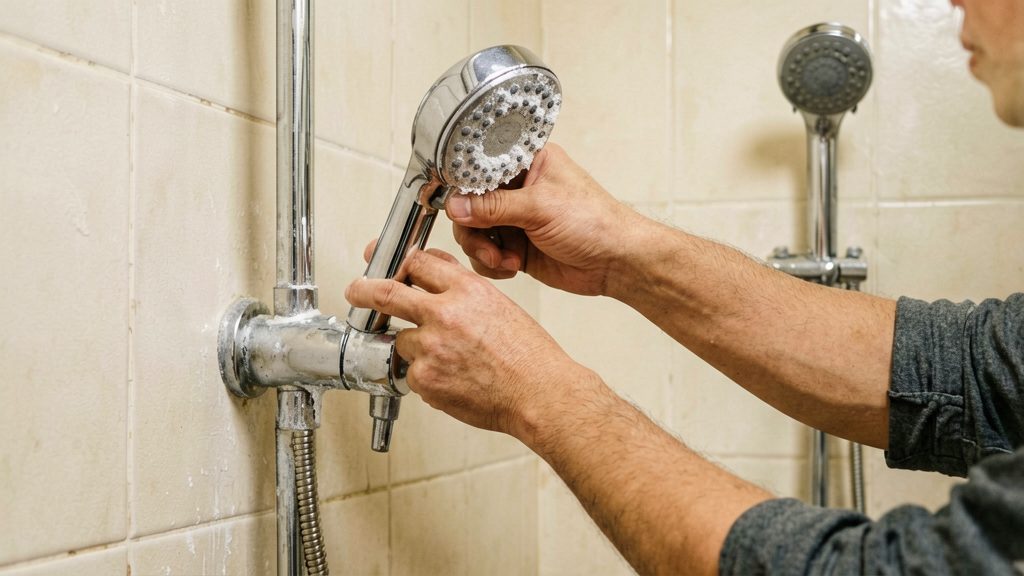
Run the tests below to find out whether the weak flow is limited to the shower or affects the whole house. If the shower is the only weak outlet, the fault sits at that fixture or its branch. If every outlet is weak, the cause is upstream, and a partly closed main shut-off valve is a common one.
Is it the shower or the whole house?
Run other taps and toilets during the shower test
Measure the shower with nothing else running, then repeat the test while another outlet is in use:
- Note how forcefully the shower runs with the house otherwise idle.
- Open a basin or kitchen tap on the same side of the house while the shower stays on.
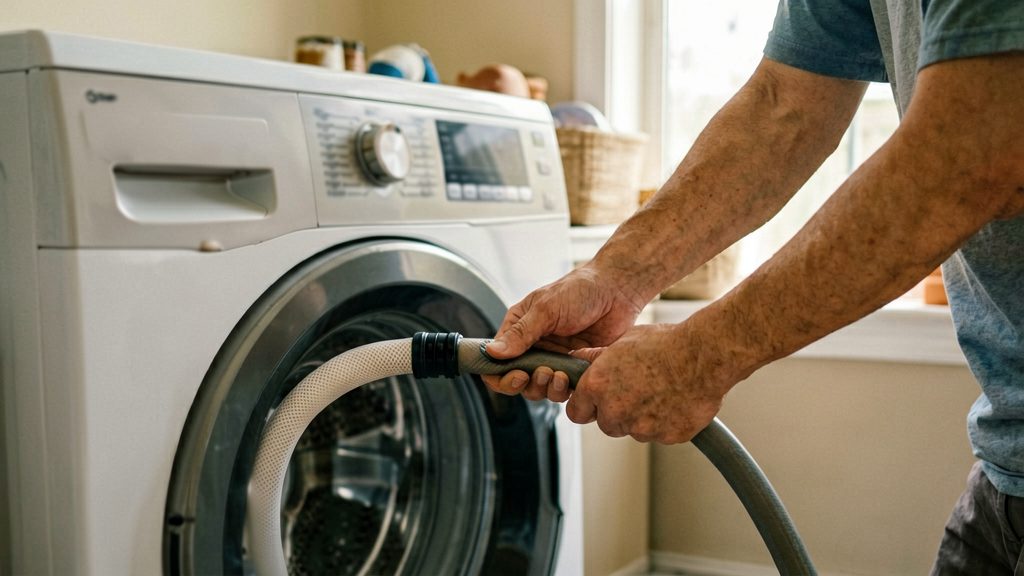
- Flush a toilet, or run a washing machine if one is connected, and watch the shower.
If the shower drops sharply when another outlet opens, the supply is shared and under strain, which points to the whole-house supply. If the shower stays steady while other outlets run, the restriction is likely local to that shower.
Compare flow at several outlets across the home
Check at least three outlets in different parts of the house, such as a kitchen tap, a bathroom basin and an outside tap if one exists. Test cold and hot separately. A weak result at every outlet suggests a shared cause. A weak result at only one, or at outlets on one branch of the pipework, points to a local cause at that location.
Check the main shut-off valve
A partly closed main water valve can cause low pressure throughout the house. According to Mr. Rooter Plumbing (Canada) (2020), cycle the valve a few times, then open it fully.
When low pressure persists
If every outlet remains weak after the main valve is fully open, call a licensed plumber (Mr. Rooter Plumbing (Canada), 2020).
Why is only one shower weak?
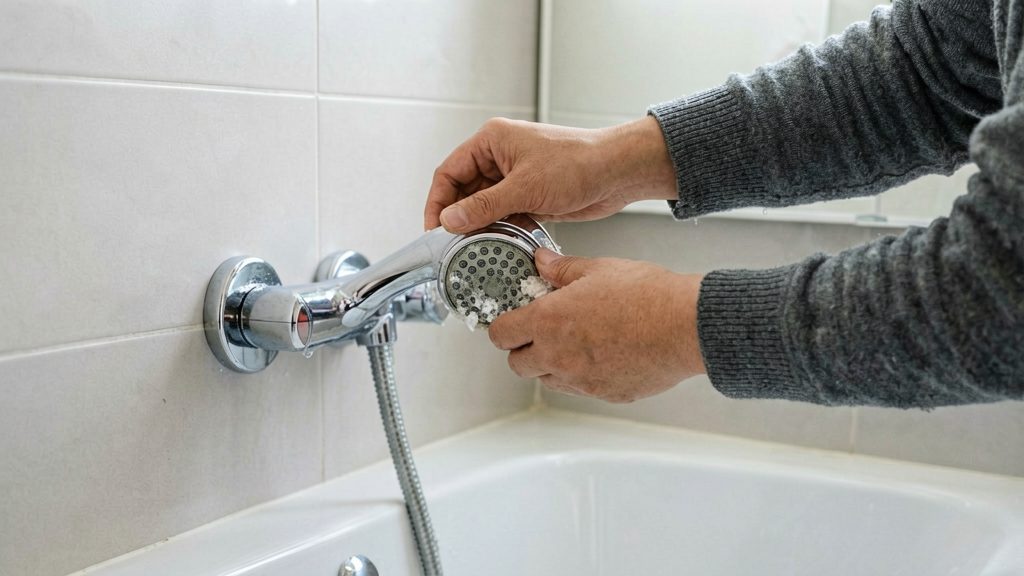
When one shower delivers a weak spray while the kitchen tap and basin run normally, the restriction is usually at or near that outlet. According to Mr. Rooter Plumbing (Canada) (2020), mineral deposits, sediment and rust are the common causes when only one fixture has low flow. They build up gradually in the small openings of a fixture, so the loss of flow usually develops over time rather than overnight.
How scale and debris restrict one outlet
Water carries dissolved minerals, fine particles and rust flakes from the pipes. These collect in the narrowest passages, such as the filter screen or aerator at the outlet and the internal channels of the shower head. Even a thin layer in these openings can noticeably reduce the spray.
Why one low fixture points to a local blockage
When only one fixture is weak, the cause is more likely something that fixture alone uses: its screen, its internal channels, or the valve and diverter in its own supply path.
Why scale builds up at one fixture
Deposits grow over time, so a shower that slowed gradually is most likely clogged with mineral buildup or debris. A shower that lost flow suddenly is less likely to be scale alone and warrants checking the valve, diverter and any visible leaks around the fitting.
Clean a clogged showerhead
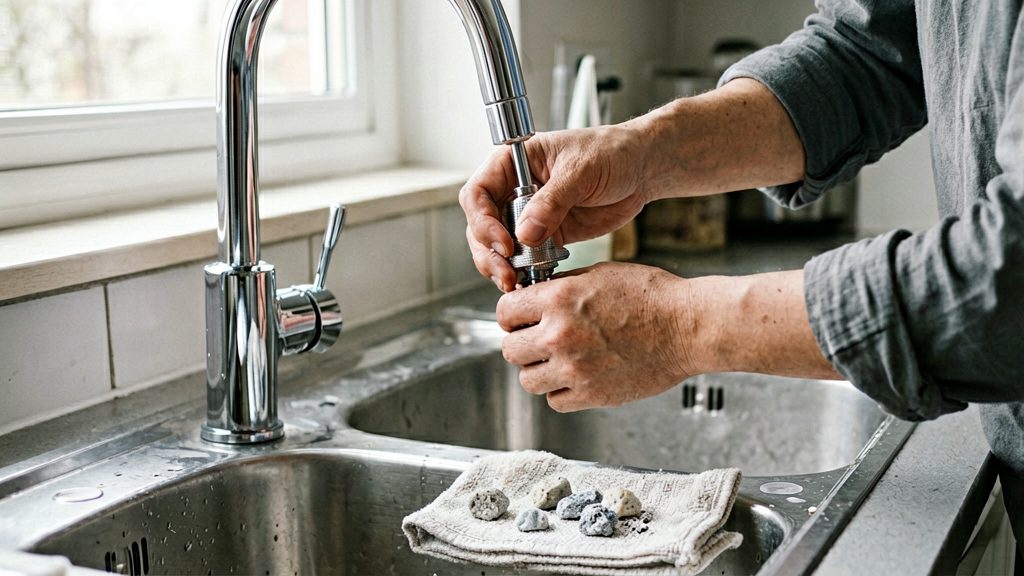
When only one showerhead has weak flow, cleaning its filter or aerator, then descaling the spray face, is the first step.
Remove and clean the filter or aerator
- Turn off the water supply to the shower.
- Unscrew the showerhead from the shower arm by hand. If it is stuck, wrap a cloth around the joint before using grip pliers gently.
- Look for a small screen or aerator inside the outlet face or at the connection, and remove it.
- Rinse the screen under running water and brush out debris with an old toothbrush.
- Reinstall the head and hand-tighten it. If the joint seeps, wrap the threads with PTFE tape before retightening.
Descale the spray face
Mineral crust on the nozzles can block spray holes even after the filter is clean. Use a descaling product labelled as suitable for your fixture’s finish. Follow the manufacturer’s instructions for contact time and check that the product is compatible with chrome, brass or other finishes. Then rinse thoroughly and run the water for a few seconds before reattaching the head.
Replace the showerhead if cleaning does not help
If flow stays weak after cleaning and descaling, replace the fixture (Mr. Rooter Plumbing (Canada), 2020). If a new head also has low flow, the restriction is probably located in the shower’s internal supply, not in the head.
Check the flow restrictor and the cartridge
When only one shower is weak, the cause is often inside that shower’s own parts, although this depends on the model and on whether the hot side is also involved. Two internal parts are worth checking: the flow restrictor in the shower arm or head, and the valve cartridge that controls that shower’s flow and mix.
Locate the flow restrictor
Many showers have a small insert or disc that limits the flow. It is often at the joint where the arm meets the wall elbow, or inside the head’s swivel connection. Its exact position depends on the model.
- Turn off the water supply to the shower, or the main valve if you cannot isolate it.
- Unscrew the showerhead from the arm. Use a cloth or tape on the threads to avoid scratching the finish.
- Look into the arm’s outlet. Check for a washer-like insert or a restricted opening, and note any scale or grit.
- If the arm has its own threaded joint at the wall, unscrew it carefully and inspect the inside the same way.
Do not force a seized fitting. Heavy force can crack the arm or damage the wall elbow.
Check the valve cartridge for wear or debris
The cartridge is the moving part inside the shower valve that blends hot and cold water. Wear or debris inside it can cut the flow to that shower while other fixtures stay normal.
Signs to look for include a stiff or jerky handle, flow that changes sharply as you turn the handle, and a drip when the valve is closed. After isolating the water supply, remove the handle and trim as your model allows, then look for scale, grit and worn seals on the cartridge. Replace a worn cartridge with one that matches your model number.
Follow the manufacturer’s disassembly instructions
Cartridges and their retaining clips, nuts and seals differ between brands. Taking a valve apart without the manual can lose small parts or damage the body. Find the model number on the valve body or the packaging, then download the manufacturer’s instructions. If the manual is not available, contact the manufacturer with that model number.
Keep the parts in the order you remove them, and photograph each step. Reassemble in reverse and open the water supply slowly to check for leaks.
When the shower checks do not fix it
If the arm, head and cartridge are clear and the flow is still low, check the hot-side causes below. A faulty diverter or a restriction behind the wall is a job for a licensed plumber.
Could the hot water side be the problem?
If the weak flow appears only on the hot tap of one fixture, the cause may be on the hot side rather than in the fixture itself. According to 1-800-Plumber, mineral buildup inside the water heater tank can affect hot water only, so one sink or shower may seem low on pressure while cold water flows normally. To check, run the hot and cold sides separately at the same fixture. If only the hot flow is weak, the problem lies upstream of the mixing point.
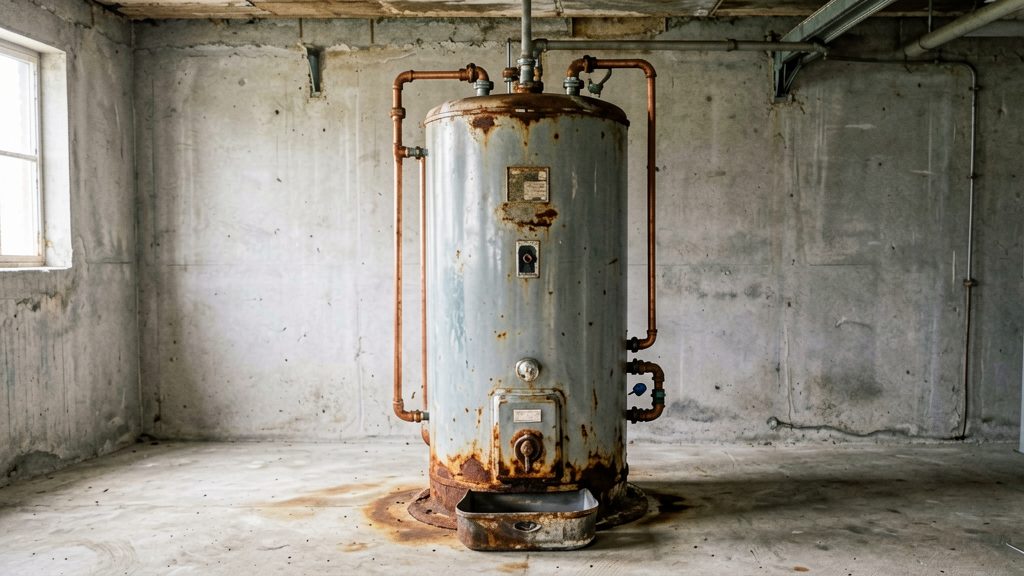
Mineral buildup inside the water heater tank
Scale and sediment inside the tank can restrict hot water flow. Look up the flushing procedure in the heater’s manufacturer manual and follow it. If you find heavy scale or are unsure how to drain the tank, call a licensed plumber.
Hidden leak on the hot supply line
A hidden leak inside a wall or under a floor can divert water before it reaches the fixture, reducing flow on the hot side only. Look for damp patches, staining or soft flooring along the hot pipe run. Then close every tap and check whether the water meter keeps moving. A moving meter with all taps closed suggests a leak somewhere in the system. Pinpointing a concealed leak usually needs a licensed plumber.
Failing pressure regulator
According to 1-800-Plumber, a failing pressure regulator is another possible cause of low pressure. Compare the cold flow at the same fixture. If weak flow shows on both sides, the regulator is worth raising with a plumber.
Do new Canadian flow limits matter?
A Canadian rule reported by a retailer blog caps new shower heads at a lower flow rate from 1 July 2026, but it is not reported to change how a shower already installed in your home performs. According to The Shower Head Store (2026), a retailer blog, shower heads made or imported on or after 1 July 2026 are limited to 7.0 L/min, down from 9.5 L/min, under Amendment 18 (SOR/2025-110) to the Energy Efficiency Regulations. These figures are unverified. They come from a secondary source and have not been confirmed against official regulatory text.
Installed fixtures are reportedly unaffected. If one shower is weak today, the rule does not explain it, so the cause lies in the fixture or the plumbing behind it.
The rule matters mainly when you replace a head:
- Check the flow rating printed on the packaging or in the manufacturer’s specification, expressed in L/min.
- If the reported cap applies, a newly made or imported head should deliver no more than 7.0 L/min.
- A lower-rated head can feel weaker than the one it replaces even when it works correctly, so compare ratings before assuming a fault.
When should you call a licensed plumber?
Call a licensed plumber when low pressure persists after you have checked the fixture’s filter or aerator, and also for leaks found under sinks or behind appliances. Three situations justify a call:
- Persistent low pressure: If one fixture stays weak after its filter or aerator is cleaned, the restriction is probably inside the fixture’s supply or behind the wall, where you cannot inspect safely.
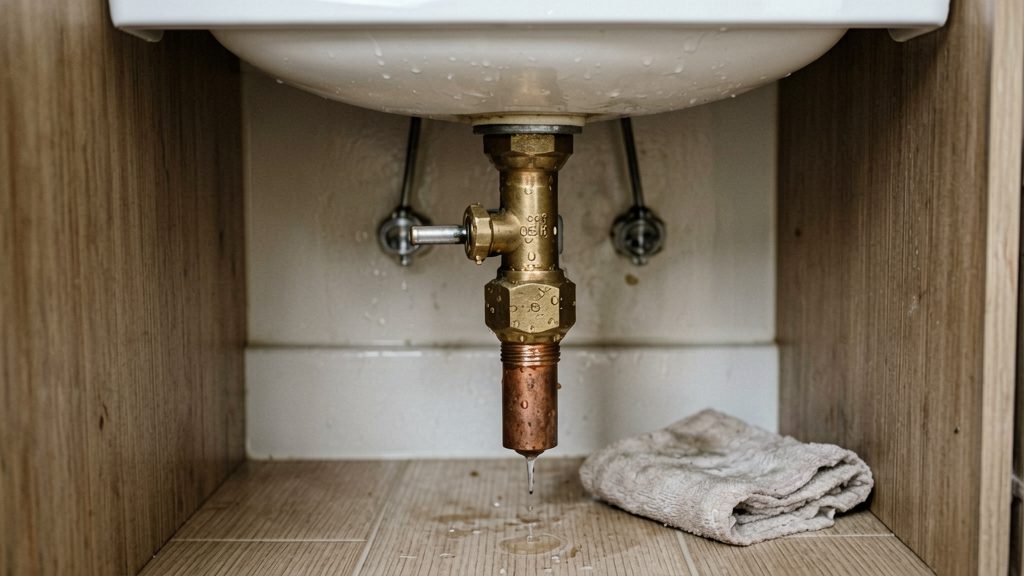
- Leaks under sinks or behind appliances: Place a towel or container under the leak. If you can reach the nearest shut-off valve safely, close it while you wait for a plumber.
- Water heater tank faults: Do not open the tank yourself. If the heater runs on gas, do not work on any gas component. If you smell gas, leave the building at once and call your gas utility or emergency services from outside. Gas repairs must be done by a qualified, licensed gas technician.
| Symptom | Likely cause (per sources above) | Action |
|---|---|---|
| Low pressure after basic checks | Restriction the fixture check did not clear | Call a plumber |
| Leak under a sink or behind an appliance | Failed connection or fitting | Contain the water, then call a plumber |
| Low pressure on hot water only | Tank mineral buildup or a hidden leak on the hot line | Follow the heater manual for flushing, or call a plumber if unsure |
Treat these causes as general guidance, and confirm local requirements with a licensed plumber in your area.