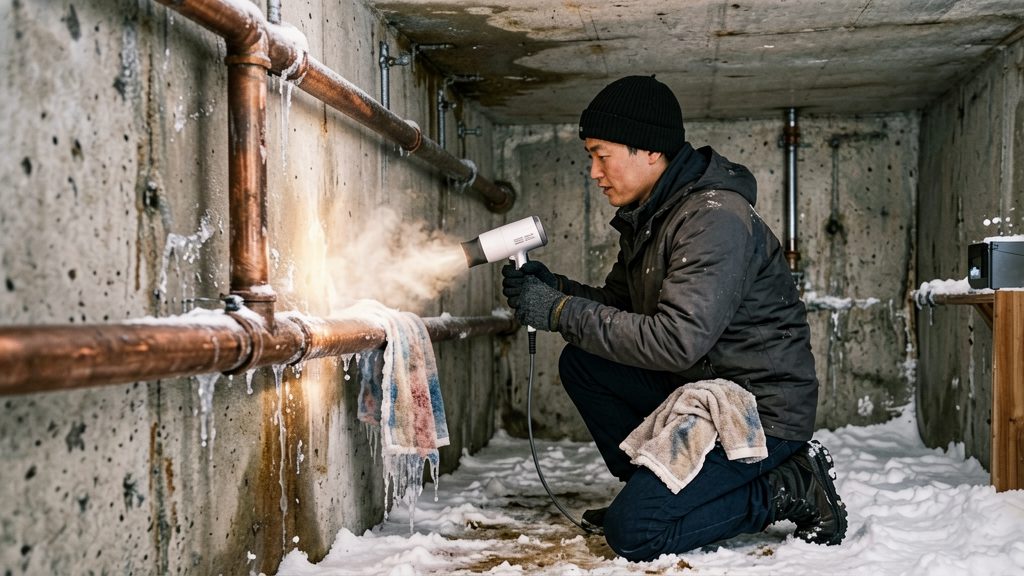
How do you know your pipes are frozen?
Signs of a frozen pipe
- No water, or only a trickle, at taps. If every tap in the home is affected, the blockage is likely upstream of the branches, not at a single fixture. According to EPCOR (2026), this is a sign of a freeze.
- Frost on exposed pipes. Visible frost on pipe that runs through a basement, crawl space or garage is a strong indicator. Per EPCOR (2026), this is a sign of a freeze.
- Freezing that spreads. According to EPCOR (2026), freezing can travel along the line, so act quickly once you notice the symptoms.
Likely freeze spots
- Exterior walls. Pipes that run inside exterior walls, including behind cabinets on outside walls, lose heat to the cold air outside. According to City of Toronto (2026), these are a common freeze location.
- Where the service pipe enters the foundation. This is the point where the incoming supply crosses the building wall. City of Toronto (2026) lists it as a likely spot to check.
- Outdoor hose faucets. A frozen outdoor tap can burst and cause water damage inside the home, according to EPCOR (2026).
Frozen pipe or closed valve?
Check these points before you turn any valve:
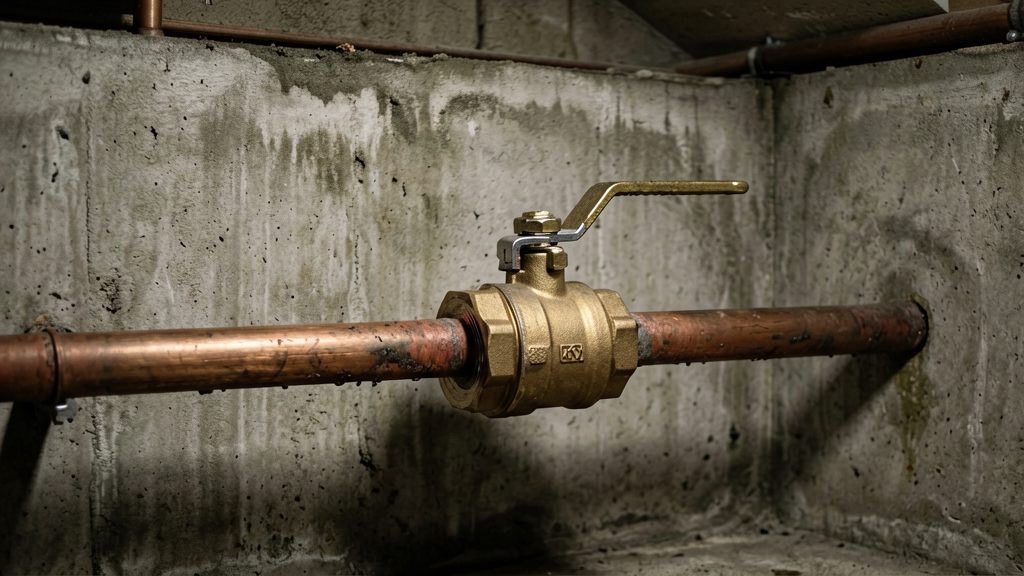
- Look at the valve handle. Note its position without turning it, and confirm whether the supply valve is open.
- Compare fixtures. If only one fixture is dry, check its local valve first, but a frozen branch is still possible. If several fixtures are dry at once, a frozen section, a closed main valve or a supply problem are all possible.
- Check your neighbours. If nearby homes also lost water, the problem may be in the municipal supply rather than your plumbing. Contact your local water service.
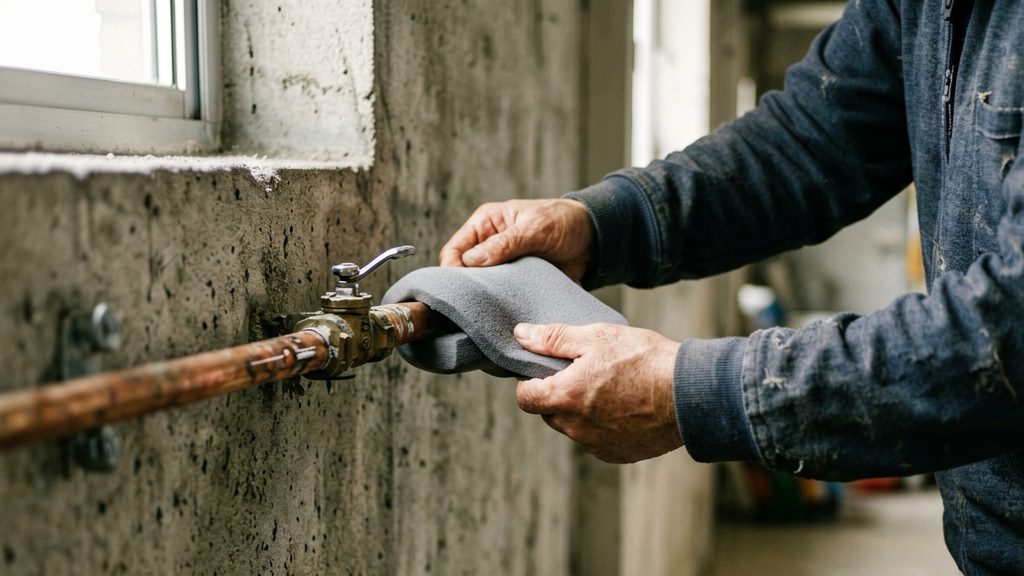
First steps: shut off water and open a tap
Shut off the main supply
If you have no water and a pipe has burst or may burst, turn off the main supply at the main shut-off valve (City of Toronto, 2026). This stops water from feeding a damaged section. If you suspect a burst, keep the main closed and call a licensed plumber rather than restoring the water yourself.
Open a basement cold tap
Open a cold tap in the basement so meltwater can drain out of the system as the ice melts (City of Toronto, 2026). Leave it open while the pipe thaws.
How to thaw a frozen pipe safely
Thawing works by applying gentle, even heat to the frozen section while water can drain out. Start by confirming the blockage is in the pipe and not at a fixture, then warm the pipe slowly from the outside. Thawing can take 1 to 6 hours depending on the weather and how frozen the pipe is, according to City of Toronto (2026). Never leave a heating device unattended while you work.
Choose the mildest heat source
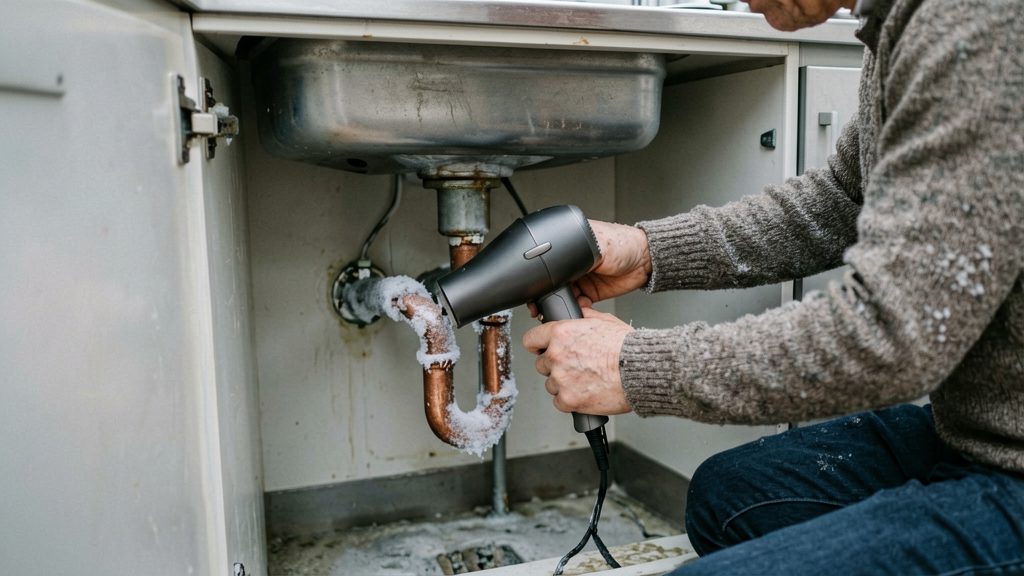
Use a heating pad wrapped around the pipe as the first choice. If you do not have one, wrap the pipe in warm towels, replacing them as they cool. Winnipeg advises warm, not hot or boiling, towels for slow, even heat, and says not to use hair dryers, portable heaters or blow torches (City of Winnipeg, 2026).
A hair dryer is accepted in Toronto, according to City of Toronto (2026), but Winnipeg advises against it, and EPCOR (2026) also lists space heaters and heat lamps among the devices to avoid. Because municipal advice differs, use the mildest heat that works and follow the guidance from your local city or utility.
Keep the water path open
Open a cold tap at a basement or lower fixture so meltwater has somewhere to flow, as City of Toronto (2026) advises. Keep the tap open while you thaw so meltwater can drain out of the system, as the City of Toronto advises.
Stay with the work
Never leave heating devices unattended, according to City of Toronto (2026). Check the pipe regularly, and once water starts flowing, keep the tap open until the flow is steady and clear. If the pipe looks swollen or water leaks at a joint, stop and turn off the supply.
What should you never do?
Open flames and blowtorches are the most dangerous shortcut when a pipe is frozen. Heating a pipe with direct fire can ignite nearby materials, and propane and other fuel-burning devices release carbon monoxide, which can build up indoors. Municipal guidance in Toronto and Winnipeg, and EPCOR in Edmonton, all rule out these methods for thawing pipes, so use only the milder heat sources they describe.
Blowtorches, propane heaters and open flames
Do not use a blowtorch, a propane heater or any other open flame on a frozen pipe. The City of Toronto (2026) states that these tools create fire and carbon monoxide hazards, and EPCOR (2026) gives the same warning about open flame. A frozen pipe can also be hidden inside a wall, floor or ceiling, where a flame can ignite materials you cannot see. If you cannot reach the frozen section, call a licensed plumber.
Carbon monoxide from flame heating
Combustion from fuel-burning heaters releases carbon monoxide, a gas with no smell or colour that can accumulate in closed rooms, crawl spaces and basements. Because a frozen pipe often sits in these low, poorly ventilated areas, the risk is higher there. Never use a fuel-burning device to thaw plumbing, in any space. Gas appliance work beyond basic safety precautions belongs to a licensed professional.
Why the mildest heat matters
Municipal advice differs on some milder options. Toronto lists hair dryers as acceptable, Winnipeg advises against them and EPCOR also lists space heaters and heat lamps. Choose the mildest method that works, such as warm (not hot or boiling) towels wrapped around the pipe, which Winnipeg recommends for slow, even heat, and follow the advice from your local municipality.
Who is responsible: the city, landlord or you?
Responsibility for a frozen pipe depends on where the pipe sits, not on who uses the water. In Toronto, the City is responsible for the service pipe from the watermain to the property line. Owners and landlords are responsible from the property line into the home (City of Toronto, 2026). In Winnipeg, owners are responsible for pipes frozen inside the home or between the house and the shut-off valve, while the City thaws its own underground portion free of charge (City of Winnipeg, 2026).
| Segment | Toronto | Winnipeg |
|---|---|---|
| Watermain to the property line (Toronto) or the City’s underground portion (Winnipeg) | City | City, thawed free of charge |
| Property line or shut-off valve to the house | Owner or landlord | Owner |
| Inside the home | Owner or landlord | Owner |
The boundary is set by each municipality, so check your city’s water utility website before assuming who pays for a repair.
If you rent
Renters generally report a loss of water to the landlord, but responsibility can depend on the lease and provincial tenancy rules; if there is a dispute, seek legal advice or contact your provincial tenancy board. In Toronto, renters should report a loss of water to their landlord or property manager (City of Toronto, 2026). Report it in writing, with the date and which taps are affected, so there is a record of when the problem started.
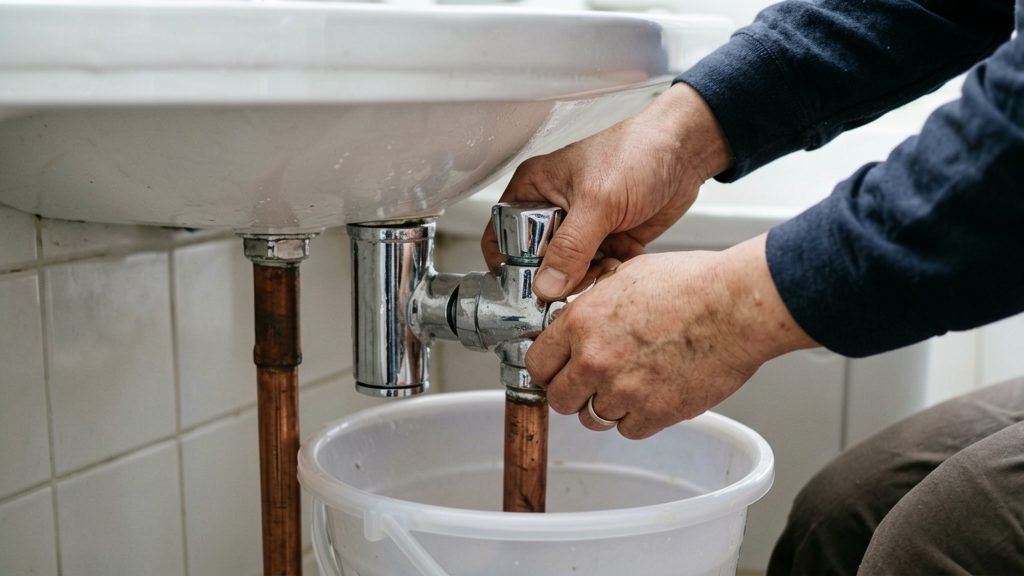
When to call a licensed plumber
Stop self-thawing and escalate when water does not return after your attempts, when you suspect a pipe has burst, or when you cannot tell where the freeze is. According to City of Toronto (2026), a licensed plumber is the next step if you still have no water after thawing attempts.
Still no water after thawing attempts
If taps stay dry after you have applied gentle heat, stop heating the pipe and call a licensed plumber. Do not keep trying with heating devices that have not produced results.
Contacting Toronto 311 for city-side issues
If the frozen section is on the City’s part of the service pipe, call Toronto’s 311 line. According to City of Toronto (2026), 311 will investigate, so report the location and what you observed.
Referral to a plumber when the pipe is private
If the frozen pipe is on private property, 311 will refer you to a plumber rather than send a City crew. At that point, call a licensed plumber directly.
| Situation | Next step |
|---|---|
| Still no water after thawing attempts | Call a licensed plumber |
| Frozen section on the City’s service pipe (Toronto) | Call 311 |
| 311 says the frozen pipe is private | Call a licensed plumber |
Outside Toronto, rules and reporting lines differ. This guide draws on Toronto, Winnipeg and Edmonton (EPCOR) guidance, so check your own municipal utility’s website or phone line before you call.
How can you prevent frozen pipes in the next cold snap?
Preventing frozen pipes takes a few steps before the temperature drops. The main levers are keeping the rooms that hold pipes warm, insulating the pipes that run through cold spaces, and letting water move or drain when the cold is severe. The exact thresholds depend on your city, so check your municipal guidance once you know which rules apply to you.
Keep pipe areas warm
Keep rooms with plumbing warm. The City of Toronto (2026) advises keeping areas with pipes above 8°C, while the City of Winnipeg (2026) advises at least 12°C. These are municipal advice figures that differ, so follow your local guidance; the higher figure is the more cautious choice.
Insulate exposed pipes
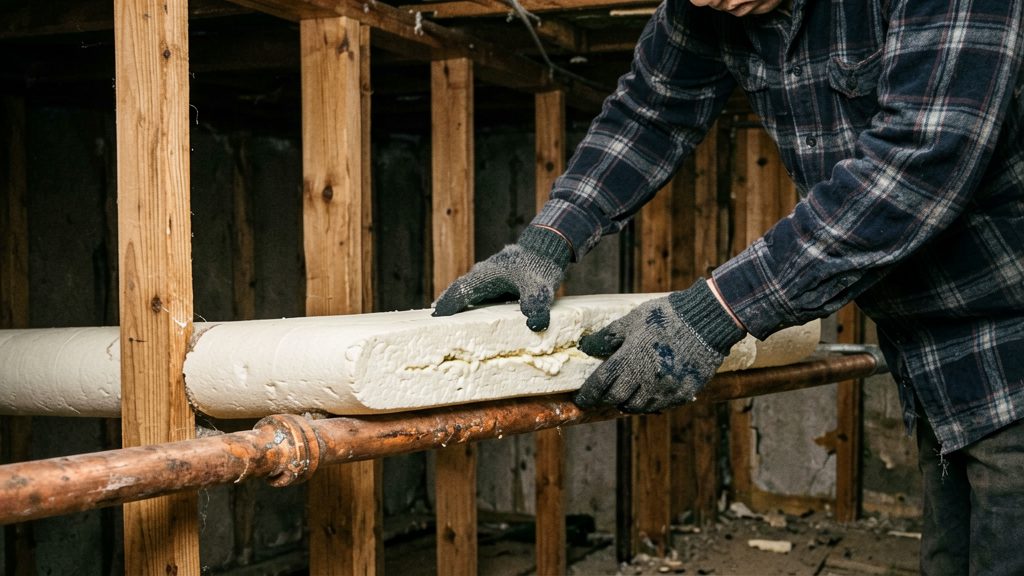
Insulate pipes that run along exterior walls, in crawl spaces, or in unheated garages. City of Toronto (2026) recommends insulating exposed pipes as a standard preventive step.
Open cabinets and drain outdoor taps
Open the doors of cabinets under sinks so warm room air reaches the supply lines. City of Toronto (2026) lists this measure alongside keeping rooms above 8°C.
Before winter, disconnect garden hoses and drain outdoor taps. EPCOR (2026) warns that a frozen outdoor hose faucet can burst and cause water damage inside the home.
Running a tap during severe cold
In Toronto, when nighttime temperatures fall below -15°C, the City (2026) allows a pencil-thin stream from vulnerable taps, and you pay for the water used. Winnipeg takes a different position: it warns that running water can increase your bill unless the City has told you to do so. Check your municipality’s current rule before you open a tap, because the two cities do not agree.